Showing Them Around the City
उन्हें शहर घुमाना
Emma and her visiting relatives explore the city, choosing between a famous landmark and a quieter neighborhood. They discuss local customs and take breaks when everyone gets tired.
एमा और उनसे मिलने आए रिश्तेदार शहर घूमते हैं और एक मशहूर ऐतिहासिक स्थल या शांत पड़ोस में से चुनते हैं। वे स्थानीय रीति-रिवाज़ों के बारे में बात करते हैं और सबके थकने पर आराम करते हैं।
संवाद9
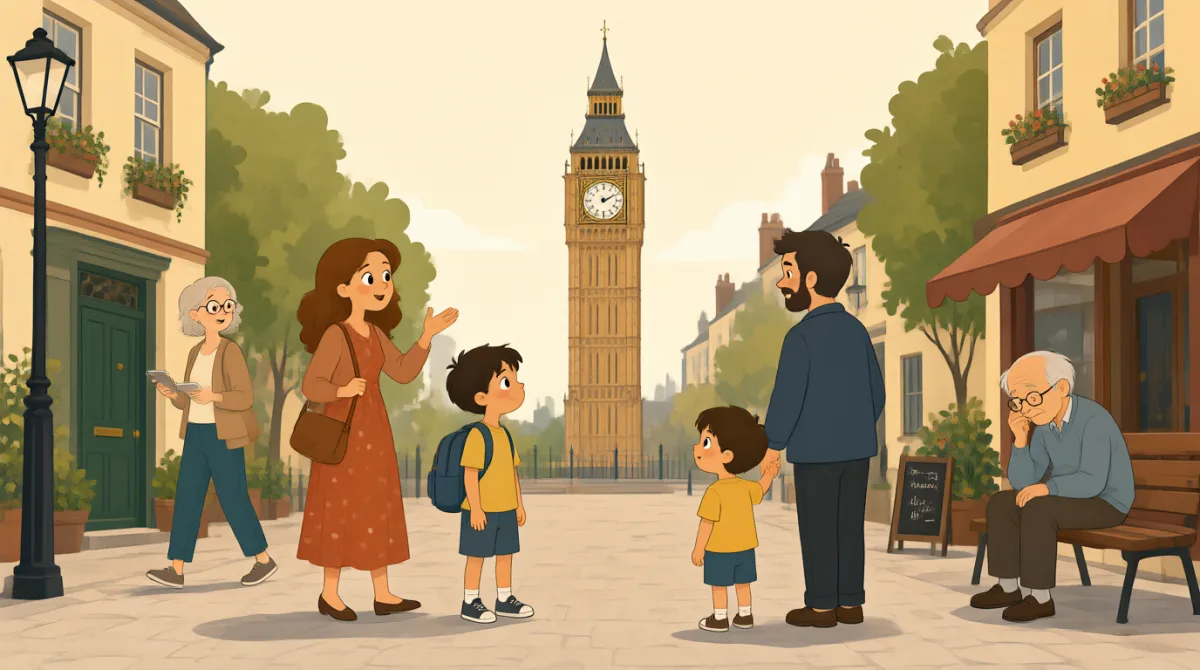

The famous tower is only a few blocks away. We could see it first, then explore the quieter neighborhood nearby.
मशहूर टावर यहाँ से बस कुछ ही ब्लॉक दूर है। पहले उसे देख सकते हैं, फिर पास के शांत पड़ोस में घूम सकते हैं।

That sounds good, but let’s check how everyone’s feeling. They had a long flight, so we shouldn’t pack too much into the day.
अच्छा लग रहा है, लेकिन पहले देखते हैं कि सब कैसा महसूस कर रहे हैं। उनकी उड़ान लंबी थी, इसलिए आज के दिन में बहुत कुछ भरने की ज़रूरत नहीं है।

The tower gets crowded around noon. If we go now, we can take a few photos before the tour groups arrive.
दोपहर के आसपास टावर पर बहुत भीड़ हो जाती है। अगर हम अभी जाएँ, तो टूर ग्रुप आने से पहले कुछ तस्वीरें ले सकते हैं।
Great. And after that, the neighborhood has little cafés and shops. It’ll be a nice change from the busy tourist spots.
बढ़िया। और उसके बाद, उस पड़ोस में छोटे-छोटे कैफ़े और दुकानें हैं। व्यस्त पर्यटन स्थलों से हटकर वहाँ जाना अच्छा लगेगा।
One thing to remember: people usually wait in line here, even for a bus. Let’s give them a heads-up so they know what to expect.
एक बात याद रखना: यहाँ लोग आम तौर पर बस के लिए भी कतार में इंतज़ार करते हैं। उन्हें पहले से बता देते हैं, ताकि उन्हें पता रहे कि क्या उम्मीद करनी है।
Good point. We can take the bus to the neighborhood, but there’s also a nice walking route if everyone still has energy.
सही कहा। हम उस पड़ोस तक बस से जा सकते हैं, लेकिन अगर सबमें अभी भी ऊर्जा हो तो पैदल जाने का रास्ता भी अच्छा है।
Let’s decide after the tower. There’s a bench nearby where we can sit down, have some water, and see how everyone feels.
टावर देखने के बाद तय करते हैं। पास में एक बेंच है, जहाँ बैठकर पानी पी सकते हैं और देख सकते हैं कि सब कैसा महसूस कर रहे हैं।
Perfect. A little flexibility goes a long way. We want them to enjoy the city, not feel like they’re racing through it.
बिल्कुल। थोड़ा लचीलापन बहुत काम आता है। हम चाहते हैं कि वे शहर का मज़ा लें, न कि ऐसा महसूस करें कि वे उसे भागते-भागते देख रहे हैं।
All right, tower first, then a break, and we’ll play the rest by ear. That should keep the day comfortable for everyone.
ठीक है, पहले टावर, फिर थोड़ा आराम, और बाकी का आगे हालात देखकर तय करेंगे। इससे सबके लिए दिन आरामदायक रहेगा।
शब्दावली7
- a few blocks awayबस कुछ ब्लॉक दूर
A short distance away, measured in city blocks. Use it to describe how near a place is.
शहर के ब्लॉकों में मापी गई थोड़ी दूरी। किसी जगह के पास होने का वर्णन करने के लिए इसका इस्तेमाल करें।
- pack too much into the dayदिन में बहुत कुछ भर देना
To plan too many activities for one day. Use this phrase when you want to keep a schedule manageable.
एक ही दिन के लिए बहुत सारी गतिविधियाँ तय करना। जब आप दिन का कार्यक्रम आसान और संभालने लायक रखना चाहते हैं, तो इस वाक्यांश का इस्तेमाल करें।
- gets crowdedभीड़ हो जाना
Becomes full of many people. You can use this to describe a place that is busy at certain times.
बहुत सारे लोगों से भर जाना। किसी ऐसी जगह का वर्णन करने के लिए इसका इस्तेमाल करें जहाँ कुछ खास समय पर भीड़ रहती है।
- give them a heads-upउन्हें पहले से बता देना
Tell them about something in advance so they can be prepared. This informal phrase is useful when sharing practical information.
किसी बात के बारे में उन्हें पहले ही बता देना, ताकि वे तैयार रह सकें। काम की जानकारी साझा करते समय यह अनौपचारिक वाक्यांश उपयोगी है।
- what to expectक्या उम्मीद करनी है
What is likely to happen or what a situation will be like. Use it to help someone prepare for an unfamiliar place or experience.
क्या होने की संभावना है या कोई स्थिति कैसी होगी। किसी अनजान जगह या अनुभव के लिए किसी को तैयार करने में यह वाक्यांश मददगार है।
- a nice change fromसे हटकर एक अच्छा बदलाव
Something different and pleasant compared with what came before. Use it when suggesting a welcome alternative.
पहले की चीज़ से अलग और सुखद कुछ। किसी स्वागतयोग्य विकल्प का सुझाव देते समय इसका इस्तेमाल करें।
- play the rest by earबाकी का आगे हालात देखकर तय करना
Decide what to do later based on how things go. This informal idiom is useful when you want to keep plans flexible.
हालात कैसे आगे बढ़ते हैं, उसके आधार पर बाद में तय करना कि क्या करना है। योजनाओं में लचीलापन रखने के लिए यह अनौपचारिक मुहावरा उपयोगी है।
मुख्य वाक्य8
- 1
They had a long flight, so we shouldn’t pack too much into the day.
उनकी उड़ान लंबी थी, इसलिए हमें आज के दिन में बहुत कुछ नहीं भरना चाहिए।
This sentence gives a reason for keeping plans light. Reuse the pattern “They had…, so we shouldn’t…” to explain why you want to avoid doing too much.
इस वाक्य में योजनाएँ हल्की रखने का कारण बताया गया है। कुछ ज़्यादा न करने की वजह समझाने के लिए “They had…, so we shouldn’t…” के ढाँचे का फिर से इस्तेमाल करें।
- 2
If we go now, we can take a few photos before the tour groups arrive.
अगर हम अभी जाएँ, तो टूर ग्रुप आने से पहले कुछ तस्वीरें ले सकते हैं।
This sentence suggests an action and explains its benefit. Use “If we…, we can…” to make a practical plan.
इस वाक्य में एक काम सुझाया गया है और उसका फ़ायदा बताया गया है। व्यावहारिक योजना बनाने के लिए “If we…, we can…” का इस्तेमाल करें।
- 3
It’ll be a nice change from the busy tourist spots.
व्यस्त पर्यटन स्थलों से हटकर वहाँ जाना अच्छा लगेगा।
This is a natural way to recommend something different. Reuse “It’ll be a nice change from…” when suggesting a new activity or place.
कुछ अलग सुझाने का यह एक स्वाभाविक तरीका है। किसी नई गतिविधि या जगह का सुझाव देते समय “It’ll be a nice change from…” का फिर से इस्तेमाल करें।
- 4
Let’s give them a heads-up so they know what to expect.
चलो, उन्हें पहले से बता देते हैं, ताकि उन्हें पता रहे कि क्या उम्मीद करनी है।
This sentence suggests warning or informing someone in advance. Use “Let’s give [someone] a heads-up so…” to explain why you’re sharing information.
इस वाक्य में किसी को पहले से आगाह करने या जानकारी देने का सुझाव है। जानकारी साझा करने की वजह बताने के लिए “Let’s give [someone] a heads-up so…” का इस्तेमाल करें।
- 5
There’s a bench nearby where we can sit down, have some water, and see how everyone feels.
पास में एक बेंच है, जहाँ हम बैठकर पानी पी सकते हैं और देख सकते हैं कि सब कैसा महसूस कर रहे हैं।
This sentence offers a practical place to rest and check in with a group. Reuse “There’s a [place] nearby where we can…” to suggest a convenient option.
इस वाक्य में आराम करने और समूह के लोगों का हाल जानने के लिए एक सुविधाजनक जगह सुझाई गई है। किसी सुविधाजनक विकल्प का सुझाव देने के लिए “There’s a [place] nearby where we can…” का फिर से इस्तेमाल करें।
- 6
A little flexibility goes a long way.
थोड़ा लचीलापन बहुत काम आता है।
This concise expression says that being adaptable can make a big difference. Use it when plans may need to change to suit people’s needs.
यह संक्षिप्त अभिव्यक्ति बताती है कि हालात के अनुसार ढलने से बड़ा फ़र्क पड़ सकता है। जब लोगों की ज़रूरतों के अनुसार योजनाएँ बदलनी पड़ सकती हैं, तब इसका इस्तेमाल करें।
- 7
We want them to enjoy the city, not feel like they’re racing through it.
हम चाहते हैं कि वे शहर का मज़ा लें, न कि ऐसा महसूस करें कि वे उसे भागते-भागते देख रहे हैं।
This sentence contrasts a positive goal with an unwanted feeling. Reuse “We want [someone] to…, not…” to explain what you hope to achieve.
इस वाक्य में एक अच्छे लक्ष्य और एक ऐसी भावना के बीच अंतर बताया गया है जिससे बचना चाहते हैं। अपनी उम्मीद बताने के लिए “We want [someone] to…, not…” का फिर से इस्तेमाल करें।
- 8
We’ll play the rest by ear.
बाकी का आगे हालात देखकर तय करेंगे।
This is an informal way to say you’ll decide later based on the situation. Use it when you want to leave part of a plan open.
यह कहने का अनौपचारिक तरीका है कि स्थिति के आधार पर बाद में तय करेंगे। जब आप योजना का कुछ हिस्सा खुला रखना चाहते हैं, तब इसका इस्तेमाल करें।