Booking the Next Lesson
After the lesson, Emma and David talk about what she practiced and what she should work on next. They choose a time for her next driving lesson.
Dialogue8
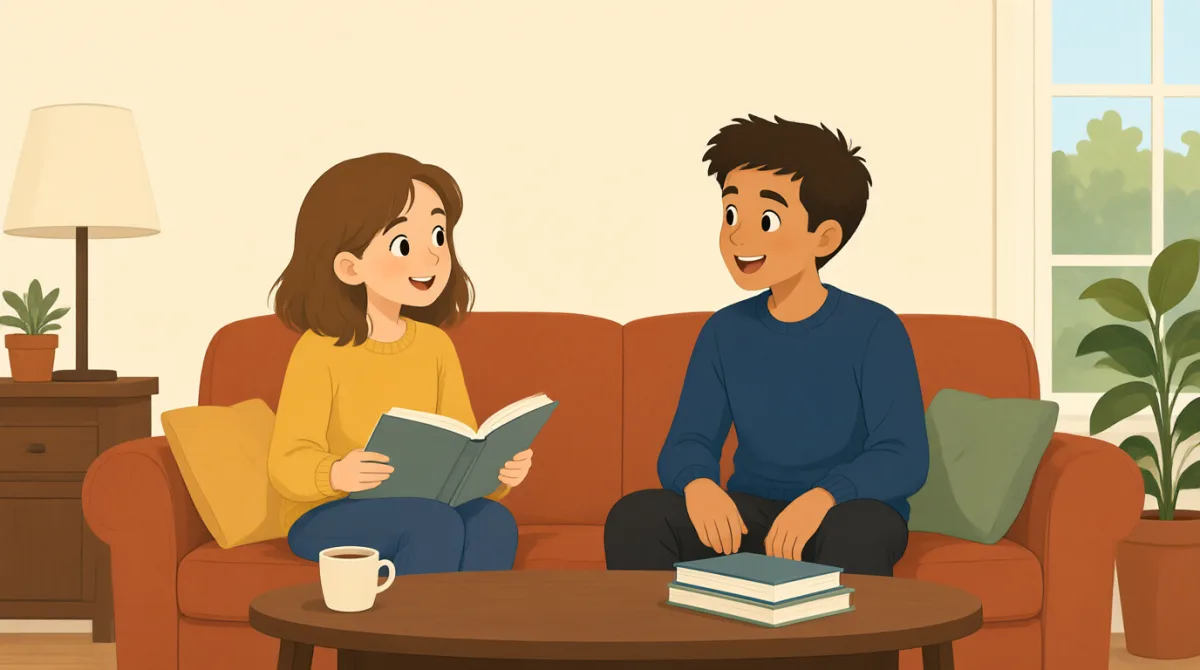

Thanks for today's lesson. I practiced turning and parking by the curb.

You did well. Next time, let's practice checking your mirrors more often.
That sounds good. Should I practice turning, too?
Yes. Keep practicing your turns, and remember to signal early.
Okay. When can we have our next lesson?
Are you free next Tuesday at three in the afternoon?
Yes, that works for me. I'll see you then.
Great. I'll meet you here, and we'll get started right away.
Vocabulary8
- by the curb
This means next to the edge of the road. It describes where Emma practiced parking.
- You did well.
This is a simple way to praise someone’s performance. You can use it after someone practices or completes a task.
- Next time
This means the next occasion when something happens. Use it to talk about what you plan to do in a future lesson.
- more often
This means more frequently. Use it when you want someone to do an action a greater number of times.
- Keep practicing
This means continue to practice. You can use it to encourage someone to keep working on a skill.
- signal early
This means use your car’s signal before you turn or change lanes. It tells other drivers what you plan to do.
- that works for me
This means that a suggested time or plan is convenient for you. It is a natural way to accept an arrangement.
- get started
This means begin doing something. You can use it when it is time to begin a lesson or activity.
Key Sentences8
- 1
Thanks for today's lesson.
This is a polite way to thank someone after a lesson. You can change “today's lesson” to name another activity.
- 2
You did well.
Use this short sentence to praise someone for doing a good job. You can say it after practice, a test, or another activity.
- 3
Next time, let's practice checking your mirrors more often.
This sentence suggests what to work on in a future lesson. Use “Next time, let's practice” followed by an activity.
- 4
Keep practicing your turns, and remember to signal early.
This gives encouragement and a useful reminder. You can use “Keep practicing” with a skill you want someone to improve.
- 5
When can we have our next lesson?
This is a polite way to ask when another lesson can happen. Replace “lesson” with another meeting or activity.
- 6
Are you free next Tuesday at three in the afternoon?
Use this question to check if someone is available at a specific time. You can change the day and time to suggest another appointment.
- 7
Yes, that works for me.
This is a natural way to accept a suggested time or plan. You can also use it to agree to a meeting place or arrangement.
- 8
I'll see you then.
This is a friendly way to confirm that you will meet at the agreed time. Use it after making a plan.