Starting With a Sincere Apology
心から謝ることから始める
Jack apologizes for forgetting their plans and for getting defensive when Emma raised the issue. He makes it clear that he understands why his actions upset her.
ジャックは、約束を忘れたことと、エマにそのことを指摘されたときにむきになったことを謝ります。自分の行動でエマがなぜ傷ついたのか、理解していることを伝えます。
会話10
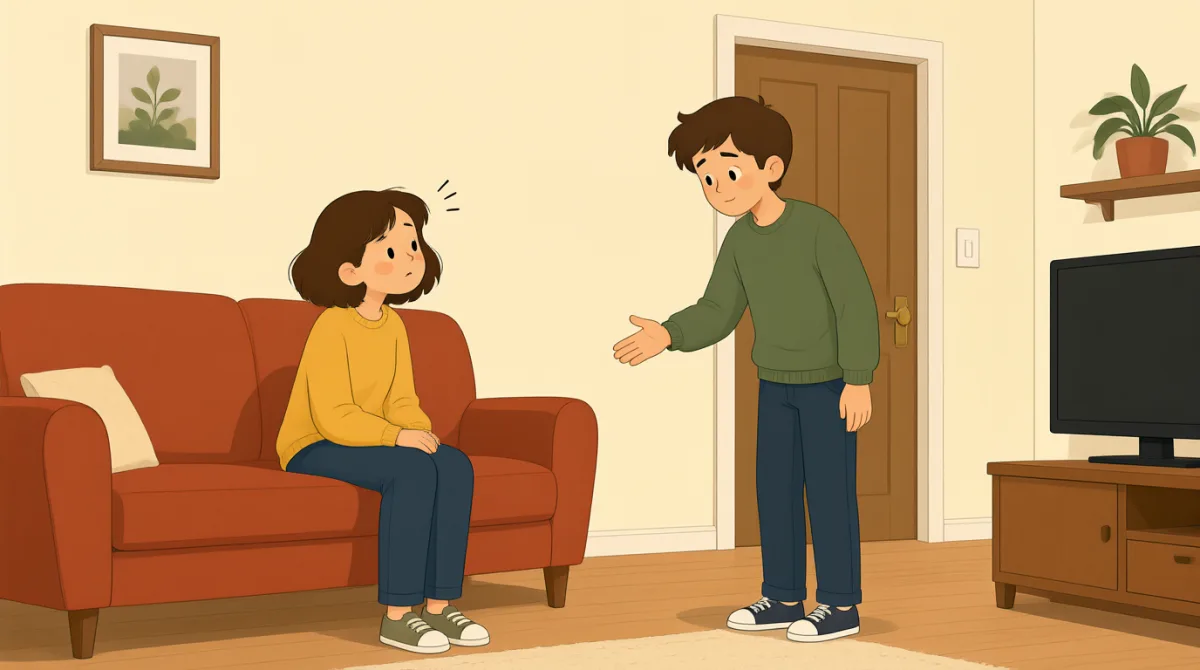

Emma, I want to start by saying I’m genuinely sorry I forgot our plans. You’d set aside the evening for us, and I didn’t show up or give you a heads-up.
エマ、まず、約束を忘れて本当にごめんって言わせて。君は僕たちのために夜の時間を空けてくれてたのに、僕は行かなかったし、連絡もしなかった。

Thank you for saying that. It wasn’t just the change of plans; I was hurt that I waited and had no idea what was going on.
そう言ってくれてありがとう。予定が変わったことだけじゃないんだ。待っていたのに、何が起きているのか全然わからなかったのがつらかった。
You’re right. I should have checked my calendar and let you know as soon as I realized I couldn’t make it. Instead, I left you hanging.
君の言うとおりだよ。カレンダーを確認して、行けないってわかった時点ですぐ伝えるべきだった。なのに、君を待たせたままにしちゃった。
And when I brought it up, you got defensive. It felt like you were more focused on proving you had a reason than hearing how it affected me.
それに、私がそのことを話したとき、あなたはむきになったよね。私への影響を聞くより、自分にはそうする理由があったって証明することに必死な感じがした。
I did get defensive, and I’m sorry for that, too. I was embarrassed about messing up, but that doesn’t excuse turning the conversation into an argument.
確かにむきになってた。それもごめん。失敗したのが恥ずかしかったんだけど、だからって話を口論にしていいわけじゃないよね。
I appreciate you owning that. I wasn’t expecting you to be perfect; I just needed you to take my feelings seriously instead of brushing them aside.
ちゃんと認めてくれてうれしい。完璧でいてほしかったわけじゃないんだ。ただ、私の気持ちを真剣に受け止めてほしかった。なかったことみたいに流さないで。
I understand. If I’d been in your shoes, I’d probably have felt hurt and unimportant, too. I should have listened instead of pushing back.
わかったよ。もし僕が君の立場だったら、きっと同じように傷ついて、自分は大切にされてないって感じたと思う。反論するんじゃなくて、ちゃんと聞くべきだった。
That means a lot. I’m still a little upset, but I’m glad we’re talking about what happened without taking another shot at each other.
そう言ってくれるのは大きいよ。まだ少し腹は立ってるけど、またお互いに嫌なことを言い合わずに、何があったか話せてよかった。
I don’t expect one apology to fix everything, but I do want to make this right. When you’re ready, I’d like to hear more about what the evening was like for you.
謝っただけで全部が解決するとは思ってない。でも、ちゃんと埋め合わせをしたいんだ。君の気持ちが落ち着いたら、あの夜どんなふうに過ごしたのか、もっと聞かせてほしい。
Okay. I’m willing to talk. Let’s take it one step at a time, and please don’t assume I’m over it just because I’m ready to listen.
わかった。話す気はあるよ。一つずつ進めていこう。私が話を聞く気になったからって、もう気にしてないんだって決めつけないでね。
語彙8
- give you a heads-up事前に知らせる
To give someone advance notice about a change or problem. Jack says he should have told Emma as soon as he knew he couldn’t make it.
変更や問題について、前もって相手に知らせることです。ジャックは行けないとわかった時点で、すぐエマに伝えるべきだったと言っています。
- left you hanging待たせたままにする
To leave someone waiting without information or support. Here, Jack recognizes that Emma was left waiting and didn’t know what was happening.
情報や助けがないまま、相手を待たせておくことです。ここでは、エマを待たせて、何が起きているのかも伝えなかったとジャックが認めています。
- got defensiveむきになる
Reacted as if you needed to protect yourself from criticism, rather than listening openly. Jack admits he did this when Emma raised the issue.
相手の話を素直に聞くのではなく、批判から身を守ろうとするように反応することです。ジャックは、エマがこの件を持ち出したときにそうしてしまったと認めています。
- owning that自分のしたことを認める
Taking responsibility for something you did. Emma appreciates that Jack acknowledges his mistake instead of denying it.
自分がしたことに責任を持つことです。ジャックが間違いを否定せず認めたことを、エマはありがたく思っています。
- in your shoesあなたの立場で
In your situation, imagining how you might feel if the same thing happened to you. Jack uses the phrase to show empathy for Emma.
同じことが自分に起きたらどう感じるかを想像し、相手の状況に身を置いて考えることです。ジャックはこの表現を使って、エマの気持ちに寄り添っています。
- pushing back反論する
Resisting or arguing against what someone says. Jack says he should have listened rather than immediately resisting Emma’s feelings.
相手の言うことに抵抗したり、言い返したりすることです。ジャックはエマの気持ちにすぐ反論するのではなく、話を聞くべきだったと言っています。
- make this right埋め合わせをする
To take action to fix a problem or make amends. Jack uses this phrase to show that he wants to do more than simply apologize.
問題を解決したり、償いをしたりするために行動することです。ジャックは、ただ謝るだけでなく、きちんと埋め合わせをしたいと伝えています。
- one step at a time一つずつ進める
Gradually, without rushing the process. Emma uses it to suggest they talk through the issue at a pace that feels comfortable.
急がず、少しずつ進めることです。エマは、無理のないペースで問題について話し合おうと提案しています。
重要な文7
- 1
I want to start by saying I’m genuinely sorry I forgot our plans.
まず、約束を忘れて本当にごめんって言わせて。
This is a sincere way to open an apology and name the specific mistake. You can reuse “I want to start by saying I’m genuinely sorry I…” before explaining what you regret.
謝罪を切り出し、具体的に何を間違えたのかを伝える、心のこもった言い方です。後悔していることを説明するときは、“I want to start by saying I’m genuinely sorry I…”(まず、本当にごめんと言わせて。私が〜してしまったこと)を応用できます。
- 2
You’re right. I should have checked my calendar and let you know as soon as I realized I couldn’t make it.
君の言うとおりだよ。カレンダーを確認して、行けないってわかった時点ですぐ伝えるべきだった。
This sentence accepts responsibility and explains what the speaker should have done differently. Use “I should have…” to acknowledge a better choice you missed in the past.
自分の責任を認め、どうすればよかったかを説明する文です。“I should have…”(〜するべきだった)は、過去に別の選択をすべきだったと認めるときに使えます。
- 3
I did get defensive, and I’m sorry for that, too.
確かにむきになってた。それもごめん。
This directly apologizes for a reaction as well as for the original mistake. You can adapt “I did get [reaction], and I’m sorry for that, too” when taking responsibility for how you responded.
最初の失敗だけでなく、自分の反応についてもはっきり謝る表現です。自分の対応に責任を持つときは、“I did get [reaction], and I’m sorry for that, too”(確かに[反応]してた。それもごめん)を応用できます。
- 4
I wasn’t expecting you to be perfect; I just needed you to take my feelings seriously instead of brushing them aside.
完璧でいてほしかったわけじゃないんだ。ただ、私の気持ちを真剣に受け止めてほしかった。なかったことみたいに流さないで。
This clearly distinguishes between expecting perfection and asking for consideration. The structure “I wasn’t expecting X; I just needed Y” is useful for expressing what matters in a disagreement.
完璧さを求めることと、相手に配慮してほしいと伝えることの違いをはっきりさせています。“I wasn’t expecting X; I just needed Y”(Xを期待してたわけじゃない。ただYしてほしかった)は、意見が食い違ったときに何が大切なのかを伝えるのに便利です。
- 5
If I’d been in your shoes, I’d probably have felt hurt and unimportant, too.
もし僕が君の立場だったら、きっと同じように傷ついて、自分は大切にされてないって感じたと思う。
This conditional shows empathy by imagining how the other person might have felt. Use “If I’d been in your shoes, I’d have…” to acknowledge someone’s perspective.
相手の立場を想像して、どんな気持ちになったかを考えることで、共感を示す仮定表現です。“If I’d been in your shoes, I’d have…”(もし私があなたの立場だったら、〜したと思う)を使うと、相手の見方を理解していることを伝えられます。
- 6
I don’t expect one apology to fix everything, but I do want to make this right.
謝っただけで全部が解決するとは思ってない。でも、ちゃんと埋め合わせをしたいんだ。
This recognizes that rebuilding trust may take time while showing a willingness to act. The pattern “I don’t expect X, but I do want to Y” helps balance realistic expectations with commitment.
信頼を取り戻すには時間がかかると認めながら、行動する意思も示しています。“I don’t expect X, but I do want to Y”(Xを期待しているわけじゃないけど、Yしたい)は、現実的な見通しと前向きな姿勢を両立させるのに役立ちます。
- 7
Let’s take it one step at a time, and please don’t assume I’m over it just because I’m ready to listen.
一つずつ進めていこう。私が話を聞く気になったからって、もう気にしてないんだって決めつけないでね。
This sets a gentle boundary and asks the other person not to mistake willingness to talk for complete forgiveness. You can use “Please don’t assume…” to clarify what someone’s actions do not necessarily mean.
穏やかに境界線を示し、話す気があることを完全に許したという意味に受け取らないでほしいと伝えています。“Please don’t assume…”(〜だと決めつけないで)は、相手の行動が必ずしも何かを意味するわけではないと説明したいときに使えます。