Starting With a Sincere Apology
Jack apologizes for forgetting their plans and for getting defensive when Emma raised the issue. He makes it clear that he understands why his actions upset her.
Dialogue10
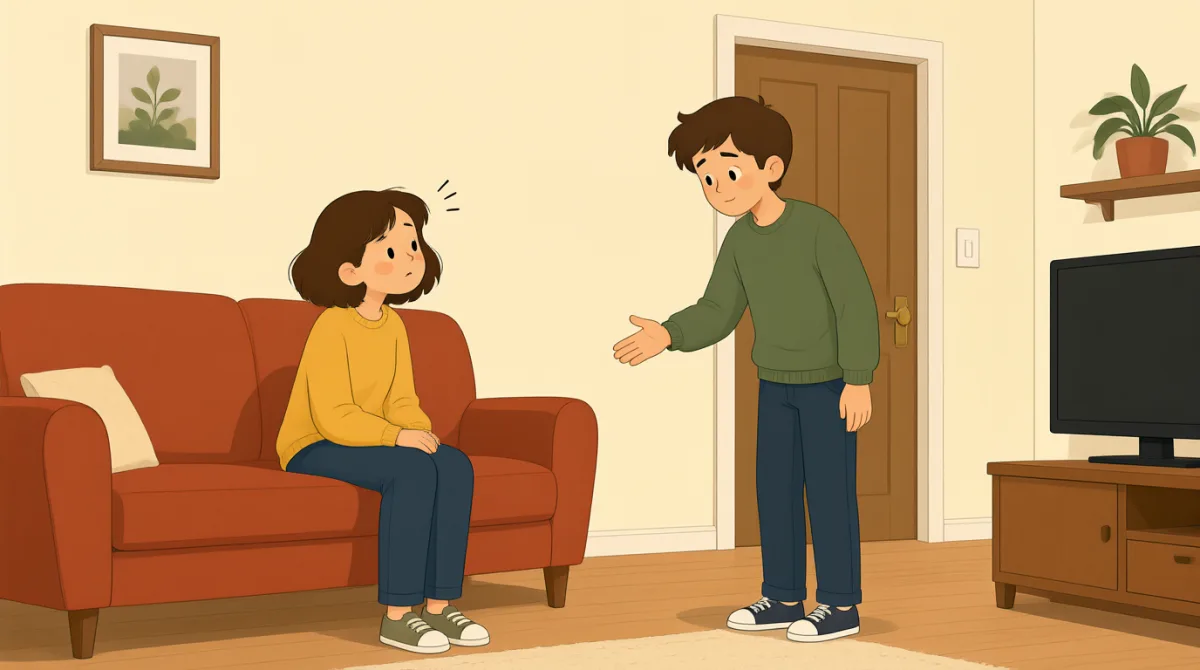

Emma, I want to start by saying I’m genuinely sorry I forgot our plans. You’d set aside the evening for us, and I didn’t show up or give you a heads-up.

Thank you for saying that. It wasn’t just the change of plans; I was hurt that I waited and had no idea what was going on.
You’re right. I should have checked my calendar and let you know as soon as I realized I couldn’t make it. Instead, I left you hanging.
And when I brought it up, you got defensive. It felt like you were more focused on proving you had a reason than hearing how it affected me.
I did get defensive, and I’m sorry for that, too. I was embarrassed about messing up, but that doesn’t excuse turning the conversation into an argument.
I appreciate you owning that. I wasn’t expecting you to be perfect; I just needed you to take my feelings seriously instead of brushing them aside.
I understand. If I’d been in your shoes, I’d probably have felt hurt and unimportant, too. I should have listened instead of pushing back.
That means a lot. I’m still a little upset, but I’m glad we’re talking about what happened without taking another shot at each other.
I don’t expect one apology to fix everything, but I do want to make this right. When you’re ready, I’d like to hear more about what the evening was like for you.
Okay. I’m willing to talk. Let’s take it one step at a time, and please don’t assume I’m over it just because I’m ready to listen.
Vocabulary8
- give you a heads-up
To give someone advance notice about a change or problem. Jack says he should have told Emma as soon as he knew he couldn’t make it.
- left you hanging
To leave someone waiting without information or support. Here, Jack recognizes that Emma was left waiting and didn’t know what was happening.
- got defensive
Reacted as if you needed to protect yourself from criticism, rather than listening openly. Jack admits he did this when Emma raised the issue.
- owning that
Taking responsibility for something you did. Emma appreciates that Jack acknowledges his mistake instead of denying it.
- in your shoes
In your situation, imagining how you might feel if the same thing happened to you. Jack uses the phrase to show empathy for Emma.
- pushing back
Resisting or arguing against what someone says. Jack says he should have listened rather than immediately resisting Emma’s feelings.
- make this right
To take action to fix a problem or make amends. Jack uses this phrase to show that he wants to do more than simply apologize.
- one step at a time
Gradually, without rushing the process. Emma uses it to suggest they talk through the issue at a pace that feels comfortable.
Key Sentences7
- 1
I want to start by saying I’m genuinely sorry I forgot our plans.
This is a sincere way to open an apology and name the specific mistake. You can reuse “I want to start by saying I’m genuinely sorry I…” before explaining what you regret.
- 2
You’re right. I should have checked my calendar and let you know as soon as I realized I couldn’t make it.
This sentence accepts responsibility and explains what the speaker should have done differently. Use “I should have…” to acknowledge a better choice you missed in the past.
- 3
I did get defensive, and I’m sorry for that, too.
This directly apologizes for a reaction as well as for the original mistake. You can adapt “I did get [reaction], and I’m sorry for that, too” when taking responsibility for how you responded.
- 4
I wasn’t expecting you to be perfect; I just needed you to take my feelings seriously instead of brushing them aside.
This clearly distinguishes between expecting perfection and asking for consideration. The structure “I wasn’t expecting X; I just needed Y” is useful for expressing what matters in a disagreement.
- 5
If I’d been in your shoes, I’d probably have felt hurt and unimportant, too.
This conditional shows empathy by imagining how the other person might have felt. Use “If I’d been in your shoes, I’d have…” to acknowledge someone’s perspective.
- 6
I don’t expect one apology to fix everything, but I do want to make this right.
This recognizes that rebuilding trust may take time while showing a willingness to act. The pattern “I don’t expect X, but I do want to Y” helps balance realistic expectations with commitment.
- 7
Let’s take it one step at a time, and please don’t assume I’m over it just because I’m ready to listen.
This sets a gentle boundary and asks the other person not to mistake willingness to talk for complete forgiveness. You can use “Please don’t assume…” to clarify what someone’s actions do not necessarily mean.