Starting With a Sincere Apology
Empezar con una disculpa sincera
Jack apologizes for forgetting their plans and for getting defensive when Emma raised the issue. He makes it clear that he understands why his actions upset her.
Jack se disculpa por haber olvidado sus planes y por ponerse a la defensiva cuando Emma se lo comentó. Deja claro que entiende por qué sus acciones la molestaron.
Diálogo10
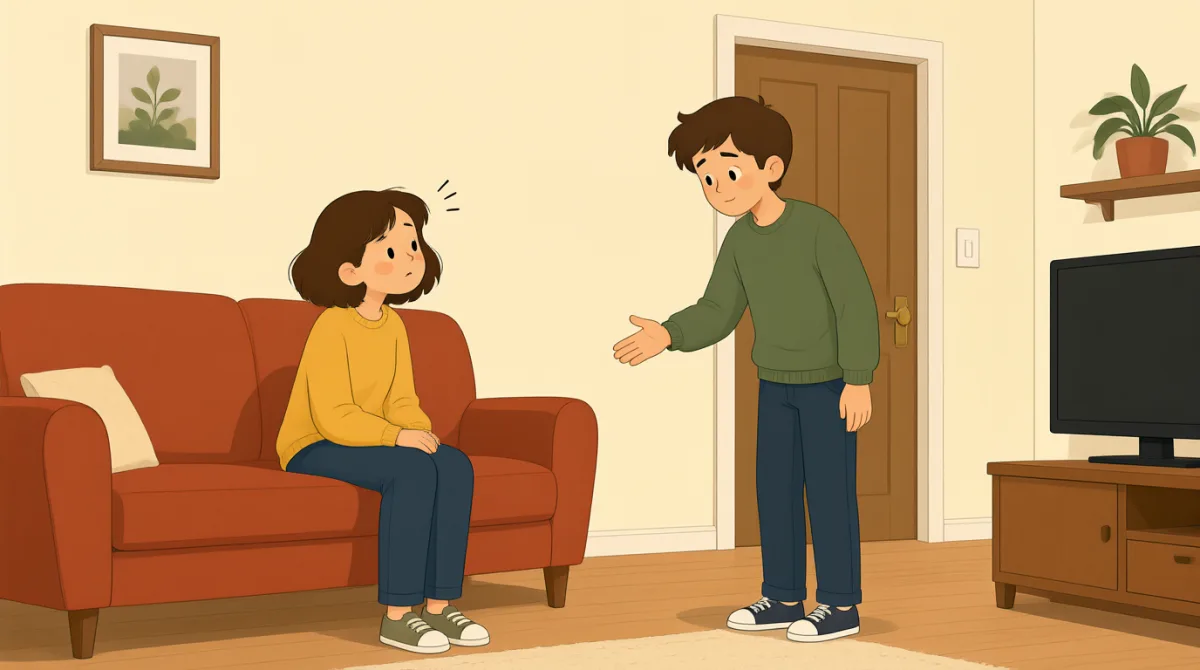

Emma, I want to start by saying I’m genuinely sorry I forgot our plans. You’d set aside the evening for us, and I didn’t show up or give you a heads-up.
Emma, quiero empezar diciéndote que de verdad siento haber olvidado nuestros planes. Habías reservado la noche para nosotros, y yo no aparecí ni te avisé.

Thank you for saying that. It wasn’t just the change of plans; I was hurt that I waited and had no idea what was going on.
Gracias por decirlo. No fue solo el cambio de planes; me dolió haberme quedado esperando sin saber qué pasaba.
You’re right. I should have checked my calendar and let you know as soon as I realized I couldn’t make it. Instead, I left you hanging.
Tienes razón. Debería haber revisado mi calendario y haberte avisado en cuanto me di cuenta de que no podía ir. En vez de eso, te dejé esperando sin saber nada.
And when I brought it up, you got defensive. It felt like you were more focused on proving you had a reason than hearing how it affected me.
Y cuando te lo comenté, te pusiste a la defensiva. Sentí que te importaba más demostrar que tenías una razón que escuchar cómo me había afectado.
I did get defensive, and I’m sorry for that, too. I was embarrassed about messing up, but that doesn’t excuse turning the conversation into an argument.
Sí, me puse a la defensiva, y también te pido perdón por eso. Me dio vergüenza haber metido la pata, pero eso no justifica que convirtiera la conversación en una discusión.
I appreciate you owning that. I wasn’t expecting you to be perfect; I just needed you to take my feelings seriously instead of brushing them aside.
Te agradezco que lo reconozcas. No esperaba que fueras perfecto; solo necesitaba que te tomaras en serio mis sentimientos en vez de restarles importancia.
I understand. If I’d been in your shoes, I’d probably have felt hurt and unimportant, too. I should have listened instead of pushing back.
Lo entiendo. Si yo hubiera estado en tu lugar, probablemente también me habría sentido herido y poco importante. Debería haberte escuchado en vez de ponerme a la defensiva.
That means a lot. I’m still a little upset, but I’m glad we’re talking about what happened without taking another shot at each other.
Eso significa mucho para mí. Todavía estoy un poco molesta, pero me alegra que estemos hablando de lo que pasó sin volver a atacarnos.
I don’t expect one apology to fix everything, but I do want to make this right. When you’re ready, I’d like to hear more about what the evening was like for you.
No espero que una disculpa lo arregle todo, pero sí quiero reparar el daño. Cuando estés lista, me gustaría que me contaras más sobre cómo fue esa noche para ti.
Okay. I’m willing to talk. Let’s take it one step at a time, and please don’t assume I’m over it just because I’m ready to listen.
Está bien. Estoy dispuesta a hablar. Vamos paso a paso y, por favor, no des por hecho que ya lo superé solo porque estoy dispuesta a escucharte.
Vocabulario8
- give you a heads-upavisarte con antelación
To give someone advance notice about a change or problem. Jack says he should have told Emma as soon as he knew he couldn’t make it.
Avisarle a alguien de antemano sobre un cambio o un problema. Jack dice que debería haberle avisado a Emma en cuanto supo que no podía ir.
- left you hangingdejarte esperando sin saber nada
To leave someone waiting without information or support. Here, Jack recognizes that Emma was left waiting and didn’t know what was happening.
Dejar a alguien esperando sin darle información ni apoyo. Aquí, Jack reconoce que Emma se quedó esperando sin saber qué estaba pasando.
- got defensiveponerse a la defensiva
Reacted as if you needed to protect yourself from criticism, rather than listening openly. Jack admits he did this when Emma raised the issue.
Reaccionar como si tuvieras que protegerte de una crítica, en lugar de escuchar con apertura. Jack reconoce que reaccionó así cuando Emma sacó el tema.
- owning thatreconocerlo
Taking responsibility for something you did. Emma appreciates that Jack acknowledges his mistake instead of denying it.
Asumir la responsabilidad por algo que hiciste. Emma agradece que Jack reconozca su error en vez de negarlo.
- in your shoesestar en tu lugar
In your situation, imagining how you might feel if the same thing happened to you. Jack uses the phrase to show empathy for Emma.
Imaginar cómo te sentirías si te ocurriera lo mismo. Jack usa esta expresión para mostrar empatía por Emma.
- pushing backresistirse
Resisting or arguing against what someone says. Jack says he should have listened rather than immediately resisting Emma’s feelings.
Oponerse a lo que alguien dice o discutirlo. Jack dice que debería haber escuchado en vez de resistirse de inmediato a los sentimientos de Emma.
- make this rightreparar el daño
To take action to fix a problem or make amends. Jack uses this phrase to show that he wants to do more than simply apologize.
Tomar medidas para solucionar un problema o compensar el daño causado. Jack usa esta expresión para mostrar que quiere hacer algo más que disculparse.
- one step at a timepaso a paso
Gradually, without rushing the process. Emma uses it to suggest they talk through the issue at a pace that feels comfortable.
Poco a poco, sin apresurar el proceso. Emma lo usa para proponer que hablen del problema a un ritmo que les resulte cómodo.
Frases clave7
- 1
I want to start by saying I’m genuinely sorry I forgot our plans.
Quiero empezar diciéndote que de verdad siento haber olvidado nuestros planes.
This is a sincere way to open an apology and name the specific mistake. You can reuse “I want to start by saying I’m genuinely sorry I…” before explaining what you regret.
Esta es una forma sincera de empezar una disculpa y mencionar el error concreto. Puedes usar “I want to start by saying I’m genuinely sorry I…” antes de explicar qué lamentas.
- 2
You’re right. I should have checked my calendar and let you know as soon as I realized I couldn’t make it.
Tienes razón. Debería haber revisado mi calendario y haberte avisado en cuanto me di cuenta de que no podía ir.
This sentence accepts responsibility and explains what the speaker should have done differently. Use “I should have…” to acknowledge a better choice you missed in the past.
Esta frase asume la responsabilidad y explica qué debería haber hecho la persona de otra manera. Usa “I should have…” para reconocer una mejor opción que no elegiste en el pasado.
- 3
I did get defensive, and I’m sorry for that, too.
Sí, me puse a la defensiva, y también te pido perdón por eso.
This directly apologizes for a reaction as well as for the original mistake. You can adapt “I did get [reaction], and I’m sorry for that, too” when taking responsibility for how you responded.
Esta frase se disculpa directamente por una reacción, además de por el error original. Puedes adaptar “I did get [reaction], and I’m sorry for that, too” para responsabilizarte de cómo reaccionaste.
- 4
I wasn’t expecting you to be perfect; I just needed you to take my feelings seriously instead of brushing them aside.
No esperaba que fueras perfecto; solo necesitaba que te tomaras en serio mis sentimientos en vez de restarles importancia.
This clearly distinguishes between expecting perfection and asking for consideration. The structure “I wasn’t expecting X; I just needed Y” is useful for expressing what matters in a disagreement.
Esta frase distingue claramente entre esperar perfección y pedir consideración. La estructura “I wasn’t expecting X; I just needed Y” sirve para expresar qué es importante para ti en un desacuerdo.
- 5
If I’d been in your shoes, I’d probably have felt hurt and unimportant, too.
Si yo hubiera estado en tu lugar, probablemente también me habría sentido herido y poco importante.
This conditional shows empathy by imagining how the other person might have felt. Use “If I’d been in your shoes, I’d have…” to acknowledge someone’s perspective.
Esta frase condicional muestra empatía al imaginar cómo podría haberse sentido la otra persona. Usa “If I’d been in your shoes, I’d have…” para reconocer su perspectiva.
- 6
I don’t expect one apology to fix everything, but I do want to make this right.
No espero que una disculpa lo arregle todo, pero sí quiero reparar el daño.
This recognizes that rebuilding trust may take time while showing a willingness to act. The pattern “I don’t expect X, but I do want to Y” helps balance realistic expectations with commitment.
Esta frase reconoce que reconstruir la confianza puede llevar tiempo y, a la vez, muestra disposición a actuar. El patrón “I don’t expect X, but I do want to Y” ayuda a combinar expectativas realistas con compromiso.
- 7
Let’s take it one step at a time, and please don’t assume I’m over it just because I’m ready to listen.
Vamos paso a paso y, por favor, no des por hecho que ya lo superé solo porque estoy dispuesta a escucharte.
This sets a gentle boundary and asks the other person not to mistake willingness to talk for complete forgiveness. You can use “Please don’t assume…” to clarify what someone’s actions do not necessarily mean.
Esta frase establece un límite con tacto y pide que la otra persona no confunda la disposición a hablar con haber perdonado por completo. Puedes usar “Please don’t assume…” para aclarar que las acciones de alguien no significan necesariamente algo.