Starting With a Sincere Apology
ईमानदारी से माफ़ी माँगकर शुरुआत
Jack apologizes for forgetting their plans and for getting defensive when Emma raised the issue. He makes it clear that he understands why his actions upset her.
जैक अपनी तय मुलाक़ात भूल जाने और एमा के बात उठाने पर रक्षात्मक हो जाने के लिए माफ़ी माँगता है। वह साफ़ करता है कि उसे समझ है कि उसकी हरकतों से एमा को क्यों बुरा लगा।
संवाद10
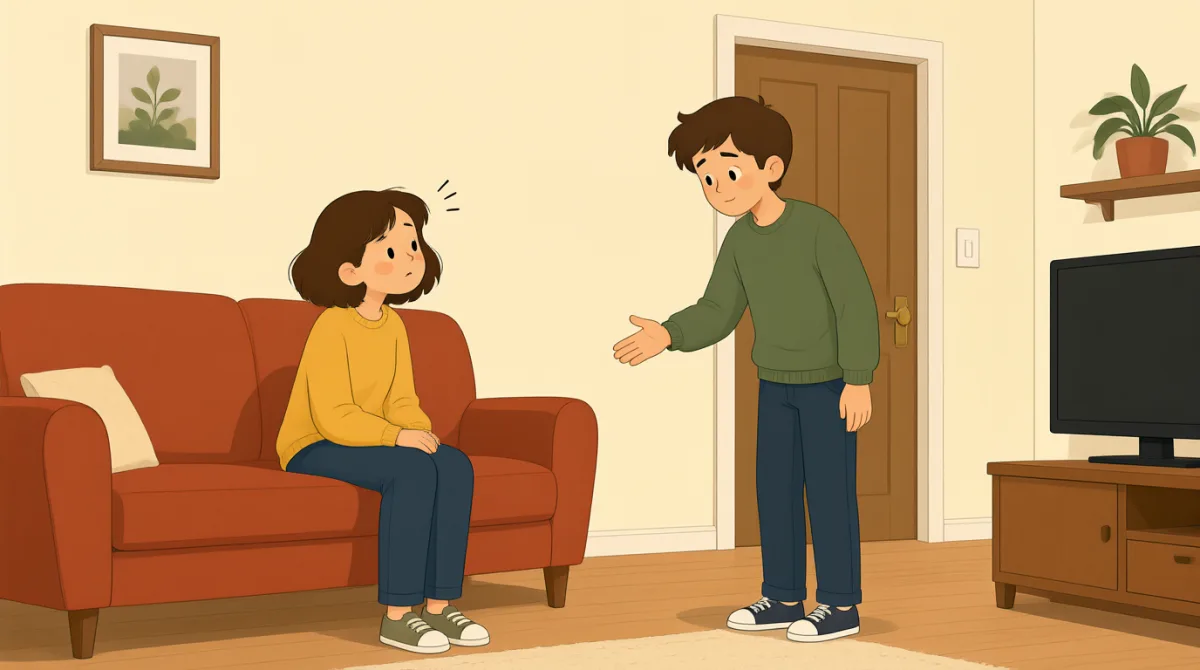

Emma, I want to start by saying I’m genuinely sorry I forgot our plans. You’d set aside the evening for us, and I didn’t show up or give you a heads-up.
एमा, मैं सबसे पहले यह कहना चाहता हूँ कि हमारी योजना भूल जाने के लिए मुझे सचमुच माफ़ कर दो। तुमने हमारे साथ समय बिताने के लिए पूरी शाम रखी थी, और न तो मैं आया, न ही तुम्हें पहले से बता पाया।

Thank you for saying that. It wasn’t just the change of plans; I was hurt that I waited and had no idea what was going on.
यह कहने के लिए शुक्रिया। बात सिर्फ़ योजना बदलने की नहीं थी; मुझे बुरा लगा कि मैं इंतज़ार करती रही और मुझे पता ही नहीं था कि क्या हो रहा है।
You’re right. I should have checked my calendar and let you know as soon as I realized I couldn’t make it. Instead, I left you hanging.
तुम सही कह रही हो। मुझे अपना कैलेंडर देख लेना चाहिए था और जैसे ही मुझे पता चला कि मैं नहीं आ पाऊँगा, तुम्हें बता देना चाहिए था। इसके बजाय, मैंने तुम्हें इंतज़ार में छोड़ दिया।
And when I brought it up, you got defensive. It felt like you were more focused on proving you had a reason than hearing how it affected me.
और जब मैंने इस बारे में बात की, तो तुम रक्षात्मक हो गए। ऐसा लगा कि तुम्हारा ध्यान यह साबित करने पर ज़्यादा था कि तुम्हारे पास कोई वजह थी, बजाय इसके कि तुम सुनते कि इसका मुझ पर क्या असर हुआ।
I did get defensive, and I’m sorry for that, too. I was embarrassed about messing up, but that doesn’t excuse turning the conversation into an argument.
मैं सच में रक्षात्मक हो गया था, और उसके लिए भी माफ़ी चाहता हूँ। अपनी गलती पर मुझे शर्मिंदगी हो रही थी, लेकिन इससे यह बहाना नहीं बनता कि मैंने बात को बहस में बदल दिया।
I appreciate you owning that. I wasn’t expecting you to be perfect; I just needed you to take my feelings seriously instead of brushing them aside.
मुझे अच्छा लगा कि तुमने अपनी गलती मानी। मुझे तुमसे परफ़ेक्ट होने की उम्मीद नहीं थी; बस इतना चाहती थी कि तुम मेरी भावनाओं को गंभीरता से लो, न कि उन्हें नज़रअंदाज़ करो।
I understand. If I’d been in your shoes, I’d probably have felt hurt and unimportant, too. I should have listened instead of pushing back.
मैं समझता हूँ। अगर मैं तुम्हारी जगह होता, तो शायद मुझे भी बुरा लगता और लगता कि मेरी कोई अहमियत नहीं है। मुझे उलटा जवाब देने के बजाय तुम्हारी बात सुननी चाहिए थी।
That means a lot. I’m still a little upset, but I’m glad we’re talking about what happened without taking another shot at each other.
यह सुनकर मेरे लिए बहुत मायने रखता है। मैं अब भी थोड़ी नाराज़ हूँ, लेकिन खुशी है कि हम एक-दूसरे पर फिर से ताने कसे बिना इस बारे में बात कर रहे हैं।
I don’t expect one apology to fix everything, but I do want to make this right. When you’re ready, I’d like to hear more about what the evening was like for you.
मुझे नहीं लगता कि एक माफ़ी से सब कुछ ठीक हो जाएगा, लेकिन मैं इस बात को सुधारना चाहता हूँ। जब तुम तैयार हो, तो मैं सुनना चाहूँगा कि वह शाम तुम्हारे लिए कैसी रही।
Okay. I’m willing to talk. Let’s take it one step at a time, and please don’t assume I’m over it just because I’m ready to listen.
ठीक है। मैं बात करने को तैयार हूँ। चलो, धीरे-धीरे आगे बढ़ते हैं, और कृपया यह मत मान लेना कि मैं अब इससे उबर गई हूँ, सिर्फ़ इसलिए कि मैं बात सुनने को तैयार हूँ।
शब्दावली8
- give you a heads-upपहले से बता देना
To give someone advance notice about a change or problem. Jack says he should have told Emma as soon as he knew he couldn’t make it.
किसी बदलाव या समस्या के बारे में पहले से सूचना देना। जैक कहता है कि जैसे ही उसे पता चला कि वह नहीं आ पाएगा, उसे एमा को बता देना चाहिए था।
- left you hangingइंतज़ार में छोड़ देना
To leave someone waiting without information or support. Here, Jack recognizes that Emma was left waiting and didn’t know what was happening.
किसी को बिना जानकारी या मदद के इंतज़ार करने देना। यहाँ जैक मानता है कि एमा इंतज़ार करती रही और उसे पता नहीं था कि क्या हो रहा है।
- got defensiveरक्षात्मक हो जाना
Reacted as if you needed to protect yourself from criticism, rather than listening openly. Jack admits he did this when Emma raised the issue.
खुलकर सुनने के बजाय इस तरह प्रतिक्रिया देना मानो आपको आलोचना से अपना बचाव करना हो। जैक मानता है कि एमा के बात उठाने पर उसने ऐसा किया।
- owning thatअपनी गलती मानना
Taking responsibility for something you did. Emma appreciates that Jack acknowledges his mistake instead of denying it.
अपने किए की ज़िम्मेदारी लेना। एमा को अच्छा लगता है कि जैक अपनी गलती नकारने के बजाय उसे स्वीकार करता है।
- in your shoesतुम्हारी जगह होना
In your situation, imagining how you might feel if the same thing happened to you. Jack uses the phrase to show empathy for Emma.
तुम्हारी स्थिति में होना और कल्पना करना कि वही बात तुम्हारे साथ होती तो तुम्हें कैसा लगता। जैक इस मुहावरे से एमा के प्रति सहानुभूति जताता है।
- pushing backउलटा जवाब देना
Resisting or arguing against what someone says. Jack says he should have listened rather than immediately resisting Emma’s feelings.
किसी की बात का विरोध करना या उससे बहस करना। जैक कहता है कि उसे एमा की भावनाओं का तुरंत विरोध करने के बजाय उसकी बात सुननी चाहिए थी।
- make this rightबात को सुधारना
To take action to fix a problem or make amends. Jack uses this phrase to show that he wants to do more than simply apologize.
किसी समस्या को ठीक करने या अपनी गलती की भरपाई करने के लिए कदम उठाना। जैक इस मुहावरे से दिखाता है कि वह सिर्फ़ माफ़ी माँगने से आगे बढ़कर कुछ करना चाहता है।
- one step at a timeधीरे-धीरे, एक कदम करके
Gradually, without rushing the process. Emma uses it to suggest they talk through the issue at a pace that feels comfortable.
बिना जल्दबाज़ी किए धीरे-धीरे आगे बढ़ना। एमा का मतलब है कि वे इस मुद्दे पर ऐसी रफ़्तार से बात करें जो दोनों को सहज लगे।
मुख्य वाक्य7
- 1
I want to start by saying I’m genuinely sorry I forgot our plans.
मैं सबसे पहले यह कहना चाहता हूँ कि हमारी योजना भूल जाने के लिए मुझे सचमुच माफ़ कर दो।
This is a sincere way to open an apology and name the specific mistake. You can reuse “I want to start by saying I’m genuinely sorry I…” before explaining what you regret.
माफ़ी की शुरुआत करने और अपनी खास गलती बताने का यह एक ईमानदार तरीका है। आप “I want to start by saying I’m genuinely sorry I…” को दोबारा इस्तेमाल करके बता सकते हैं कि आपको किस बात का पछतावा है।
- 2
You’re right. I should have checked my calendar and let you know as soon as I realized I couldn’t make it.
तुम सही कह रही हो। मुझे अपना कैलेंडर देख लेना चाहिए था और जैसे ही मुझे पता चला कि मैं नहीं आ पाऊँगा, तुम्हें बता देना चाहिए था।
This sentence accepts responsibility and explains what the speaker should have done differently. Use “I should have…” to acknowledge a better choice you missed in the past.
इस वाक्य में बोलने वाला ज़िम्मेदारी लेता है और बताता है कि उसे अलग तरह से क्या करना चाहिए था। बीती हुई किसी बात में बेहतर विकल्प को स्वीकार करने के लिए “I should have…” का इस्तेमाल करें।
- 3
I did get defensive, and I’m sorry for that, too.
मैं सच में रक्षात्मक हो गया था, और उसके लिए भी माफ़ी चाहता हूँ।
This directly apologizes for a reaction as well as for the original mistake. You can adapt “I did get [reaction], and I’m sorry for that, too” when taking responsibility for how you responded.
इसमें मूल गलती के साथ-साथ अपनी प्रतिक्रिया के लिए भी सीधे माफ़ी माँगी गई है। अपनी प्रतिक्रिया की ज़िम्मेदारी लेते समय “I did get [reaction], and I’m sorry for that, too” को अपनी स्थिति के अनुसार ढाल सकते हैं।
- 4
I wasn’t expecting you to be perfect; I just needed you to take my feelings seriously instead of brushing them aside.
मुझे तुमसे परफ़ेक्ट होने की उम्मीद नहीं थी; बस इतना चाहती थी कि तुम मेरी भावनाओं को गंभीरता से लो, न कि उन्हें नज़रअंदाज़ करो।
This clearly distinguishes between expecting perfection and asking for consideration. The structure “I wasn’t expecting X; I just needed Y” is useful for expressing what matters in a disagreement.
यह वाक्य परफ़ेक्ट होने की उम्मीद और संवेदनशीलता दिखाने की माँग के बीच साफ़ फ़र्क करता है। किसी मतभेद में अपनी ज़रूरत बताने के लिए “I wasn’t expecting X; I just needed Y” वाला ढाँचा काम आता है।
- 5
If I’d been in your shoes, I’d probably have felt hurt and unimportant, too.
अगर मैं तुम्हारी जगह होता, तो शायद मुझे भी बुरा लगता और लगता कि मेरी कोई अहमियत नहीं है।
This conditional shows empathy by imagining how the other person might have felt. Use “If I’d been in your shoes, I’d have…” to acknowledge someone’s perspective.
यह काल्पनिक स्थिति दूसरे व्यक्ति की भावनाओं की कल्पना करके सहानुभूति जताती है। किसी का नज़रिया समझने की बात कहने के लिए “If I’d been in your shoes, I’d have…” का इस्तेमाल करें।
- 6
I don’t expect one apology to fix everything, but I do want to make this right.
मुझे नहीं लगता कि एक माफ़ी से सब कुछ ठीक हो जाएगा, लेकिन मैं इस बात को सुधारना चाहता हूँ।
This recognizes that rebuilding trust may take time while showing a willingness to act. The pattern “I don’t expect X, but I do want to Y” helps balance realistic expectations with commitment.
यह मानता है कि भरोसा दोबारा बनाने में समय लग सकता है, और साथ ही कुछ करने की इच्छा भी जताता है। वास्तविक उम्मीदों और प्रतिबद्धता के बीच संतुलन बनाने के लिए “I don’t expect X, but I do want to Y” वाला ढाँचा उपयोगी है।
- 7
Let’s take it one step at a time, and please don’t assume I’m over it just because I’m ready to listen.
चलो, धीरे-धीरे आगे बढ़ते हैं, और कृपया यह मत मान लेना कि मैं अब इससे उबर गई हूँ, सिर्फ़ इसलिए कि मैं बात सुनने को तैयार हूँ।
This sets a gentle boundary and asks the other person not to mistake willingness to talk for complete forgiveness. You can use “Please don’t assume…” to clarify what someone’s actions do not necessarily mean.
यह नरमी से एक सीमा तय करता है और सामने वाले से कहता है कि बात करने की इच्छा को पूरी तरह माफ़ कर देने का संकेत न समझे। यह स्पष्ट करने के लिए कि किसी का व्यवहार ज़रूरी नहीं कि क्या मतलब रखता हो, “Please don’t assume…” का इस्तेमाल कर सकते हैं।