Taking Time to Cool Down
落ち着く時間を取る
After the argument, Emma and Jack agree to take some time apart rather than say things they might regret. Later, Jack checks in and asks whether Emma is ready to talk.
口論のあと、エマとジャックは後悔するようなことを言ってしまわないよう、少し距離を置くことにする。後日、ジャックはエマに連絡し、話す準備ができたか尋ねる。
会話11
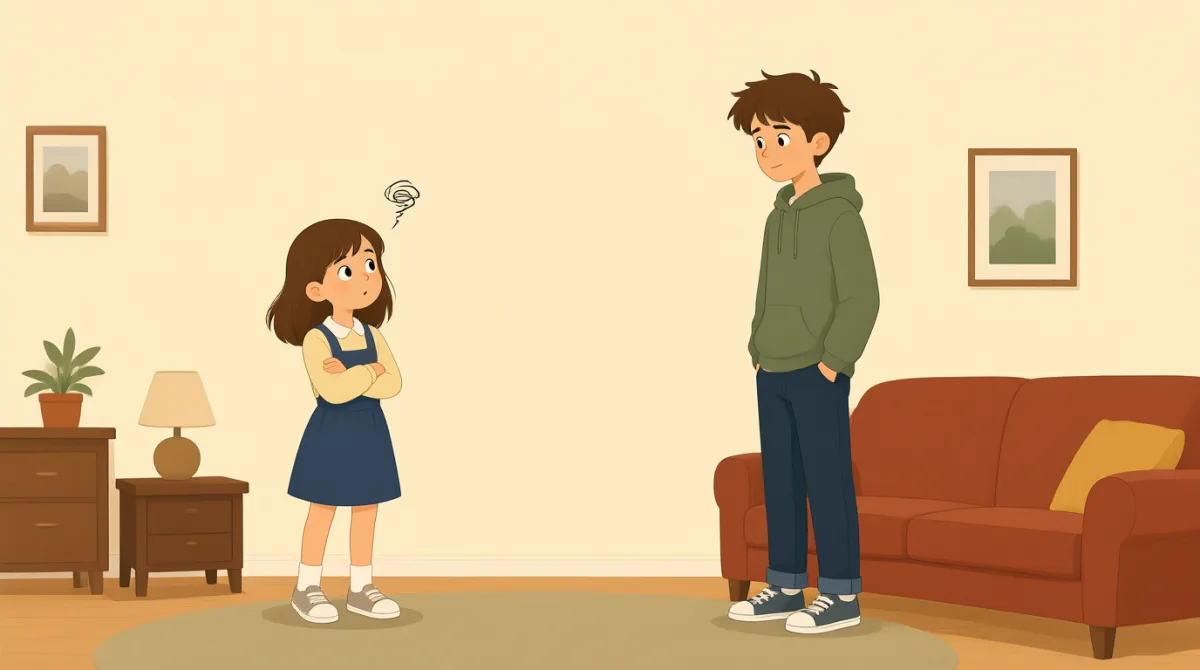

Hey, Emma. I know we said we’d give each other some space, so there’s no pressure to reply right away. I just wanted to check in.
やあ、エマ。お互い少し距離を置こうって話したよね。だから、すぐに返事しなくても大丈夫だよ。どうしてるかなと思って連絡しただけ。

Thanks for checking in. I’ve had some time to cool down, but I’m still feeling hurt. I think I’m ready to talk, as long as we take it slowly.
連絡してくれてありがとう。少し時間がたって落ち着いたけど、まだ傷ついてる。ゆっくり話せるなら、話す準備はできてると思う。
Absolutely. We don’t have to sort everything out tonight. I’d rather listen properly than jump in and get defensive again.
もちろん。今夜、全部解決しなくてもいいよ。すぐ口を挟んでまたむきになっちゃうより、ちゃんと話を聞きたいんだ。
That would help. When we argued, I felt like we were both trying to win instead of understand what the other person was saying.
そうしてくれると助かる。言い合いになったとき、お互い相手の言ってることを理解するより、勝つことに必死だった気がする。
I can see that. I got caught up in explaining myself, and the more I talked, the less I seemed to hear you. I’m sorry for that.
確かにそうだね。自分のことを説明するのに夢中になって、話せば話すほど、君の話を聞けてなかったと思う。ごめん。
I appreciate you saying that. I don’t want us to brush it under the rug, but I also don’t want to go over every sharp thing we said right now.
そう言ってくれてうれしい。なかったことにしたいわけじゃないけど、今すぐお互いが言ったきつい言葉を一つ一つ蒸し返したいわけでもないんだ。
That makes sense. We can pause if either of us starts getting worked up. Would you rather talk here, or take a walk somewhere quiet?
それもそうだね。どちらかが感情的になりそうになったら、いったん休憩しよう。ここで話すのと、静かなところを散歩しながら話すの、どっちがいい?
A walk sounds good. I think I’ll be able to explain myself better if we’re not sitting across from each other like we’re in a formal meeting.
散歩がいいな。会議みたいに向かい合って座ってないほうが、自分の気持ちをうまく説明できそう。
Fair enough. We can keep it low-key and just talk for a little while. If it feels like too much, we can call it for tonight and pick it up later.
そうしよう。気楽に、少しだけ話せばいいよ。しんどくなったら今夜はいったん切り上げて、またあとで続きを話そう。
Okay. I’m not promising we’ll settle everything on this walk, but I’m willing to hear you out and tell you how I’ve been feeling.
わかった。この散歩で全部解決するって約束はできないけど、あなたの話を最後まで聞くし、自分がどう感じてきたかも伝えたい。
That’s all I’m asking for. Thanks for giving me a chance to talk, Emma. Let’s take it one step at a time.
それだけで十分だよ。話す機会をくれてありがとう、エマ。一歩ずつ進めていこう。
語彙7
- give each other some spaceお互いに少し距離を置く
To spend some time apart so both people can calm down. It can help prevent an argument from getting worse.
二人が落ち着けるように、しばらく別々に過ごすことです。口論がさらにひどくなるのを防ぐのに役立ちます。
- cool down落ち着く
To become calmer after feeling angry or upset. Here, Emma has had time to process her feelings before talking.
怒ったり動揺したりしたあと、冷静になることです。この場面では、エマは話す前に自分の気持ちを整理する時間を取っています。
- get defensiveむきになる
To react as if you are being attacked, often by making excuses or arguing back. You can use this phrase to describe a response that makes a difficult conversation harder.
攻撃されているように感じて反応することです。言い訳をしたり、言い返したりする場合によく使います。難しい話し合いをさらにこじらせるような反応を表すときに便利な表現です。
- brush it under the rug問題をうやむやにする
To avoid discussing a problem instead of dealing with it. It is often used when an issue may come back later if it is ignored.
問題に向き合わず、話し合いを避けることです。問題を放っておくと、あとでまた持ち上がる可能性があるときによく使います。
- keep it low-key気楽な雰囲気にする
To make something relaxed and informal, without too much intensity or attention. Here, it means having a calm, casual conversation.
気負いや緊張、注目を避けて、リラックスしたくだけた雰囲気にすることです。この場面では、落ち着いて気軽に話すという意味です。
- hear you out話を最後まで聞く
To listen to someone fully before judging or responding. It is useful when you want to show that you are open to understanding another person's point of view.
判断したり返事をしたりする前に、相手の話をしっかり聞くことです。相手の見方を理解しようとしていると伝えたいときに便利です。
- one step at a time一歩ずつ
To deal with something gradually instead of trying to solve everything at once. It can reassure someone during a difficult or complicated process.
一度にすべて解決しようとせず、少しずつ対処することです。難しいことや複雑なことに取り組むとき、相手を安心させるのに役立ちます。
重要な文8
- 1
I’ve had some time to cool down, but I’m still feeling hurt.
少し時間がたって落ち着いたけど、まだ傷ついてる。
This sentence shows that you are calmer but still have difficult feelings. You can reuse the pattern “I’ve had some time to [verb], but I’m still…” to describe mixed emotions.
この文では、少し冷静になったものの、まだつらい気持ちが残っていることを伝えています。「I’ve had some time to [verb], but I’m still…」という形を使うと、入り混じった気持ちを表せます。
- 2
I think I’m ready to talk, as long as we take it slowly.
ゆっくり話せるなら、話す準備はできてると思う。
This is a considerate way to agree to a conversation while setting a condition. Replace “take it slowly” with another request, such as “keep it brief” or “talk somewhere quiet.”
話し合いに応じながら、条件も伝える思いやりのある言い方です。「take it slowly」を「keep it brief(手短に話す)」や「talk somewhere quiet(静かな場所で話す)」などに変えて使えます。
- 3
I’d rather listen properly than jump in and get defensive again.
すぐ口を挟んでまたむきになっちゃうより、ちゃんと話を聞きたいんだ。
This sentence expresses a preference and recognizes a past behavior you want to change. The structure “I’d rather [action] than [action]” is useful for explaining how you want to handle a situation.
自分の希望を伝えながら、改めたい過去の行動にも触れている文です。「I’d rather [action] than [action]」という形は、ある状況でどう対応したいかを説明するのに便利です。
- 4
I don’t want us to brush it under the rug, but I also don’t want to go over every sharp thing we said right now.
なかったことにしたいわけじゃないけど、今すぐお互いが言ったきつい言葉を一つ一つ蒸し返したいわけでもないんだ。
This balances the need to address a problem with the need to avoid discussing it all immediately. You can reuse “I don’t want to…, but I also don’t want to…” to explain two competing concerns.
問題に向き合う必要性と、すべてを今すぐ話し合うのは避けたいという気持ちの両方を表しています。「I don’t want to…, but I also don’t want to…」を使うと、相反する二つの懸念を説明できます。
- 5
We can pause if either of us starts getting worked up.
どちらかが感情的になりそうになったら、いったん休憩しよう。
This suggests a practical boundary for keeping a conversation calm. The pattern “We can [action] if either of us…” can help both people agree on a plan.
話し合いを冷静に保つための、現実的な約束を提案しています。「We can [action] if either of us…」という形を使うと、二人で対応策を決めるのに役立ちます。
- 6
If it feels like too much, we can call it for tonight and pick it up later.
しんどくなったら今夜はいったん切り上げて、またあとで続きを話そう。
This offers a way to stop a difficult conversation without giving up on it. “Call it for tonight” means stop for now, while “pick it up later” means continue at another time.
難しい話し合いを諦めずに、いったん終える方法を提案しています。「Call it for tonight」は今夜はここまでにするという意味で、「pick it up later」はまたあとで続きをするという意味です。
- 7
I’m not promising we’ll settle everything on this walk, but I’m willing to hear you out and tell you how I’ve been feeling.
この散歩で全部解決するって約束はできないけど、あなたの話を最後まで聞くし、自分がどう感じてきたかも伝えたい。
This manages expectations while showing openness to a conversation. You can use “I’m not promising…, but I’m willing to…” to set a realistic limit and still show cooperation.
話し合いに前向きな姿勢を見せながら、期待を調整する言い方です。「I’m not promising…, but I’m willing to…」を使うと、現実的な限界を伝えつつ、協力する気持ちも示せます。
- 8
Let’s take it one step at a time.
一歩ずつ進めていこう。
This encourages people to handle a situation gradually. It works well when a problem feels complicated or emotionally overwhelming.
物事に少しずつ取り組もうと促す表現です。問題が複雑だったり、気持ちの負担が大きかったりするときにぴったりです。