Starting With a Sincere Apology
진심 어린 사과로 시작하기
Jack apologizes for forgetting their plans and for getting defensive when Emma raised the issue. He makes it clear that he understands why his actions upset her.
잭은 약속을 잊은 것과 에마가 그 일을 꺼냈을 때 방어적으로 반응한 것에 대해 사과해요. 자신의 행동 때문에 에마가 왜 속상했는지 이해한다는 점을 분명히 전해요.
대화10
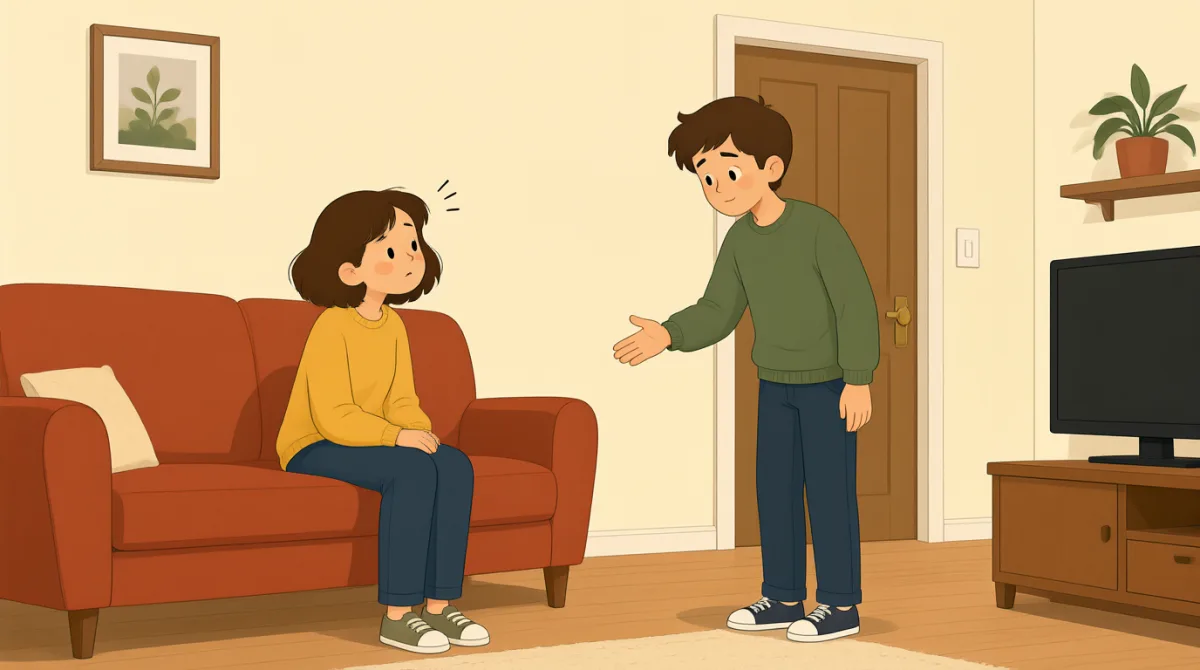

Emma, I want to start by saying I’m genuinely sorry I forgot our plans. You’d set aside the evening for us, and I didn’t show up or give you a heads-up.
에마, 먼저 우리 약속을 잊은 거 정말 미안하다고 말하고 싶어. 너는 우리랑 함께 보내려고 저녁 시간을 비워 뒀는데, 난 나타나지도 않고 미리 연락도 안 했잖아.

Thank you for saying that. It wasn’t just the change of plans; I was hurt that I waited and had no idea what was going on.
그렇게 말해줘서 고마워. 단순히 계획이 바뀐 것만 문제가 아니었어. 기다리면서 무슨 일인지 전혀 몰랐던 게 속상했어.
You’re right. I should have checked my calendar and let you know as soon as I realized I couldn’t make it. Instead, I left you hanging.
네 말이 맞아. 달력을 확인하고 못 갈 것 같다는 걸 알았을 때 바로 알려줬어야 했어. 그런데 널 그냥 기다리게 했네.
And when I brought it up, you got defensive. It felt like you were more focused on proving you had a reason than hearing how it affected me.
그리고 내가 그 얘기를 꺼냈을 때 넌 방어적으로 나왔어. 내 기분이 어땠는지 듣기보다는 네게 그럴 만한 이유가 있었다는 걸 증명하는 데 더 신경 쓰는 것 같았어.
I did get defensive, and I’m sorry for that, too. I was embarrassed about messing up, but that doesn’t excuse turning the conversation into an argument.
내가 방어적으로 반응한 거 맞아. 그것도 미안해. 실수한 게 창피했지만, 그렇다고 대화를 말다툼으로 만든 게 정당화되는 건 아니야.
I appreciate you owning that. I wasn’t expecting you to be perfect; I just needed you to take my feelings seriously instead of brushing them aside.
그 점을 인정해줘서 고마워. 네가 완벽하길 바란 건 아니야. 내 감정을 대수롭지 않게 넘기지 말고 진지하게 받아들여 주길 바랐어.
I understand. If I’d been in your shoes, I’d probably have felt hurt and unimportant, too. I should have listened instead of pushing back.
이해해. 내가 네 입장이었어도 아마 속상하고 중요하지 않은 사람처럼 느꼈을 거야. 반박하기보다 네 말을 들었어야 했어.
That means a lot. I’m still a little upset, but I’m glad we’re talking about what happened without taking another shot at each other.
그 말 들으니 정말 고마워. 아직 조금 속상하긴 하지만, 서로 또 상처 주지 않으면서 있었던 일을 이야기하고 있어서 다행이야.
I don’t expect one apology to fix everything, but I do want to make this right. When you’re ready, I’d like to hear more about what the evening was like for you.
사과 한 번으로 모든 게 해결될 거라고 생각하진 않아. 그래도 이 일을 바로잡고 싶어. 네가 괜찮아지면 그날 저녁 네가 어땠는지 더 듣고 싶어.
Okay. I’m willing to talk. Let’s take it one step at a time, and please don’t assume I’m over it just because I’m ready to listen.
알겠어. 나도 이야기할 마음은 있어. 서두르지 말고 한 번에 한 걸음씩 해보자. 그리고 내가 들을 준비가 됐다고 해서 다 괜찮아졌다고 생각하진 말아줘.
어휘8
- give you a heads-up미리 알려주다
To give someone advance notice about a change or problem. Jack says he should have told Emma as soon as he knew he couldn’t make it.
변경 사항이나 문제가 생겼을 때 미리 알려주는 거예요. 여기서 잭은 갈 수 없다는 걸 알았을 때 바로 에마에게 말했어야 한다고 해요.
- left you hanging기다리게만 해놓다
To leave someone waiting without information or support. Here, Jack recognizes that Emma was left waiting and didn’t know what was happening.
아무런 정보나 도움도 주지 않은 채 누군가를 기다리게 하는 거예요. 여기서 잭은 에마가 무슨 일인지 모른 채 기다리게 됐다는 점을 인정해요.
- got defensive방어적으로 반응하다
Reacted as if you needed to protect yourself from criticism, rather than listening openly. Jack admits he did this when Emma raised the issue.
상대의 말을 열린 마음으로 듣기보다 비판에 맞서 자신을 지키려는 듯 반응하는 거예요. 잭은 에마가 그 문제를 꺼냈을 때 자신이 그렇게 반응했다고 인정해요.
- owning that그 점을 인정하는 것
Taking responsibility for something you did. Emma appreciates that Jack acknowledges his mistake instead of denying it.
자신이 한 일에 책임을 지는 거예요. 에마는 잭이 실수를 부정하지 않고 인정해줘서 고마워해요.
- in your shoes네 입장이라면
In your situation, imagining how you might feel if the same thing happened to you. Jack uses the phrase to show empathy for Emma.
네가 처한 상황에 자신을 놓고, 같은 일이 자신에게 일어났다면 어떤 기분이었을지 생각하는 거예요. 잭은 이 표현으로 에마의 마음을 이해한다는 걸 보여줘요.
- pushing back반박하다
Resisting or arguing against what someone says. Jack says he should have listened rather than immediately resisting Emma’s feelings.
상대의 말에 맞서거나 동의하지 않는 거예요. 잭은 에마의 감정에 바로 반박하기보다 먼저 들었어야 했다고 말해요.
- make this right이 일을 바로잡다
To take action to fix a problem or make amends. Jack uses this phrase to show that he wants to do more than simply apologize.
문제를 해결하거나 잘못을 만회하기 위해 행동하는 거예요. 잭은 단순히 사과하는 데서 그치지 않고 실제로 뭔가 하고 싶다는 뜻으로 이 표현을 써요.
- one step at a time한 번에 한 걸음씩
Gradually, without rushing the process. Emma uses it to suggest they talk through the issue at a pace that feels comfortable.
서두르지 않고 차근차근 진행한다는 뜻이에요. 에마는 두 사람이 편안하게 느끼는 속도로 문제를 이야기하자고 제안해요.
핵심 문장7
- 1
I want to start by saying I’m genuinely sorry I forgot our plans.
먼저 우리 약속을 잊은 거 정말 미안하다고 말하고 싶어.
This is a sincere way to open an apology and name the specific mistake. You can reuse “I want to start by saying I’m genuinely sorry I…” before explaining what you regret.
사과를 진심 어린 말로 시작하면서 구체적으로 어떤 실수를 했는지 밝힐 때 쓰는 표현이에요. 후회하는 일을 설명하기 전에 “I want to start by saying I’m genuinely sorry I…”라고 말해보세요.
- 2
You’re right. I should have checked my calendar and let you know as soon as I realized I couldn’t make it.
네 말이 맞아. 달력을 확인하고 못 갈 것 같다는 걸 알았을 때 바로 알려줬어야 했어.
This sentence accepts responsibility and explains what the speaker should have done differently. Use “I should have…” to acknowledge a better choice you missed in the past.
이 문장은 책임을 인정하고 자신이 어떻게 다르게 행동했어야 했는지 설명해요. 과거에 더 나은 선택을 할 수 있었음을 인정할 때 “I should have…”를 써보세요.
- 3
I did get defensive, and I’m sorry for that, too.
내가 방어적으로 반응한 거 맞아. 그것도 미안해.
This directly apologizes for a reaction as well as for the original mistake. You can adapt “I did get [reaction], and I’m sorry for that, too” when taking responsibility for how you responded.
처음의 실수뿐 아니라 그에 대한 반응도 직접 사과하는 표현이에요. 자신의 반응에 책임을 질 때 “I did get [reaction], and I’m sorry for that, too”를 상황에 맞게 바꿔 써보세요.
- 4
I wasn’t expecting you to be perfect; I just needed you to take my feelings seriously instead of brushing them aside.
네가 완벽하길 바란 건 아니야. 내 감정을 대수롭지 않게 넘기지 말고 진지하게 받아들여 주길 바랐어.
This clearly distinguishes between expecting perfection and asking for consideration. The structure “I wasn’t expecting X; I just needed Y” is useful for expressing what matters in a disagreement.
완벽함을 기대하는 것과 상대의 감정을 배려해 달라고 하는 것은 다르다는 점을 분명히 해요. 의견이 다를 때 무엇이 중요한지 표현하려면 “I wasn’t expecting X; I just needed Y”라는 구조를 활용해 보세요.
- 5
If I’d been in your shoes, I’d probably have felt hurt and unimportant, too.
내가 네 입장이었어도 아마 속상하고 중요하지 않은 사람처럼 느꼈을 거야.
This conditional shows empathy by imagining how the other person might have felt. Use “If I’d been in your shoes, I’d have…” to acknowledge someone’s perspective.
상대의 입장에서 어떤 기분이었을지 상상하며 공감을 나타내는 가정 표현이에요. 상대의 관점을 이해한다는 뜻을 전할 때 “If I’d been in your shoes, I’d have…”를 써보세요.
- 6
I don’t expect one apology to fix everything, but I do want to make this right.
사과 한 번으로 모든 게 해결될 거라고 생각하진 않아. 그래도 이 일을 바로잡고 싶어.
This recognizes that rebuilding trust may take time while showing a willingness to act. The pattern “I don’t expect X, but I do want to Y” helps balance realistic expectations with commitment.
신뢰를 회복하는 데 시간이 걸릴 수 있음을 인정하면서도 행동으로 옮기겠다는 의지를 보여줘요. 현실적인 기대와 의지를 함께 전하려면 “I don’t expect X, but I do want to Y”라는 패턴을 써보세요.
- 7
Let’s take it one step at a time, and please don’t assume I’m over it just because I’m ready to listen.
서두르지 말고 한 번에 한 걸음씩 해보자. 그리고 내가 들을 준비가 됐다고 해서 다 괜찮아졌다고 생각하진 말아줘.
This sets a gentle boundary and asks the other person not to mistake willingness to talk for complete forgiveness. You can use “Please don’t assume…” to clarify what someone’s actions do not necessarily mean.
부드럽게 선을 긋고, 대화할 의향이 있다는 것을 완전히 용서했다는 뜻으로 받아들이지 말아 달라고 해요. 어떤 행동이 반드시 무엇을 의미하는 것은 아니라고 분명히 할 때 “Please don’t assume…”를 활용해 보세요.