Agreeing on a Better Way Forward
これからのよりよい関係のために合意する
Emma and Jack agree to confirm important plans and let each other know as early as possible if something changes. They talk about how to bring up frustrations before they build into another argument.
エマとジャックは、大切な予定は確認し合い、変更があればできるだけ早く伝えることにする。次の口論に発展する前に、不満をどう切り出すかについても話し合う。
会話10
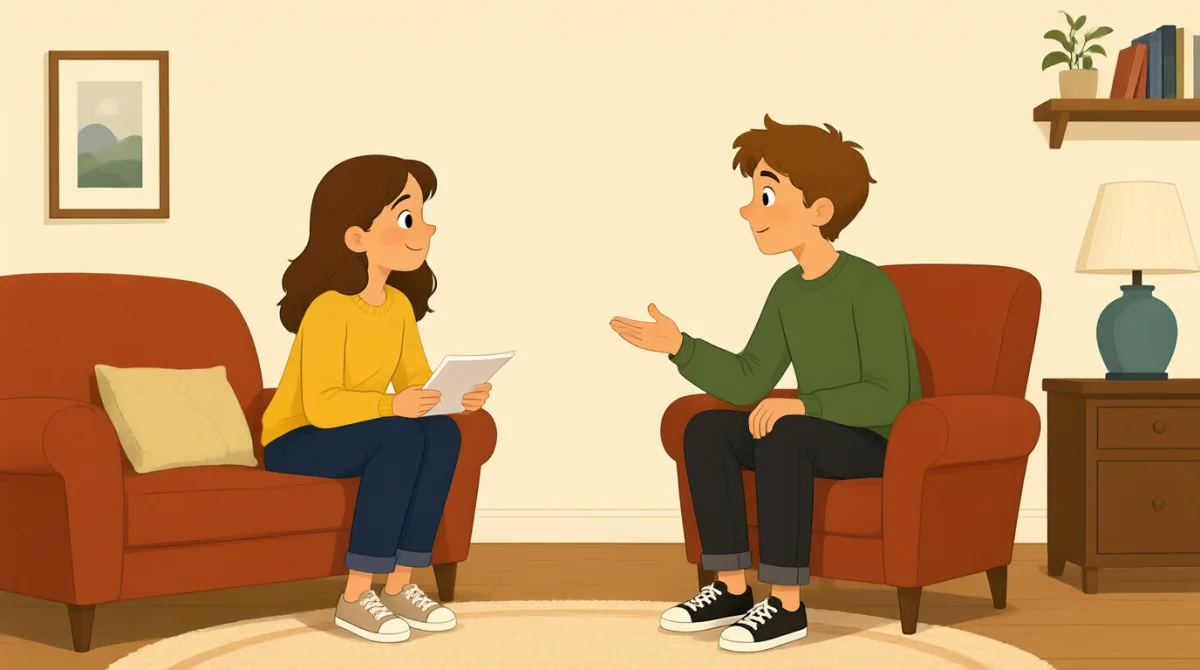

I’m glad we’re talking about what to do differently. I don’t want us to keep revisiting the argument every time one of us feels let down.
これからどう変えていくか話せてよかった。どちらかががっかりするたびに、同じ口論を何度も蒸し返すのは嫌なんだ。

Me neither. Could we agree to confirm plans that really matter, maybe the day before? That way, we can catch a misunderstanding before it turns into a missed evening.
俺もそう思う。大事な予定は、前日とかに確認し合うことにしない? そうすれば、夜の予定が台なしになる前に、勘違いに気づけるかもしれない。
That sounds reasonable. And if something changes, I’d rather hear about it as soon as you know, even if you’re still figuring out the details.
それはいいと思う。それから、何か変更があったら、詳細がまだ決まってなくても、分かった時点ですぐに教えてほしいな。
I can do that. I sometimes put off sending a message because I think I need a complete solution first, but I can see how that leaves you in the dark.
そうするよ。ちゃんと解決策が見つかってからじゃないと、と思ってメッセージを送るのを先延ばしにすることがあるんだ。でも、それだと君を何も分からないままにしてしまうんだね。
And I’ll try to bring things up earlier, before I’ve been sitting with them for hours. I don’t want frustration to build until it comes out sharper than I mean it to.
私も、何時間も抱え込む前に、もっと早く話を切り出すようにするね。イライラがたまって、言いたいこと以上にきつい言い方になっちゃうのは嫌だから。
That would help. Maybe we can say, “Something’s bothering me—can we talk about it?” That feels less like an accusation and more like an invitation to sort it out.
そうしてくれると助かる。「ちょっと気になることがあるんだけど、話せる?」って言うのはどうかな。責めてる感じじゃなくて、一緒に解決しようって誘ってる感じがする。
I like that. And if one of us isn’t ready to talk right away, we can say so and suggest a time to come back to it, instead of just going quiet.
それいいね。それに、どちらかがすぐには話せないときは、そう伝えて、また話す時間を決めればいいよね。黙り込むんじゃなくて。
Agreed. I don’t expect us to get everything right, but I want us to be more upfront and give each other the benefit of the doubt when we can.
そうしよう。何もかも完璧にできるとは思ってないけど、もっと率直に話して、できるだけお互いに悪く受け取らないようにしたい。
I want that too. Let’s try these things and check in after a few weeks to see whether they’re working for both of us.
私もそうしたい。これを試してみて、何週間かしたら、お互いにうまくいってるか話し合おう。
Deal. And if I forget to confirm, you can remind me without having to soften it into a hint. I’ll do my best to listen instead of getting defensive.
そうしよう。俺が確認するのを忘れたら、遠回しにほのめかさなくても、はっきり言ってくれていいよ。言い訳したりムキになったりせず、ちゃんと聞くようにする。
語彙5
- keep revisiting the argument同じ口論を何度も蒸し返す
To keep bringing up the same disagreement again and again. It suggests the speakers want to resolve the issue rather than repeatedly return to it.
同じ意見の食い違いを何度も話題にすることです。何度も蒸し返すのではなく、問題を解決したいという気持ちが表れています。
- confirm plans予定を確認する
To check and make sure an arrangement is still happening. You can use this phrase when agreeing on plans that are important to you.
決めた予定が今もそのとおりに行われるか、確かめることです。自分にとって大切な予定について話し合うときに使えます。
- bring things up話を切り出す
To start talking about a subject, especially a concern or problem. You can bring something up early to discuss it before it becomes more serious.
ある話題について話し始めることです。特に、心配事や問題を話し始めるときに使います。深刻になる前に早めに話を切り出すこともできます。
- build until it comes out sharper than I mean it to不満がたまって、思った以上にきつい言い方になってしまう
To grow stronger over time and eventually come out in a harsher way than intended. This phrase describes how unspoken frustration can affect the way someone speaks.
時間がたつにつれて気持ちが強まり、意図したよりもきつい言い方で表に出てしまうことです。口に出さずにいた不満が、話し方に影響する様子を表します。
- give each other the benefit of the doubtお互いに悪く受け取らない
To assume that someone had good intentions rather than immediately thinking the worst. This can help people respond more generously when something goes wrong.
すぐに相手を悪く考えるのではなく、相手にはよい意図があったと思うことです。何かうまくいかなかったときも、相手に寛大な気持ちで接しやすくなります。
重要な文8
- 1
Could we agree to confirm plans that really matter, maybe the day before?
大事な予定は、前日とかに確認し合うことにしない?
This is a polite way to suggest a practical agreement. Reuse “Could we agree to…” when you want to propose a shared routine or expectation.
実際にできそうな約束を提案するときの、丁寧な言い方です。共通の習慣やルールを提案するときは、“Could we agree to…”(〜することにしない?)を使ってみましょう。
- 2
And if something changes, I’d rather hear about it as soon as you know, even if you’re still figuring out the details.
それから、何か変更があったら、詳細がまだ決まってなくても、分かった時点ですぐに教えてほしいな。
This clearly explains what kind of update would help and allows for uncertainty. Reuse “I’d rather hear about it…” to express a communication preference.
どんな連絡があると助かるかをはっきり伝えつつ、まだ分からないことがあるのも認めています。連絡の希望を伝えるときは、“I’d rather hear about it…”(〜のほうがいいな)を使ってみましょう。
- 3
I sometimes put off sending a message because I think I need a complete solution first, but I can see how that leaves you in the dark.
ちゃんと解決策が見つかってからじゃないと、と思ってメッセージを送るのを先延ばしにすることがあるんだ。でも、それだと君を何も分からないままにしてしまうんだね。
This sentence explains a habit, acknowledges its effect on another person, and shows understanding. It is useful for taking responsibility without making excuses.
自分の習慣を説明し、それが相手に与える影響を認め、理解を示す文です。言い訳をせずに、自分の責任を引き受けたいときに役立ちます。
- 4
And I’ll try to bring things up earlier, before I’ve been sitting with them for hours.
それから、何時間も抱え込む前に、もっと早く話を切り出すようにするね。
This is a constructive way to commit to changing a behavior. Reuse “I’ll try to… earlier” when you want to discuss how you will handle a problem differently.
行動を変える意思を前向きに伝える言い方です。問題への対処をどう変えるか話したいときは、“I’ll try to… earlier”を使ってみましょう。
- 5
Maybe we can say, “Something’s bothering me—can we talk about it?”
「ちょっと気になることがあるんだけど、話せる?」って言うのはどうかな。
This offers a direct but non-accusatory way to start a difficult conversation. You can use the question to raise a concern while inviting the other person to talk.
難しい話を、率直でありながら相手を責めずに始める言い方を提案しています。心配事を伝えながら、相手にも話し合いを促したいときに使えます。
- 6
And if one of us isn’t ready to talk right away, we can say so and suggest a time to come back to it, instead of just going quiet.
それに、どちらかがすぐには話せないときは、そう伝えて、また話す時間を決めればいいよね。黙り込むんじゃなくて。
This sentence sets a considerate boundary while keeping the conversation open. Reuse “suggest a time to come back to it” when you need a pause but still want to resolve an issue.
相手を思いやりながら、会話を続けられる余地も残す言い方です。少し時間を置きたいけれど、問題は解決したいときに、“suggest a time to come back to it”(また話す時間を提案する)を使ってみましょう。
- 7
I don’t expect us to get everything right, but I want us to be more upfront and give each other the benefit of the doubt when we can.
何もかも完璧にできるとは思ってないけど、もっと率直に話して、できるだけお互いに悪く受け取らないようにしたい。
This balances realistic expectations with a clear goal for the relationship. It is useful when agreeing to improve communication without expecting perfection.
現実的な期待と、関係をよくするための目標をうまく両立させています。完璧を求めずに、コミュニケーションを改善する約束をしたいときに役立ちます。
- 8
Let’s try these things and check in after a few weeks to see whether they’re working for both of us.
これを試してみて、何週間かしたら、お互いにうまくいってるか話し合おう。
This proposes a practical follow-up and makes the agreement something both people can review. Reuse “check in after…” when you want to revisit a plan after some time.
実際的な振り返りの機会を提案し、二人で約束を見直せるようにしています。しばらくたってから計画を見直したいときは、“check in after…”(〜のあとに様子を話し合う)を使ってみましょう。