Starting With a Sincere Apology
从真诚道歉开始
Jack apologizes for forgetting their plans and for getting defensive when Emma raised the issue. He makes it clear that he understands why his actions upset her.
Jack为忘记约定以及Emma提起此事时自己表现得防备而道歉。他明确表示自己理解为什么这些行为让她难过。
对话10
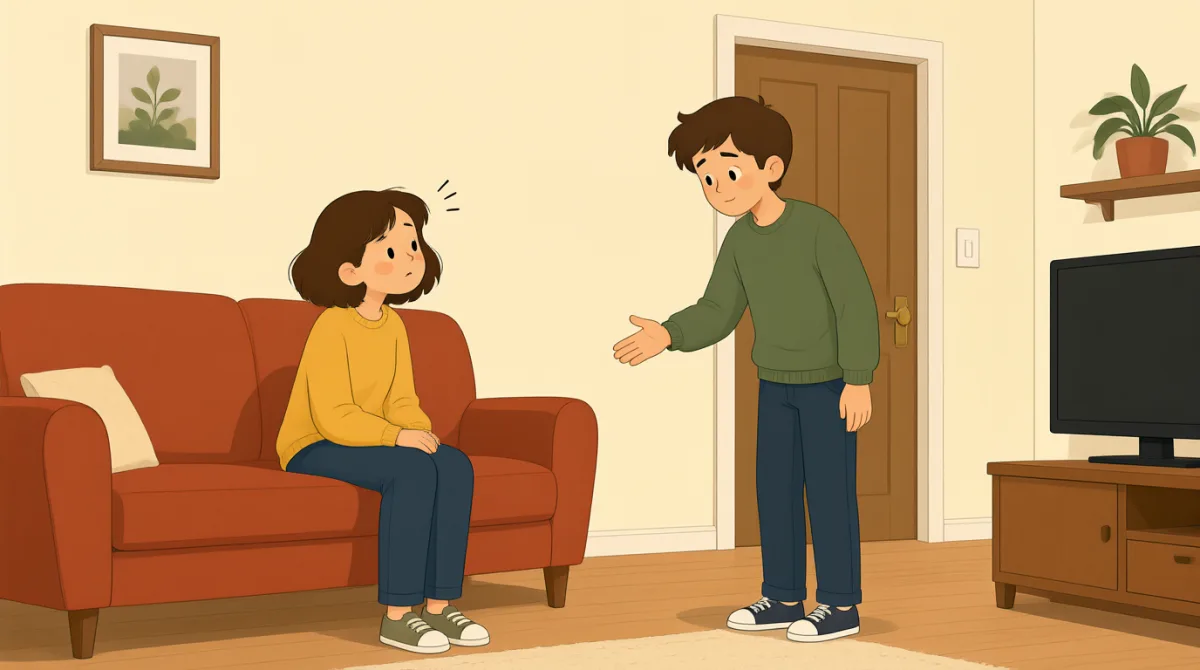

Emma, I want to start by saying I’m genuinely sorry I forgot our plans. You’d set aside the evening for us, and I didn’t show up or give you a heads-up.
Emma,我想先认真地向你道歉。我忘了我们的约定。你特意留出那个晚上和我在一起,而我既没出现,也没提前告诉你。

Thank you for saying that. It wasn’t just the change of plans; I was hurt that I waited and had no idea what was going on.
谢谢你这么说。让我难过的不只是计划有变,而是我一直在等,却完全不知道发生了什么。
You’re right. I should have checked my calendar and let you know as soon as I realized I couldn’t make it. Instead, I left you hanging.
你说得对。我本该查看日程,一发现自己赶不过来就马上告诉你。可我却让你一直干等。
And when I brought it up, you got defensive. It felt like you were more focused on proving you had a reason than hearing how it affected me.
而且我提起这件事时,你立刻就开始辩解。那让我觉得,你更在意证明自己有理由,而不是听听这件事对我的影响。
I did get defensive, and I’m sorry for that, too. I was embarrassed about messing up, but that doesn’t excuse turning the conversation into an argument.
我确实开始辩解了,这一点我也向你道歉。我因为自己搞砸了而感到难堪,但这不能成为把谈话变成争吵的借口。
I appreciate you owning that. I wasn’t expecting you to be perfect; I just needed you to take my feelings seriously instead of brushing them aside.
谢谢你愿意承认这一点。我并没有指望你事事完美;我只是希望你认真对待我的感受,而不是把它们一笔带过。
I understand. If I’d been in your shoes, I’d probably have felt hurt and unimportant, too. I should have listened instead of pushing back.
我明白。如果换作是我,大概也会觉得受伤,觉得自己不重要。我本该先听你说,而不是马上反驳。
That means a lot. I’m still a little upset, but I’m glad we’re talking about what happened without taking another shot at each other.
你这么说对我很重要。我现在还是有点难受,但很高兴我们能好好谈谈这件事,而不是再互相挖苦。
I don’t expect one apology to fix everything, but I do want to make this right. When you’re ready, I’d like to hear more about what the evening was like for you.
我不指望一句道歉就能解决所有问题,但我确实想把事情处理好。等你准备好了,我想多听听那晚你的感受。
Okay. I’m willing to talk. Let’s take it one step at a time, and please don’t assume I’m over it just because I’m ready to listen.
好,我愿意谈谈。我们一步一步来。也请别因为我愿意听,就以为我已经不在意这件事了。
词汇8
- give you a heads-up提前告诉你一声
To give someone advance notice about a change or problem. Jack says he should have told Emma as soon as he knew he couldn’t make it.
指提前告知别人某个变化或问题。杰克说,他一知道自己赶不过去,就应该马上告诉艾玛。
- left you hanging让你一直干等
To leave someone waiting without information or support. Here, Jack recognizes that Emma was left waiting and didn’t know what was happening.
指让别人一直等,却不给任何消息或帮助。这里,杰克意识到艾玛一直在等,也不知道发生了什么。
- got defensive开始防备起来
Reacted as if you needed to protect yourself from criticism, rather than listening openly. Jack admits he did this when Emma raised the issue.
指像是需要保护自己不受批评一样作出反应,而不是坦然倾听。杰克承认,艾玛提起这件事时,他就是这么做的。
- owning that承认这件事
Taking responsibility for something you did. Emma appreciates that Jack acknowledges his mistake instead of denying it.
指为自己做过的事承担责任。艾玛很感激杰克承认自己的错误,而不是否认。
- in your shoes换作是你
In your situation, imagining how you might feel if the same thing happened to you. Jack uses the phrase to show empathy for Emma.
指设身处地想想,如果同样的事发生在自己身上,会有什么感受。杰克用这个说法表达对艾玛的体谅。
- pushing back反驳
Resisting or arguing against what someone says. Jack says he should have listened rather than immediately resisting Emma’s feelings.
指不接受别人的话,进行抵触或争辩。杰克说,他本该先听艾玛说,而不是立刻反驳她的感受。
- make this right把事情补救好
To take action to fix a problem or make amends. Jack uses this phrase to show that he wants to do more than simply apologize.
指采取行动解决问题或弥补过失。杰克用这个说法表示,他不想只是道歉,还想采取行动弥补。
- one step at a time一步一步来
Gradually, without rushing the process. Emma uses it to suggest they talk through the issue at a pace that feels comfortable.
指不着急,循序渐进。艾玛用这个说法表示,他们可以按照让彼此都舒服的节奏谈这件事。
重点句子7
- 1
I want to start by saying I’m genuinely sorry I forgot our plans.
我想先说,我真的很抱歉忘了我们的约定。
This is a sincere way to open an apology and name the specific mistake. You can reuse “I want to start by saying I’m genuinely sorry I…” before explaining what you regret.
这是一种真诚的道歉开场方式,也点明了具体的错误。你可以套用 “I want to start by saying I’m genuinely sorry I…”(我想先说,我真的很抱歉……),然后说明自己后悔做了什么。
- 2
You’re right. I should have checked my calendar and let you know as soon as I realized I couldn’t make it.
你说得对。我本该查看日程,一发现自己赶不过去就告诉你。
This sentence accepts responsibility and explains what the speaker should have done differently. Use “I should have…” to acknowledge a better choice you missed in the past.
这句话承认了责任,也说明说话者本来应该采取什么不同的做法。用 “I should have…”(我本来应该……)来承认过去有更好的选择,而自己当时没有做到。
- 3
I did get defensive, and I’m sorry for that, too.
我确实开始防备起来了,这一点我也向你道歉。
This directly apologizes for a reaction as well as for the original mistake. You can adapt “I did get [reaction], and I’m sorry for that, too” when taking responsibility for how you responded.
这句话不仅为最初的错误道歉,也直接为自己的反应道歉。承担自己回应方式的责任时,可以套用 “I did get [reaction], and I’m sorry for that, too”(我确实有过……的反应,这一点我也很抱歉)。
- 4
I wasn’t expecting you to be perfect; I just needed you to take my feelings seriously instead of brushing them aside.
我并没有指望你事事完美;我只是希望你认真对待我的感受,而不是把它们一笔带过。
This clearly distinguishes between expecting perfection and asking for consideration. The structure “I wasn’t expecting X; I just needed Y” is useful for expressing what matters in a disagreement.
这句话清楚地区分了要求对方完美和希望对方体谅自己。结构 “I wasn’t expecting X; I just needed Y”(我并没有指望……;我只是希望……)适合用来表达在意见不合时什么对自己很重要。
- 5
If I’d been in your shoes, I’d probably have felt hurt and unimportant, too.
如果换作是我,大概也会觉得受伤,觉得自己不重要。
This conditional shows empathy by imagining how the other person might have felt. Use “If I’d been in your shoes, I’d have…” to acknowledge someone’s perspective.
这个虚拟条件句通过设想对方的感受来表达共情。你可以用 “If I’d been in your shoes, I’d have…”(如果换作是我,我也会……)来表示自己理解对方的处境。
- 6
I don’t expect one apology to fix everything, but I do want to make this right.
我不指望一句道歉就能解决所有问题,但我确实想把事情补救好。
This recognizes that rebuilding trust may take time while showing a willingness to act. The pattern “I don’t expect X, but I do want to Y” helps balance realistic expectations with commitment.
这句话承认重建信任可能需要时间,同时表明自己愿意采取行动。句型 “I don’t expect X, but I do want to Y”(我不指望……,但我确实想……)能帮助你在表达现实期待的同时,也展现自己的诚意。
- 7
Let’s take it one step at a time, and please don’t assume I’m over it just because I’m ready to listen.
我们一步一步来。也请别因为我愿意听,就以为我已经不在意这件事了。
This sets a gentle boundary and asks the other person not to mistake willingness to talk for complete forgiveness. You can use “Please don’t assume…” to clarify what someone’s actions do not necessarily mean.
这句话温和地设定了界限,请对方不要把愿意交谈误以为已经完全原谅。你可以用 “Please don’t assume…”(请别以为……)来说明一个人的行为不一定意味着什么。