Practicing the Presentation
プレゼンの練習
The group rehearses their presentation and gives one another practical feedback. They make a few changes to the slides and practice handing off between speakers.
グループでプレゼンのリハーサルをして、お互いに実践的なフィードバックをします。スライドを少し修正し、話し手の交代も練習します。
会話9
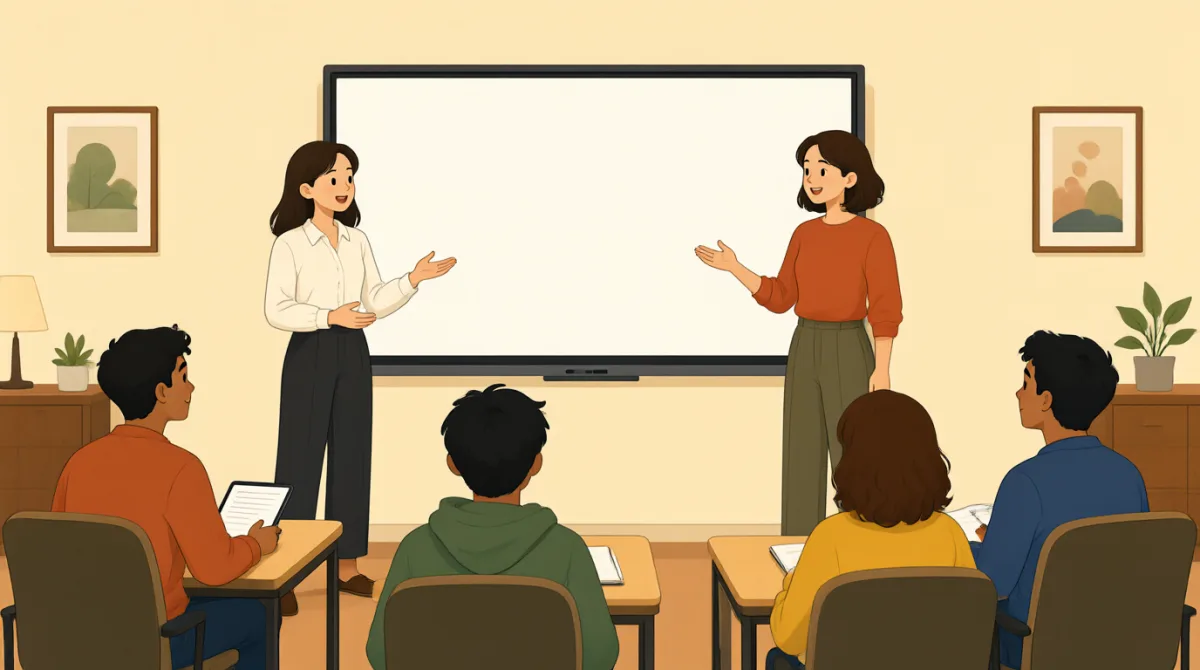

Okay, let’s run through the whole presentation. I’ll start with the background, then hand it over to you, Leo.
よし、プレゼン全体を通して練習しよう。まず私が背景を説明して、それからレオに交代するね。

Sounds good. I’ll cover our research findings. I’m a little nervous about the numbers, though—there’s a lot to explain.
いいね。僕は調査結果を担当するよ。ただ、数字のところはちょっと不安なんだ。説明することが多くて。

You don’t need to explain every detail. Focus on the two main findings, and the chart will help make them clear.
細かいところまで全部説明しなくていいよ。主な結果を二つに絞って。グラフがあれば分かりやすくなるよ。

I noticed the labels on the second slide are hard to read. I can make them bigger before we practice that part again.
2枚目のスライドのラベルが読みにくいのに気づいたよ。その部分をもう一度練習する前に、文字を大きくしておくね。
Great. Leo, after your findings, say, “Mia will explain what they mean.” That should make the handoff feel smooth.
いいね。レオ、結果を説明したあとに、「次にミアがその意味を説明するよ」って言ってね。そうすれば、話の引き継ぎが自然になるはず。
Got it. Let me try: “Those are our main findings. Mia will now explain what they mean for our project.”
分かった。やってみるね。「以上が主な調査結果です。次にミアが、これらが私たちのプロジェクトにとってどんな意味を持つのかを説明します。」
That works well. Just slow down a little on the last sentence. It’s an important point, so give it a moment.
いい感じだよ。最後の文だけ、もう少しゆっくり話してね。大事なポイントだから、少し間を取るといいよ。
The slide is fixed. Let’s practice the handoff once more, then we can time the whole thing and see if we’re on schedule.
スライドを直したよ。もう一度、話の引き継ぎを練習しよう。そのあと全体の時間を計って、予定どおりか確認しよう。
We’re right on track. Let’s do one full run now, and if we finish early, we can save time for questions.
予定どおりだね。今度は最初から最後まで通してやってみよう。早く終わったら、質疑応答の時間を取れるよ。
語彙8
- run through最初から最後まで通して練習する
To practice or review something from beginning to end. Here, the group is practicing the whole presentation.
何かを最初から最後まで練習したり、確認したりすることです。ここでは、グループでプレゼン全体を練習しています。
- cover担当する
To talk about or include a particular topic. You can say, “I’ll cover the main results” when explaining your part of a presentation.
特定の話題について話したり、取り上げたりすることです。プレゼンで自分の担当部分を説明するとき、「I’ll cover the main results」と言えます。
- focus on〜に集中する
To give most of your attention to something. Use it to suggest which ideas or details are most important.
何かに注意を向けることです。どの考えや詳細が特に重要かを伝えるときに使えます。
- hand it over to you次はあなたに引き継ぐ
A natural way to say that someone else will speak next. It is useful when passing the presentation to another speaker.
次に別の人が話すことを自然に伝える表現です。プレゼンで次の話し手に交代するときに便利です。
- make them clear分かりやすくする
To help people understand something. You can use this phrase when explaining how a chart, example, or explanation will help the audience.
人に何かを理解してもらいやすくすることです。グラフや例、説明が聞き手の理解にどう役立つかを話すときに使えます。
- slow down a littleもう少しゆっくり話す
To speak slightly more slowly. This is practical feedback when someone’s words are difficult to follow.
少し速度を落として話すことです。相手の話が聞き取りにくいときに伝える、実践的なフィードバックです。
- right on track予定どおりに進んでいる
On schedule and making good progress. Use it to reassure a group that a task is going as planned.
予定に遅れず、順調に進んでいることです。作業が計画どおりだとグループに伝えて安心させるときに使えます。
- save time for questions質問の時間を残しておく
To leave some time at the end for people to ask questions. This is useful when planning a presentation.
最後に質問を受けるための時間を確保することです。プレゼンの予定を立てるときに便利な表現です。
重要な文8
- 1
Okay, let’s run through the whole presentation.
よし、プレゼン全体を通して練習しよう。
This is a friendly way to suggest practicing a presentation from start to finish. You can replace “presentation” with another activity or task.
プレゼンを最初から最後まで練習しようと提案する、親しみやすい表現です。「presentation」を別の活動や作業に置き換えて使えます。
- 2
I’ll cover our research findings.
僕は調査結果を担当するよ。
Use this sentence to tell others which topic you will talk about. Replace “research findings” with the subject of your part.
自分がどの話題について話すのかを伝える文です。「research findings」を自分の担当部分のテーマに置き換えられます。
- 3
Focus on the two main findings, and the chart will help make them clear.
主な結果を二つに絞って。グラフがあれば分かりやすくなるよ。
This gives practical advice by identifying the key points and explaining how a visual can help. You can use the same structure to suggest a focus and a helpful resource.
重要なポイントを示し、視覚資料がどう役立つかを説明する、実践的なアドバイスです。何に集中するかと、役立つ資料を提案する際に同じ形で使えます。
- 4
I can make them bigger before we practice that part again.
その部分をもう一度練習する前に、文字を大きくしておくね。
This offers a specific way to improve something before the next practice. Replace “them” with the items you want to adjust, such as labels or images.
次の練習の前に、何かを改善する具体的な方法を提案する表現です。「them」は、ラベルや画像など、調整したいものに置き換えられます。
- 5
That should make the handoff feel smooth.
そうすれば、話の引き継ぎが自然になるはず。
Use this to explain why a transition between speakers or activities will work well. “That should make…” is also useful for describing an expected result.
話し手や活動の交代がうまくいく理由を説明するときに使えます。「That should make…」は、期待される結果を伝えるのにも便利です。
- 6
Just slow down a little on the last sentence.
最後の文だけ、もう少しゆっくり話してね。
This is polite, specific feedback about someone’s speaking pace. You can change “the last sentence” to the part that needs attention.
話す速さについて、具体的で丁寧にフィードバックする表現です。「the last sentence」は、改善が必要な部分に置き換えられます。
- 7
Let’s practice the handoff once more, then we can time the whole thing and see if we’re on schedule.
もう一度、話の引き継ぎを練習しよう。そのあと全体の時間を計って、予定どおりか確認しよう。
This sentence suggests two clear next steps: rehearse a transition and check the timing. It is useful when organizing a group practice.
話の引き継ぎを練習し、時間を確認するという、次の二つのステップを提案する文です。グループ練習の段取りを決めるときに便利です。
- 8
We’re right on track.
予定どおりに進んでいるよ。
This is a concise way to say that progress is going as planned. Use it to reassure a team about its schedule or goals.
進み具合が計画どおりだと簡潔に伝える表現です。チームの予定や目標について、みんなを安心させるときに使えます。