Practicing the Presentation
प्रस्तुति का अभ्यास
The group rehearses their presentation and gives one another practical feedback. They make a few changes to the slides and practice handing off between speakers.
समूह अपनी प्रस्तुति का अभ्यास करता है और एक-दूसरे को काम की प्रतिक्रिया देता है। वे स्लाइडों में कुछ बदलाव करते हैं और वक्ताओं के बीच बारी सौंपने का अभ्यास करते हैं।
संवाद9
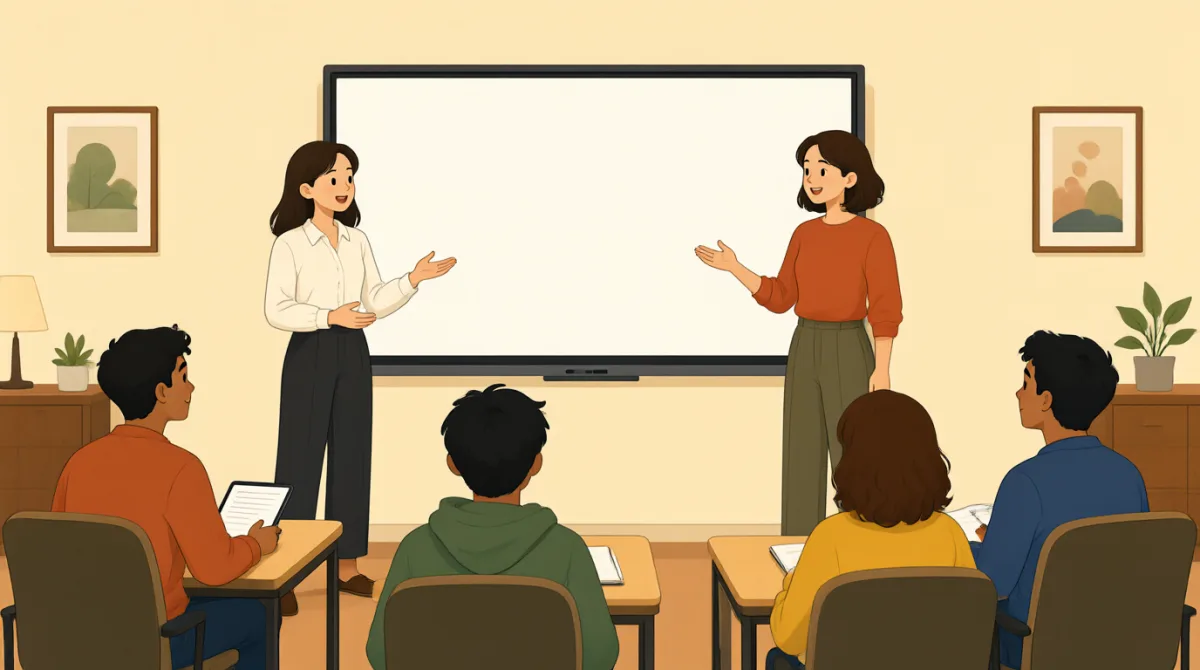

Okay, let’s run through the whole presentation. I’ll start with the background, then hand it over to you, Leo.
ठीक है, चलो पूरी प्रस्तुति शुरू से आखिर तक दोहरा लेते हैं। मैं पृष्ठभूमि से शुरू करूँगी, फिर बोलने की बारी तुम्हें दूँगी, Leo।

Sounds good. I’ll cover our research findings. I’m a little nervous about the numbers, though—there’s a lot to explain.
ठीक है। मैं हमारे शोध के निष्कर्ष बताऊँगा। हालाँकि, आँकड़ों को लेकर थोड़ा घबराया हुआ हूँ—समझाने के लिए बहुत कुछ है।

You don’t need to explain every detail. Focus on the two main findings, and the chart will help make them clear.
तुम्हें हर बात का ब्यौरा देने की ज़रूरत नहीं है। दो मुख्य निष्कर्षों पर ध्यान दो, और चार्ट उन्हें समझने में मदद करेगा।

I noticed the labels on the second slide are hard to read. I can make them bigger before we practice that part again.
मैंने देखा कि दूसरी स्लाइड पर दिए गए लेबल पढ़ने में मुश्किल हैं। उस हिस्से का दोबारा अभ्यास करने से पहले मैं उन्हें बड़ा कर सकता हूँ।
Great. Leo, after your findings, say, “Mia will explain what they mean.” That should make the handoff feel smooth.
बढ़िया। Leo, अपने निष्कर्ष बताने के बाद कहना, “Mia बताएगी कि उनका क्या मतलब है।” इससे वक्ता बदलने का क्रम सहज लगेगा।
Got it. Let me try: “Those are our main findings. Mia will now explain what they mean for our project.”
समझ गया। मुझे कहने दो: “ये हमारे मुख्य निष्कर्ष हैं। अब Mia बताएगी कि हमारे प्रोजेक्ट के लिए उनका क्या मतलब है।”
That works well. Just slow down a little on the last sentence. It’s an important point, so give it a moment.
यह अच्छा है। बस आखिरी वाक्य थोड़ा धीरे बोलना। यह एक अहम बात है, तो इसे कहने के लिए थोड़ा समय देना।
The slide is fixed. Let’s practice the handoff once more, then we can time the whole thing and see if we’re on schedule.
स्लाइड ठीक कर दी है। चलो एक बार और बारी सौंपने का अभ्यास करते हैं, फिर पूरे प्रेज़ेंटेशन का समय नापकर देखते हैं कि हम तय समय के अनुसार चल रहे हैं या नहीं।
We’re right on track. Let’s do one full run now, and if we finish early, we can save time for questions.
हम बिल्कुल तय योजना के मुताबिक चल रहे हैं। चलो अब एक बार शुरू से अंत तक पूरा अभ्यास करते हैं; अगर जल्दी खत्म हो गए, तो सवालों के लिए समय बचा सकते हैं।
शब्दावली8
- run throughशुरू से अंत तक दोहराना
To practice or review something from beginning to end. Here, the group is practicing the whole presentation.
किसी चीज़ का शुरू से अंत तक अभ्यास करना या उसे दोहराना। यहाँ समूह पूरी प्रस्तुति का अभ्यास कर रहा है।
- coverबताना
To talk about or include a particular topic. You can say, “I’ll cover the main results” when explaining your part of a presentation.
किसी खास विषय पर बात करना या उसे शामिल करना। प्रस्तुति में अपना हिस्सा बताते हुए आप कह सकते हैं, “I’ll cover the main results” (मैं मुख्य नतीजे बताऊँगा)।
- focus onध्यान देना
To give most of your attention to something. Use it to suggest which ideas or details are most important.
अपना ज़्यादातर ध्यान किसी चीज़ पर लगाना। इसका इस्तेमाल यह बताने के लिए करें कि कौन-से विचार या बातें सबसे अहम हैं।
- hand it over to youबोलने की बारी तुम्हें देना
A natural way to say that someone else will speak next. It is useful when passing the presentation to another speaker.
यह कहने का स्वाभाविक तरीका कि अब कोई दूसरा बोलेगा। प्रस्तुति में अगले वक्ता को बोलने की बारी देते समय यह उपयोगी है।
- make them clearउन्हें स्पष्ट करना
To help people understand something. You can use this phrase when explaining how a chart, example, or explanation will help the audience.
लोगों को कोई बात समझने में मदद करना। यह बताने के लिए इस वाक्यांश का इस्तेमाल करें कि चार्ट, उदाहरण या व्याख्या दर्शकों की मदद कैसे करेगी।
- slow down a littleथोड़ा धीरे बोलना
To speak slightly more slowly. This is practical feedback when someone’s words are difficult to follow.
थोड़ी कम रफ़्तार से बोलना। जब किसी की बात समझने में मुश्किल हो, तो यह काम की प्रतिक्रिया होती है।
- right on trackतय योजना के मुताबिक चलना
On schedule and making good progress. Use it to reassure a group that a task is going as planned.
निर्धारित समय-सारणी के अनुसार आगे बढ़ना और अच्छी प्रगति करना। समूह को भरोसा दिलाने के लिए इसका इस्तेमाल करें कि काम योजना के मुताबिक चल रहा है।
- save time for questionsसवालों के लिए समय बचाकर रखना
To leave some time at the end for people to ask questions. This is useful when planning a presentation.
अंत में लोगों के सवाल पूछने के लिए कुछ समय रखना। प्रस्तुति की योजना बनाते समय यह उपयोगी है।
मुख्य वाक्य8
- 1
Okay, let’s run through the whole presentation.
ठीक है, चलो पूरी प्रस्तुति शुरू से आखिर तक दोहरा लेते हैं।
This is a friendly way to suggest practicing a presentation from start to finish. You can replace “presentation” with another activity or task.
प्रस्तुति का शुरू से अंत तक अभ्यास करने का सुझाव देने का यह एक दोस्ताना तरीका है। आप “presentation” की जगह कोई दूसरी गतिविधि या काम रख सकते हैं।
- 2
I’ll cover our research findings.
मैं हमारे शोध के निष्कर्ष बताऊँगा।
Use this sentence to tell others which topic you will talk about. Replace “research findings” with the subject of your part.
दूसरों को यह बताने के लिए इस वाक्य का इस्तेमाल करें कि आप किस विषय पर बात करेंगे। अपने हिस्से के विषय के अनुसार “research findings” की जगह दूसरा विषय रख सकते हैं।
- 3
Focus on the two main findings, and the chart will help make them clear.
दो मुख्य निष्कर्षों पर ध्यान दो, और चार्ट उन्हें समझने में मदद करेगा।
This gives practical advice by identifying the key points and explaining how a visual can help. You can use the same structure to suggest a focus and a helpful resource.
इस वाक्य में मुख्य बातों की पहचान करके बताया गया है कि कोई दृश्य सामग्री कैसे मदद कर सकती है। किसी खास बात पर ध्यान देने और मददगार साधन सुझाने के लिए इसी ढाँचे का इस्तेमाल कर सकते हैं।
- 4
I can make them bigger before we practice that part again.
उस हिस्से का दोबारा अभ्यास करने से पहले मैं उन्हें बड़ा कर सकता हूँ।
This offers a specific way to improve something before the next practice. Replace “them” with the items you want to adjust, such as labels or images.
अगले अभ्यास से पहले किसी चीज़ को बेहतर करने का यह एक ठोस सुझाव है। “them” की जगह उन चीज़ों के नाम रख सकते हैं जिन्हें आप बदलना चाहते हैं, जैसे लेबल या तस्वीरें।
- 5
That should make the handoff feel smooth.
इससे वक्ता बदलने का क्रम सहज लगेगा।
Use this to explain why a transition between speakers or activities will work well. “That should make…” is also useful for describing an expected result.
वक्ताओं या गतिविधियों के बीच बदलाव अच्छी तरह कैसे काम करेगा, यह समझाने के लिए इसका इस्तेमाल करें। किसी अपेक्षित नतीजे के बारे में बताने के लिए “That should make…” भी उपयोगी है।
- 6
Just slow down a little on the last sentence.
बस आखिरी वाक्य थोड़ा धीरे बोलना।
This is polite, specific feedback about someone’s speaking pace. You can change “the last sentence” to the part that needs attention.
किसी के बोलने की रफ़्तार पर यह विनम्र और स्पष्ट प्रतिक्रिया है। “the last sentence” की जगह उस हिस्से का नाम रख सकते हैं जिस पर ध्यान देने की ज़रूरत है।
- 7
Let’s practice the handoff once more, then we can time the whole thing and see if we’re on schedule.
चलो एक बार और बारी सौंपने का अभ्यास करते हैं, फिर पूरे प्रेज़ेंटेशन का समय नापकर देखते हैं कि हम तय समय के अनुसार चल रहे हैं या नहीं।
This sentence suggests two clear next steps: rehearse a transition and check the timing. It is useful when organizing a group practice.
इस वाक्य में आगे के दो साफ़ कदम सुझाए गए हैं: वक्ताओं के बीच बदलाव का अभ्यास करना और समय जाँचना। समूह के अभ्यास को व्यवस्थित करते समय यह उपयोगी है।
- 8
We’re right on track.
हम बिल्कुल तय योजना के मुताबिक चल रहे हैं।
This is a concise way to say that progress is going as planned. Use it to reassure a team about its schedule or goals.
यह कहने का संक्षिप्त तरीका है कि काम योजना के मुताबिक आगे बढ़ रहा है। टीम को समय-सारणी या लक्ष्यों के बारे में भरोसा दिलाने के लिए इसका इस्तेमाल करें।