Explaining the Ankle Injury
टखने की चोट के बारे में बताना
A clinician asks Leo how he hurt his ankle and about his symptoms. Leo describes what happened and answers questions about the pain and swelling.
एक चिकित्साकर्मी लियो से पूछती हैं कि उसके टखने में चोट कैसे लगी और उसे क्या लक्षण हैं। लियो बताता है कि क्या हुआ था और दर्द व सूजन के बारे में सवालों के जवाब देता है।
संवाद10
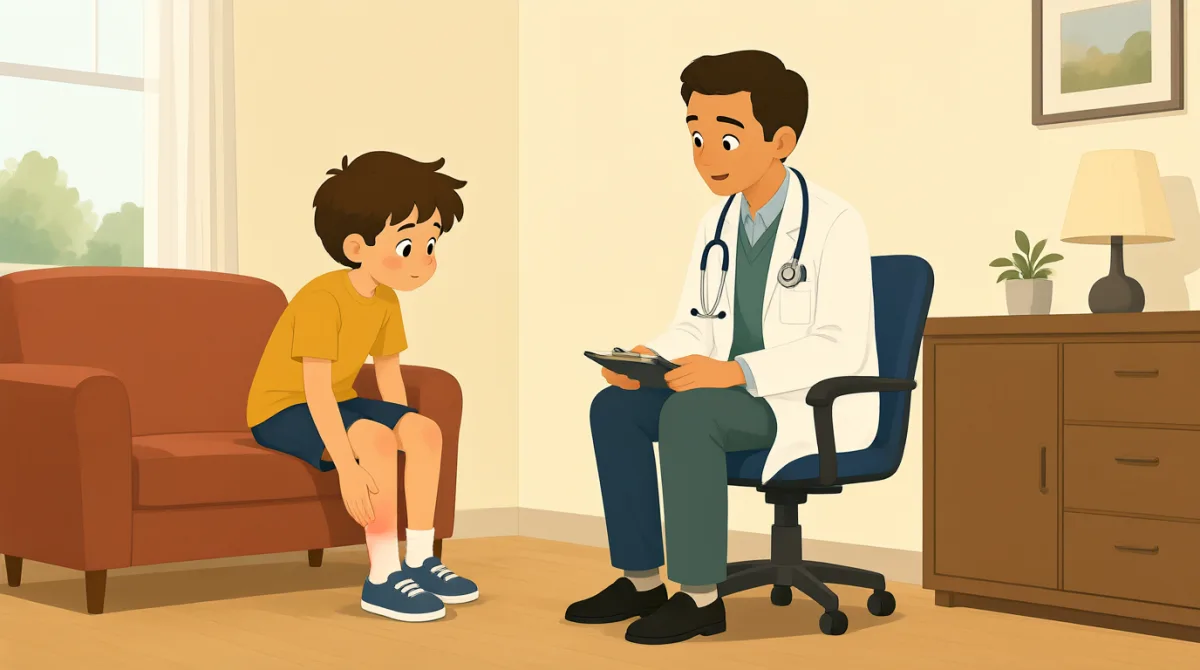

Hi, Leo. I understand you twisted your ankle. Can you tell me what happened?
नमस्ते, लियो। मुझे पता चला कि तुम्हारा टखना मुड़ गया है। क्या तुम बता सकते हो कि क्या हुआ था?

I was playing basketball and came down awkwardly after a jump. My foot rolled to the side, and I heard a pop.
मैं बास्केटबॉल खेल रहा था और छलाँग लगाने के बाद अजीब तरह से नीचे उतरा। मेरा पैर एक तरफ मुड़ गया और मुझे चटकने की आवाज़ सुनाई दी।
When did this happen, and were you able to put any weight on that foot afterward?
यह कब हुआ था, और उसके बाद क्या तुम उस पैर पर कुछ भार डाल पाए?
It happened about two hours ago. I can walk, but I’m limping, and it hurts more when I put weight on it.
करीब दो घंटे पहले। मैं चल तो सकता हूँ, लेकिन लंगड़ा रहा हूँ, और उस पर भार डालने पर ज़्यादा दर्द होता है।
Where does it hurt the most? And have you noticed any swelling, bruising, or numbness?
सबसे ज़्यादा दर्द कहाँ हो रहा है? और क्या तुम्हें सूजन, नील पड़ना या सुन्नपन महसूस हुआ है?
The pain is mostly on the outside of my ankle. It’s getting swollen, but I don’t see bruising or feel numb.
दर्द ज़्यादातर मेरे टखने के बाहरी हिस्से में है। वहाँ सूजन बढ़ रही है, लेकिन मुझे न तो नील दिख रहा है, न ही सुन्नपन महसूस हो रहा है।
On a scale from zero to ten, how bad is the pain right now? Does anything make it feel better?
शून्य से दस के पैमाने पर, अभी दर्द कितना है? क्या किसी चीज़ से बेहतर महसूस होता है?
It’s about a six when I stand, maybe a three when I’m sitting. Keeping it still helps a little.
खड़े होने पर करीब छह, और बैठने पर शायद तीन। इसे स्थिर रखने से थोड़ी राहत मिलती है।
Any previous ankle injuries, allergies, or medications you’re taking?
क्या पहले कभी तुम्हारे टखने में चोट लगी है? कोई एलर्जी है या कोई दवा ले रहे हो?
No previous injuries or allergies. I’m not taking any medication, and I haven’t put ice on it yet.
पहले कभी चोट नहीं लगी और न ही कोई एलर्जी है। मैं कोई दवा नहीं ले रहा हूँ, और अभी तक उस पर बर्फ़ भी नहीं लगाई है।
शब्दावली8
- came down awkwardlyअजीब तरह से नीचे उतरा
Landed in an uncomfortable or unbalanced way after jumping. You can use this phrase to explain how you landed or moved when you got hurt.
इसका मतलब है कि छलाँग के बाद असहज या असंतुलित तरीके से ज़मीन पर उतरे। चोट लगने के समय आप कैसे उतरे या हिले, यह बताने के लिए इस वाक्यांश का इस्तेमाल कर सकते हैं।
- rolled to the sideएक तरफ मुड़ गया
Describes a foot or ankle turning sideways. It helps explain the movement that caused an injury.
यह बताता है कि पैर या टखना बगल की ओर मुड़ गया। चोट लगने का कारण बनी हरकत समझाने में यह काम आता है।
- put any weight on that footउस पैर पर भार डालना
Means to stand or walk using that foot to support your body. Clinicians may ask this to understand how an injury affects movement.
इसका मतलब है उस पैर का सहारा लेकर खड़ा होना या चलना। चिकित्साकर्मी यह जानने के लिए पूछ सकते हैं कि चोट से आपकी चलने-फिरने की क्षमता पर कितना असर पड़ा है।
- limpingलंगड़ाना
Walking unevenly because one leg or foot hurts. You can say “I’m limping” to describe how an injury affects the way you walk.
एक पैर या पंजे में दर्द होने के कारण असमान ढंग से चलना। चोट से आपके चलने के तरीके पर पड़ने वाला असर बताने के लिए आप “I’m limping” कह सकते हैं।
- swellingसूजन
An area of the body becoming larger, often after an injury. You can describe it by saying, “It’s getting swollen.”
शरीर का कोई हिस्सा बड़ा हो जाना, अक्सर चोट लगने के बाद। आप इसे “It’s getting swollen.” कहकर बता सकते हैं।
- on a scale from zero to tenशून्य से दस के पैमाने पर
A way to rate how strong pain is, with zero meaning no pain and ten meaning the worst pain. It is commonly used when talking with a clinician.
दर्द की तीव्रता बताने का एक तरीका, जिसमें शून्य का मतलब है दर्द न होना और दस का मतलब है सबसे ज़्यादा दर्द। चिकित्साकर्मी से बात करते समय इसका आम तौर पर इस्तेमाल होता है।
- previous ankle injuriesटखने में पहले लगी चोटें
Earlier injuries to the ankle. This phrase is useful when answering questions about your medical history.
टखने में पहले हुई चोटें। अपनी चिकित्सकीय जानकारी से जुड़े सवालों के जवाब देते समय यह वाक्यांश काम आता है।
- put ice on itउस पर बर्फ़ लगाना
Apply ice to an injured area, usually to help with pain or swelling. You can use this phrase to explain what treatment you have or haven’t tried.
दर्द या सूजन में राहत पाने के लिए चोट वाली जगह पर बर्फ़ लगाना। आपने कौन-सा उपचार किया है या नहीं किया है, यह बताने के लिए इस वाक्यांश का इस्तेमाल कर सकते हैं।
मुख्य वाक्य7
- 1
Can you tell me what happened?
क्या तुम बता सकते हो कि क्या हुआ था?
A polite, open question for asking someone to describe an event. You can reuse it to invite someone to explain a problem or situation.
किसी से किसी घटना के बारे में बताने के लिए पूछने का यह एक विनम्र और खुला सवाल है। किसी से किसी समस्या या स्थिति को समझाने के लिए कहने में भी इसका इस्तेमाल कर सकते हैं।
- 2
My foot rolled to the side, and I heard a pop.
मेरा पैर एक तरफ मुड़ गया और मुझे चटकने की आवाज़ सुनाई दी।
This sentence describes both how the injury happened and what you heard. You can adapt it to report the movement and sounds connected to an injury.
यह वाक्य चोट लगने का तरीका और आपने क्या आवाज़ सुनी—दोनों बताता है। चोट से जुड़ी हरकत और आवाज़ बताने के लिए आप इसे अपने हिसाब से बदल सकते हैं।
- 3
I can walk, but I’m limping, and it hurts more when I put weight on it.
मैं चल तो सकता हूँ, लेकिन लंगड़ा रहा हूँ, और उस पर भार डालने पर ज़्यादा दर्द होता है।
This explains what you can do and what makes the pain worse. Replace “walk” or “put weight on it” with details that match your symptoms.
इससे पता चलता है कि आप क्या कर सकते हैं और किससे दर्द बढ़ता है। अपने लक्षणों के मुताबिक “walk” या “put weight on it” की जगह दूसरी बातें रख सकते हैं।
- 4
The pain is mostly on the outside of my ankle.
दर्द ज़्यादातर मेरे टखने के बाहरी हिस्से में है।
A clear way to say exactly where pain is located. You can replace “the outside of my ankle” with another body area.
दर्द कहाँ है, यह साफ़-साफ़ बताने का एक तरीका। आप “the outside of my ankle” की जगह शरीर के किसी दूसरे हिस्से का नाम रख सकते हैं।
- 5
It’s about a six when I stand, maybe a three when I’m sitting.
खड़े होने पर दर्द करीब छह है, और बैठने पर शायद तीन।
This compares pain levels in two situations using a number scale. You can use the same structure to explain how your pain changes with movement or rest.
यह संख्या के पैमाने का इस्तेमाल करके दो स्थितियों में दर्द के स्तर की तुलना करता है। हरकत या आराम के साथ दर्द में होने वाला बदलाव बताने के लिए आप यही ढाँचा इस्तेमाल कर सकते हैं।
- 6
Keeping it still helps a little.
इसे स्थिर रखने से थोड़ी राहत मिलती है।
This describes something that reduces the pain slightly. You can use “Keeping [body part] still helps” to explain what makes a symptom better.
इससे पता चलता है कि कोई चीज़ दर्द को थोड़ा कम करती है। लक्षण में किस चीज़ से राहत मिलती है, यह बताने के लिए “Keeping [body part] still helps” का इस्तेमाल कर सकते हैं।
- 7
I’m not taking any medication, and I haven’t put ice on it yet.
मैं कोई दवा नहीं ले रहा हूँ, और अभी तक उस पर बर्फ़ नहीं लगाई है।
This gives a clinician useful information about medicine and care you have tried. You can change the details to say what you are taking or what treatment you have used.
इससे चिकित्साकर्मी को दवाओं और आज़माए गए उपचार के बारे में ज़रूरी जानकारी मिलती है। आप जो दवा ले रहे हैं या जो उपचार किया है, उसके मुताबिक बातें बदल सकते हैं।