Explaining the Ankle Injury
شرح آسیبدیدگی مچ پا
A clinician asks Leo how he hurt his ankle and about his symptoms. Leo describes what happened and answers questions about the pain and swelling.
پزشک از لئو میپرسد چطور مچ پایش آسیب دیده و چه علائمی دارد. لئو ماجرا را توضیح میدهد و به پرسشهایی دربارهٔ درد و ورم پاسخ میدهد.
گفتوگو10
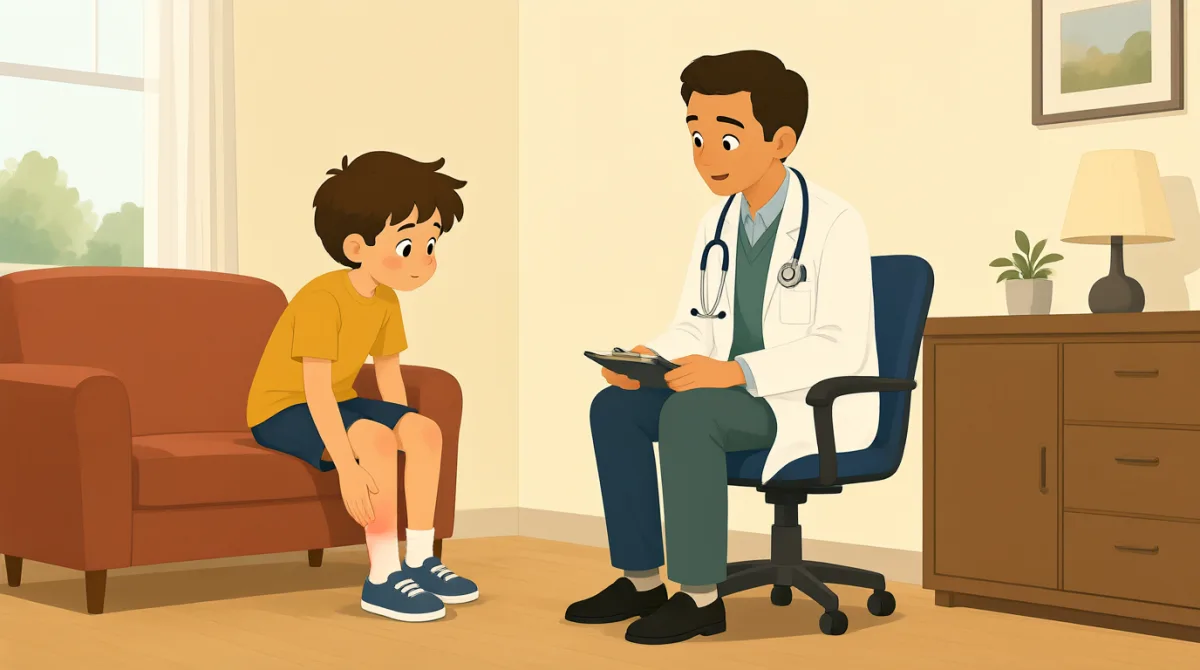

Hi, Leo. I understand you twisted your ankle. Can you tell me what happened?
سلام لئو. متوجه شدم مچ پایت پیچ خورده. میتوانی بگویی چه اتفاقی افتاد؟

I was playing basketball and came down awkwardly after a jump. My foot rolled to the side, and I heard a pop.
داشتم بسکتبال بازی میکردم و بعد از پرش، بدجور فرود آمدم. پایم به پهلو چرخید و صدای تقی شنیدم.
When did this happen, and were you able to put any weight on that foot afterward?
این اتفاق کی افتاد؟ بعدش توانستی روی آن پا وزن بیندازی؟
It happened about two hours ago. I can walk, but I’m limping, and it hurts more when I put weight on it.
حدود دو ساعت پیش بود. میتوانم راه بروم، اما میلنگم و وقتی رویش وزن میاندازم دردش بیشتر میشود.
Where does it hurt the most? And have you noticed any swelling, bruising, or numbness?
بیشتر کجایش درد میکند؟ متوجه ورم، کبودی یا بیحسی شدهای؟
The pain is mostly on the outside of my ankle. It’s getting swollen, but I don’t see bruising or feel numb.
بیشتر قسمت بیرونی مچ پایم درد میکند. دارد ورم میکند، اما کبودی نمیبینم و بیحسی هم ندارم.
On a scale from zero to ten, how bad is the pain right now? Does anything make it feel better?
از صفر تا ده، الان شدت درد چقدر است؟ چیزی هست که بهترش کند؟
It’s about a six when I stand, maybe a three when I’m sitting. Keeping it still helps a little.
وقتی میایستم حدود شش است، شاید وقتی نشستهام سه. بیحرکت نگهداشتنش کمی کمک میکند.
Any previous ankle injuries, allergies, or medications you’re taking?
قبلاً مچ پایت آسیب دیده؟ حساسیت دارویی داری یا دارویی مصرف میکنی؟
No previous injuries or allergies. I’m not taking any medication, and I haven’t put ice on it yet.
نه قبلاً آسیبی دیده و نه حساسیتی دارم. دارویی مصرف نمیکنم و هنوز رویش یخ نگذاشتهام.
واژگان8
- came down awkwardlyبدجور فرود آمدن
Landed in an uncomfortable or unbalanced way after jumping. You can use this phrase to explain how you landed or moved when you got hurt.
یعنی بعد از پریدن، به شکلی ناراحت یا نامتعادل فرود آمدن. میتوانی از عبارت “came down awkwardly” برای توضیح نحوهٔ فرود آمدن یا حرکتت هنگام آسیبدیدن استفاده کنی.
- rolled to the sideبه پهلو چرخیدن
Describes a foot or ankle turning sideways. It helps explain the movement that caused an injury.
برای توصیف چرخیدن پا یا مچ پا به پهلو به کار میرود. این عبارت کمک میکند حرکتی را که باعث آسیب شده توضیح بدهی.
- put any weight on that footروی آن پا وزن انداختن
Means to stand or walk using that foot to support your body. Clinicians may ask this to understand how an injury affects movement.
یعنی با تکیه بر آن پا بایستی یا راه بروی. پزشکها ممکن است این را بپرسند تا بفهمند آسیب چطور روی حرکتت اثر گذاشته است.
- limpingلنگیدن
Walking unevenly because one leg or foot hurts. You can say “I’m limping” to describe how an injury affects the way you walk.
بهخاطر درد یک پا یا کف پا، نامتعادل راه رفتن. میتوانی با گفتن “I’m limping” توضیح بدهی که آسیب چطور روی راه رفتنت اثر گذاشته است.
- swellingورم
An area of the body becoming larger, often after an injury. You can describe it by saying, “It’s getting swollen.”
بزرگتر شدن بخشی از بدن که اغلب پس از آسیبدیدگی اتفاق میافتد. میتوانی با گفتن “It’s getting swollen” آن را توصیف کنی.
- on a scale from zero to tenاز صفر تا ده
A way to rate how strong pain is, with zero meaning no pain and ten meaning the worst pain. It is commonly used when talking with a clinician.
روشی برای درجهبندی شدت درد است؛ صفر یعنی هیچ دردی نیست و ده یعنی شدیدترین درد. این روش هنگام صحبت با پزشک رایج است.
- previous ankle injuriesآسیبدیدگیهای قبلی مچ پا
Earlier injuries to the ankle. This phrase is useful when answering questions about your medical history.
یعنی آسیبهایی که پیشتر به مچ پا وارد شدهاند. این عبارت هنگام پاسخدادن به پرسشهایی دربارهٔ سابقهٔ پزشکیات به کار میآید.
- put ice on itروی آن یخ گذاشتن
Apply ice to an injured area, usually to help with pain or swelling. You can use this phrase to explain what treatment you have or haven’t tried.
یخ گذاشتن روی محل آسیبدیده، معمولاً برای کاهش درد یا ورم. میتوانی با این عبارت توضیح بدهی چه درمانی را امتحان کردهای یا نکردهای.
جملات کلیدی7
- 1
Can you tell me what happened?
میتوانی بگویی چه اتفاقی افتاد؟
A polite, open question for asking someone to describe an event. You can reuse it to invite someone to explain a problem or situation.
پرسشی مؤدبانه و باز برای اینکه از کسی بخواهی ماجرایی را توضیح دهد. میتوانی از آن برای دعوتکردن کسی به توضیح یک مشکل یا موقعیت هم استفاده کنی.
- 2
My foot rolled to the side, and I heard a pop.
پایم به پهلو چرخید و صدای تقی شنیدم.
This sentence describes both how the injury happened and what you heard. You can adapt it to report the movement and sounds connected to an injury.
این جمله هم نحوهٔ رخدادن آسیب را میگوید و هم صدایی را که شنیدی. میتوانی آن را با جزئیات دیگری دربارهٔ حرکت و صداهای مرتبط با آسیب تغییر بدهی.
- 3
I can walk, but I’m limping, and it hurts more when I put weight on it.
میتوانم راه بروم، اما میلنگم و وقتی رویش وزن میاندازم دردش بیشتر میشود.
This explains what you can do and what makes the pain worse. Replace “walk” or “put weight on it” with details that match your symptoms.
این جمله توضیح میدهد چه کاری میتوانی انجام بدهی و چه چیزی درد را بدتر میکند. میتوانی “walk” یا “put weight on it” را با جزئیاتی متناسب با علائمت عوض کنی.
- 4
The pain is mostly on the outside of my ankle.
بیشتر قسمت بیرونی مچ پایم درد میکند.
A clear way to say exactly where pain is located. You can replace “the outside of my ankle” with another body area.
روشی روشن برای گفتن اینکه درد دقیقاً کجاست. میتوانی “the outside of my ankle” را با بخش دیگری از بدن جایگزین کنی.
- 5
It’s about a six when I stand, maybe a three when I’m sitting.
وقتی میایستم حدود شش است، شاید وقتی نشستهام سه.
This compares pain levels in two situations using a number scale. You can use the same structure to explain how your pain changes with movement or rest.
این جمله شدت درد را در دو موقعیت با استفاده از یک مقیاس عددی مقایسه میکند. میتوانی از همین ساختار استفاده کنی تا توضیح بدهی درد با حرکت یا استراحت چطور تغییر میکند.
- 6
Keeping it still helps a little.
بیحرکت نگهداشتنش کمی کمک میکند.
This describes something that reduces the pain slightly. You can use “Keeping [body part] still helps” to explain what makes a symptom better.
این جمله چیزی را توصیف میکند که کمی درد را کاهش میدهد. میتوانی از الگوی “Keeping [body part] still helps” استفاده کنی تا بگویی چه چیزی علائمت را بهتر میکند.
- 7
I’m not taking any medication, and I haven’t put ice on it yet.
دارویی مصرف نمیکنم و هنوز رویش یخ نگذاشتهام.
This gives a clinician useful information about medicine and care you have tried. You can change the details to say what you are taking or what treatment you have used.
این جمله اطلاعات مفیدی دربارهٔ دارو و مراقبتهایی که امتحان کردهای، در اختیار پزشک میگذارد. میتوانی جزئیات را عوض کنی و بگویی چه دارویی مصرف میکنی یا چه درمانی را انجام دادهای.