Explaining the Ankle Injury
อธิบายอาการบาดเจ็บที่ข้อเท้า
A clinician asks Leo how he hurt his ankle and about his symptoms. Leo describes what happened and answers questions about the pain and swelling.
บุคลากรทางการแพทย์ถามลีโอว่าเขาบาดเจ็บที่ข้อเท้าได้อย่างไรและมีอาการอะไรบ้าง ลีโอเล่าเหตุการณ์และตอบคำถามเกี่ยวกับอาการปวดและบวม
บทสนทนา10
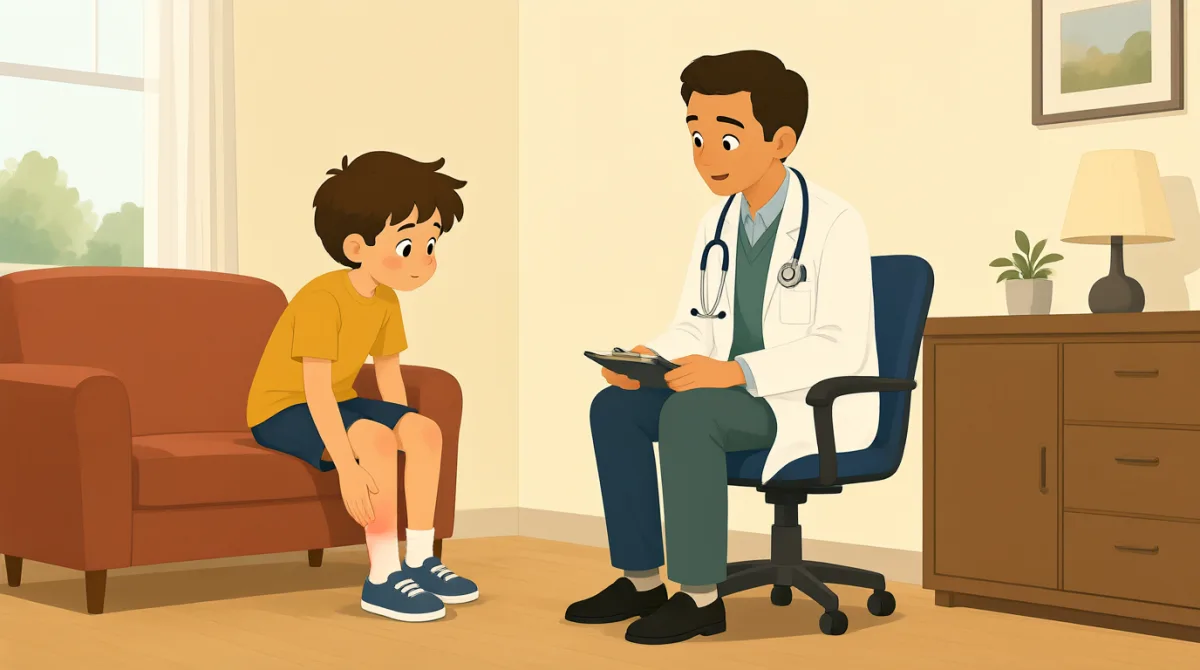

Hi, Leo. I understand you twisted your ankle. Can you tell me what happened?
สวัสดีค่ะ ลีโอ ทราบมาว่าคุณข้อเท้าแพลง ช่วยเล่าให้ฟังได้ไหมคะว่าเกิดอะไรขึ้น

I was playing basketball and came down awkwardly after a jump. My foot rolled to the side, and I heard a pop.
ผมกำลังเล่นบาสเกตบอล แล้วลงพื้นผิดท่าหลังจากกระโดดครับ เท้าผมพลิกไปด้านข้าง แล้วก็ได้ยินเสียงดังป๊อบครับ
When did this happen, and were you able to put any weight on that foot afterward?
เกิดขึ้นเมื่อไหร่คะ แล้วหลังจากนั้นคุณลงน้ำหนักที่เท้าข้างนั้นได้ไหม
It happened about two hours ago. I can walk, but I’m limping, and it hurts more when I put weight on it.
เกิดขึ้นประมาณสองชั่วโมงที่แล้วครับ ผมเดินได้ แต่เดินกะเผลก แล้วก็เจ็บมากขึ้นเวลาลงน้ำหนักครับ
Where does it hurt the most? And have you noticed any swelling, bruising, or numbness?
เจ็บตรงไหนมากที่สุดคะ แล้วสังเกตเห็นว่าบวมหรือช้ำ หรือรู้สึกชาบ้างไหมคะ
The pain is mostly on the outside of my ankle. It’s getting swollen, but I don’t see bruising or feel numb.
เจ็บตรงด้านนอกข้อเท้าเป็นส่วนใหญ่ครับ ตอนนี้เริ่มบวมแล้ว แต่ไม่เห็นรอยช้ำและก็ไม่รู้สึกชาครับ
On a scale from zero to ten, how bad is the pain right now? Does anything make it feel better?
ถ้าให้คะแนนจากศูนย์ถึงสิบ ตอนนี้ปวดมากแค่ไหนคะ มีอะไรช่วยให้อาการดีขึ้นบ้างไหม
It’s about a six when I stand, maybe a three when I’m sitting. Keeping it still helps a little.
ประมาณหกตอนยืนครับ อาจจะสามตอนนั่ง การอยู่นิ่ง ๆ ช่วยได้หน่อยครับ
Any previous ankle injuries, allergies, or medications you’re taking?
เคยบาดเจ็บที่ข้อเท้ามาก่อนไหมคะ มีอาการแพ้หรือกำลังกินยาอะไรอยู่หรือเปล่า
No previous injuries or allergies. I’m not taking any medication, and I haven’t put ice on it yet.
ไม่เคยบาดเจ็บมาก่อนและไม่มีอาการแพ้ครับ ผมไม่ได้กินยาอะไร แล้วก็ยังไม่ได้ประคบน้ำแข็งครับ
คำศัพท์8
- came down awkwardlyลงพื้นผิดท่า
Landed in an uncomfortable or unbalanced way after jumping. You can use this phrase to explain how you landed or moved when you got hurt.
หมายถึงลงพื้นหลังจากกระโดดในท่าที่ไม่ถนัดหรือเสียการทรงตัว ใช้สำนวนนี้เพื่ออธิบายว่าคุณลงพื้นหรือเคลื่อนไหวอย่างไรตอนบาดเจ็บได้ค่ะ
- rolled to the sideพลิกไปด้านข้าง
Describes a foot or ankle turning sideways. It helps explain the movement that caused an injury.
ใช้บอกว่าเท้าหรือข้อเท้าพลิกออกไปด้านข้าง ช่วยอธิบายการเคลื่อนไหวที่ทำให้บาดเจ็บได้ค่ะ
- put any weight on that footลงน้ำหนักที่เท้าข้างนั้น
Means to stand or walk using that foot to support your body. Clinicians may ask this to understand how an injury affects movement.
หมายถึงยืนหรือเดินโดยใช้เท้าข้างนั้นรับน้ำหนักตัว บุคลากรทางการแพทย์อาจถามเรื่องนี้เพื่อประเมินว่าอาการบาดเจ็บส่งผลต่อการเคลื่อนไหวอย่างไรค่ะ
- limpingเดินกะเผลก
Walking unevenly because one leg or foot hurts. You can say “I’m limping” to describe how an injury affects the way you walk.
เดินไม่เท่ากันเพราะเจ็บขาหรือเท้าข้างหนึ่ง คุณพูดว่า “I’m limping” เพื่ออธิบายว่าอาการบาดเจ็บส่งผลต่อการเดินอย่างไรได้ค่ะ
- swellingอาการบวม
An area of the body becoming larger, often after an injury. You can describe it by saying, “It’s getting swollen.”
หมายถึงบริเวณหนึ่งของร่างกายมีขนาดใหญ่ขึ้น ซึ่งมักเกิดหลังจากบาดเจ็บ คุณอธิบายอาการนี้ได้ว่า “It’s getting swollen.” ค่ะ
- on a scale from zero to tenให้คะแนนจากศูนย์ถึงสิบ
A way to rate how strong pain is, with zero meaning no pain and ten meaning the worst pain. It is commonly used when talking with a clinician.
เป็นวิธีให้คะแนนระดับความปวด โดยศูนย์หมายถึงไม่ปวดเลย และสิบหมายถึงปวดที่สุด มักใช้เวลาพูดคุยกับบุคลากรทางการแพทย์ค่ะ
- previous ankle injuriesการบาดเจ็บที่ข้อเท้าก่อนหน้านี้
Earlier injuries to the ankle. This phrase is useful when answering questions about your medical history.
หมายถึงการบาดเจ็บที่ข้อเท้าที่เคยเกิดขึ้นก่อนหน้านี้ วลีนี้มีประโยชน์เมื่อตอบคำถามเกี่ยวกับประวัติสุขภาพค่ะ
- put ice on itประคบน้ำแข็ง
Apply ice to an injured area, usually to help with pain or swelling. You can use this phrase to explain what treatment you have or haven’t tried.
หมายถึงการนำน้ำแข็งมาประคบบริเวณที่บาดเจ็บ โดยทั่วไปทำเพื่อช่วยลดอาการปวดหรือบวม คุณใช้วลีนี้อธิบายได้ว่าได้ลองหรือยังไม่ได้ลองรักษาอะไรบ้างค่ะ
ประโยคสำคัญ7
- 1
Can you tell me what happened?
ช่วยเล่าให้ฟังได้ไหมคะว่าเกิดอะไรขึ้น
A polite, open question for asking someone to describe an event. You can reuse it to invite someone to explain a problem or situation.
เป็นคำถามปลายเปิดที่สุภาพ ใช้ขอให้ใครสักคนเล่าเหตุการณ์ คุณนำไปใช้ถามให้ใครอธิบายปัญหาหรือสถานการณ์ได้ค่ะ
- 2
My foot rolled to the side, and I heard a pop.
เท้าผมพลิกไปด้านข้าง แล้วก็ได้ยินเสียงดังป๊อบครับ
This sentence describes both how the injury happened and what you heard. You can adapt it to report the movement and sounds connected to an injury.
ประโยคนี้อธิบายทั้งลักษณะที่เกิดการบาดเจ็บและเสียงที่ได้ยิน คุณปรับใช้เพื่อเล่าการเคลื่อนไหวและเสียงที่เกี่ยวข้องกับการบาดเจ็บได้ค่ะ
- 3
I can walk, but I’m limping, and it hurts more when I put weight on it.
ผมเดินได้ แต่เดินกะเผลก แล้วก็เจ็บมากขึ้นเวลาลงน้ำหนักครับ
This explains what you can do and what makes the pain worse. Replace “walk” or “put weight on it” with details that match your symptoms.
ประโยคนี้อธิบายว่าคุณทำอะไรได้บ้างและอะไรทำให้อาการปวดแย่ลง คุณเปลี่ยน “walk” หรือ “put weight on it” เป็นรายละเอียดที่ตรงกับอาการของคุณได้ค่ะ
- 4
The pain is mostly on the outside of my ankle.
เจ็บตรงด้านนอกข้อเท้าเป็นส่วนใหญ่ครับ
A clear way to say exactly where pain is located. You can replace “the outside of my ankle” with another body area.
เป็นวิธีพูดที่ชัดเจนเพื่อระบุตำแหน่งที่ปวดโดยเฉพาะ คุณเปลี่ยน “the outside of my ankle” เป็นบริเวณอื่นของร่างกายได้ค่ะ
- 5
It’s about a six when I stand, maybe a three when I’m sitting.
ประมาณหกตอนยืนครับ อาจจะสามตอนนั่ง
This compares pain levels in two situations using a number scale. You can use the same structure to explain how your pain changes with movement or rest.
ประโยคนี้เปรียบเทียบระดับความปวดในสองสถานการณ์โดยใช้ตัวเลข คุณใช้โครงสร้างเดียวกันเพื่ออธิบายว่าอาการปวดเปลี่ยนไปอย่างไรเมื่อเคลื่อนไหวหรือพักได้ค่ะ
- 6
Keeping it still helps a little.
การอยู่นิ่ง ๆ ช่วยได้หน่อยครับ
This describes something that reduces the pain slightly. You can use “Keeping [body part] still helps” to explain what makes a symptom better.
ประโยคนี้อธิบายสิ่งที่ช่วยลดอาการปวดได้เล็กน้อย คุณใช้ “Keeping [body part] still helps” เพื่อบอกว่าอะไรช่วยให้อาการดีขึ้นได้ค่ะ
- 7
I’m not taking any medication, and I haven’t put ice on it yet.
ผมไม่ได้กินยาอะไร แล้วก็ยังไม่ได้ประคบน้ำแข็งครับ
This gives a clinician useful information about medicine and care you have tried. You can change the details to say what you are taking or what treatment you have used.
ประโยคนี้ให้ข้อมูลที่เป็นประโยชน์แก่บุคลากรทางการแพทย์เกี่ยวกับยาที่กินและการดูแลที่ลองทำแล้ว คุณเปลี่ยนรายละเอียดเพื่อบอกว่ากำลังกินยาอะไรหรือได้ลองรักษาแบบไหนได้ค่ะ