Reporting a Hot Water Problem
お湯が出ない問題を伝える
After the shower runs cold, Emma lets Jack know that the hot water isn't working. Jack asks a few questions and arranges to come by and check the heater.
シャワーのお湯が途中で水になったため、エマはジャックにお湯が出ないと伝えます。ジャックはいくつか質問し、給湯器を確認しに来ることにします。
会話10
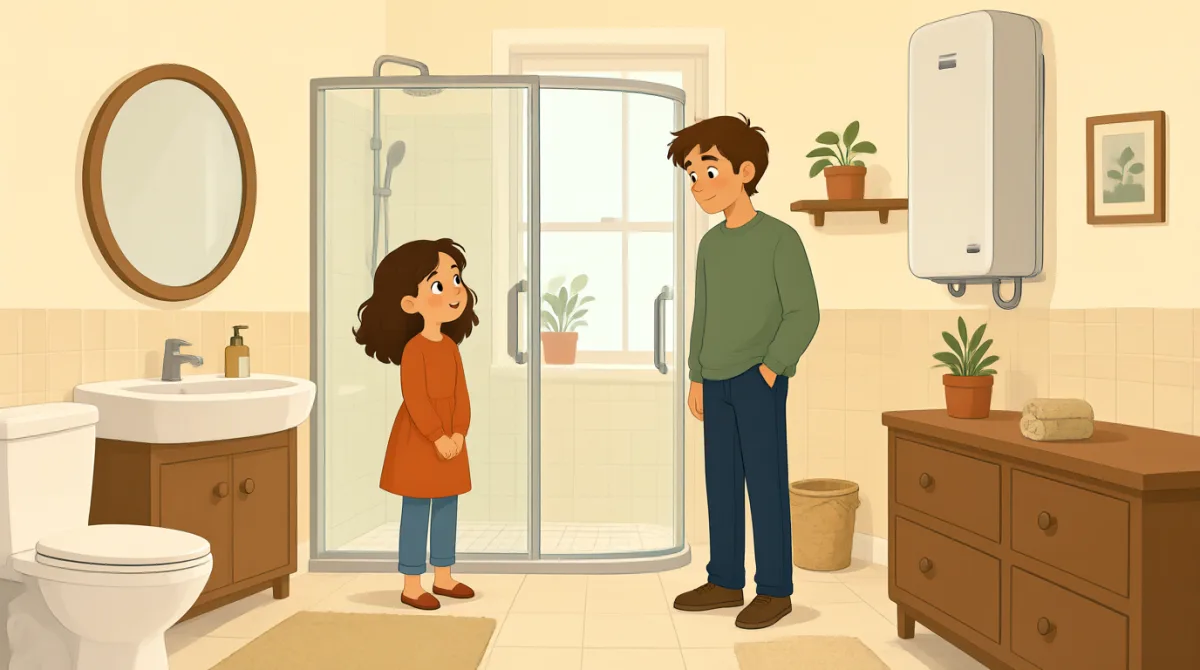

Hi, Jack. I wanted to let you know the shower went cold after a few minutes, and I couldn't get the hot water back.
ジャック、こんにちは。シャワーを浴びていたら数分でお湯が水になっちゃって、そのあとお湯が出なくなったんだ。

Sorry about that, Emma. Did the water start out hot, or was it cold from the beginning?
それは困ったね、エマ。最初はお湯が出てた?それとも最初から水だった?
It was hot at first, then gradually turned cold. I waited a bit and tried again, but it didn't help.
最初はお湯だったけど、だんだん冷たくなったよ。少し待ってからもう一度試したけど、だめだった。
Thanks for checking. Is the heater switch in the bathroom turned on? It’s next to the light switch.
確認してくれてありがとう。浴室の給湯器のスイッチは入ってる?照明のスイッチの隣にあるよ。
Yes, it’s on. I also checked the kitchen tap, and that water is cold too, so it seems to be the whole place.
うん、入ってるよ。キッチンの蛇口も確認したけど、そっちも水だった。家じゅうでお湯が出ないみたい。
Got it. It sounds like the heater may have switched off. I can come by and take a look in about twenty minutes.
わかった。給湯器のスイッチが切れたのかもしれないね。20分くらいしたら行って、ちょっと見てみるよ。
That works for me. I’ll be here. Should I leave the heater alone until you arrive?
それで大丈夫。ここにいるね。来るまで給湯器には触らないほうがいい?
Yes, please don’t touch the controls. I’ll check the unit and get it going again if it’s a simple fix.
うん、操作部分には触らないでね。給湯器を確認して、簡単に直せそうならまた動くようにするよ。
Thanks for sorting it out so quickly. I was hoping to take another shower before heading out, so I appreciate the help.
すぐ対応してくれてありがとう。出かける前にもう一度シャワーを浴びたかったから、助かるよ。
No problem. If it needs more than a quick fix, I’ll let you know what the next step is. See you soon.
どういたしまして。すぐに直せないようなら、次にどうするか伝えるね。またすぐ行くよ。
語彙7
- let you know知らせる
To tell someone something or give them an update. You can use it when reporting a problem or sharing important information.
誰かに何かを伝えたり、状況を報告したりするときに使います。問題を伝えるときや、大切な情報を共有するときに便利な表現です。
- went cold冷たくなった
Became cold after being warm. This phrase is useful for describing water or another thing that changes temperature.
温かかったものが冷たくなることです。水など、温度が変わったことを説明するときに使えます。
- from the beginning最初から
From the very start. Use it to clarify whether something was happening right away or began later.
始まった時点から、という意味です。何かが最初から起きていたのか、あとから始まったのかをはっきりさせるときに使います。
- gradually turned coldだんだん冷たくなった
Became cold little by little, rather than all at once. This describes how a temperature or situation changed over time.
一気にではなく、少しずつ冷たくなったという意味です。温度や状況が時間とともにどう変化したかを説明できます。
- take a lookちょっと見てみる
To examine or check something. It’s a casual way to say you’ll inspect a problem.
何かを調べたり確認したりすることです。問題を確認することを、くだけた言い方で表します。
- come by立ち寄る
To visit a place, usually for a short time. You can use it when arranging for someone to stop at your home or rental.
たいてい短時間、どこかを訪れることです。家や貸別荘に来てもらう約束をするときに使えます。
- quick fix簡単な修理
A simple repair that can be done quickly. Use it when a problem may not need extensive work.
短時間でできる簡単な修理のことです。大がかりな作業は必要なさそうな問題について話すときに使います。
重要な文7
- 1
I wanted to let you know the shower went cold after a few minutes, and I couldn't get the hot water back.
数分でシャワーのお湯が水になっちゃって、そのあとお湯が出なくなったんだ。
This is a polite, clear way to report a problem and explain what happened. You can reuse “I wanted to let you know…” when informing someone about an issue.
問題が起きたことと、そのときの状況をはっきり伝える丁寧な言い方です。何かの問題を知らせるときは、“I wanted to let you know…”(お伝えしたいことがあって)の形を使えます。
- 2
Did the water start out hot, or was it cold from the beginning?
最初はお湯が出てた?それとも最初から水だった?
This question helps clarify when a problem started. You can use “Did [something] start out [one way], or was it [another way] from the beginning?” to compare possibilities.
問題がいつ始まったのかを確認する質問です。“Did [something] start out [one way], or was it [another way] from the beginning?”(最初は[ある状態]だった?それとも最初から[別の状態]だった?)という形で、二つの可能性を比べられます。
- 3
I waited a bit and tried again, but it didn't help.
少し待ってからもう一度試したけど、だめだった。
This explains what you did to solve a problem and whether it worked. Replace “waited a bit” and “tried again” with the steps you took.
問題を解決するために何をしたか、うまくいったかどうかを説明する文です。“waited a bit”や“tried again”を、自分が試したことに置き換えて使えます。
- 4
I also checked the kitchen tap, and that water is cold too, so it seems to be the whole place.
キッチンの蛇口も確認したけど、そっちも水だった。家じゅうでお湯が出ないみたい。
This gives evidence that a problem affects more than one area. You can use “so it seems to be…” to share a reasonable conclusion.
問題が一か所だけではないことを、確認した内容を挙げて説明しています。“so it seems to be…”(だから〜のようです)を使うと、根拠をもとにした結論を伝えられます。
- 5
I can come by and take a look in about twenty minutes.
20分くらいしたら行って、ちょっと見てみるよ。
This is a natural way to offer a visit and give an estimated time. Replace “come by” and the time to arrange another visit.
訪問を申し出て、到着までのおおよその時間を伝える自然な言い方です。“come by”と時間を入れ替えれば、別の訪問の予定を伝えられます。
- 6
Should I leave the heater alone until you arrive?
来るまで給湯器には触らないほうがいい?
This is a useful way to ask whether you should avoid touching or changing something. Replace “the heater” with the item you’re asking about.
何かに触ったり、操作したりしないほうがいいか尋ねるときに便利な表現です。“the heater”を、確認したいものに置き換えて使えます。
- 7
If it needs more than a quick fix, I’ll let you know what the next step is.
すぐに直せないようなら、次にどうするか伝えるね。
This explains what someone will do if a problem is more complicated than expected. You can reuse “If it needs more than…, I’ll let you know…” when discussing repairs or plans.
問題が予想より複雑だった場合に、どう対応するかを説明しています。修理や予定について話すときは、“If it needs more than…, I’ll let you know…”(もし〜以上の対応が必要なら、知らせるね)という形を使えます。