Asking About House Rules and Parking
家のルールと駐車について尋ねる
Emma checks with Jack about quiet hours, taking out the trash, and where she can park. Jack explains the rules and offers a practical tip about the narrow driveway.
エマはジャックに、夜間の静かな時間帯、ゴミ出し、駐車場所について確認します。ジャックはルールを説明し、狭い driveway での実用的なコツを教えます。
会話8
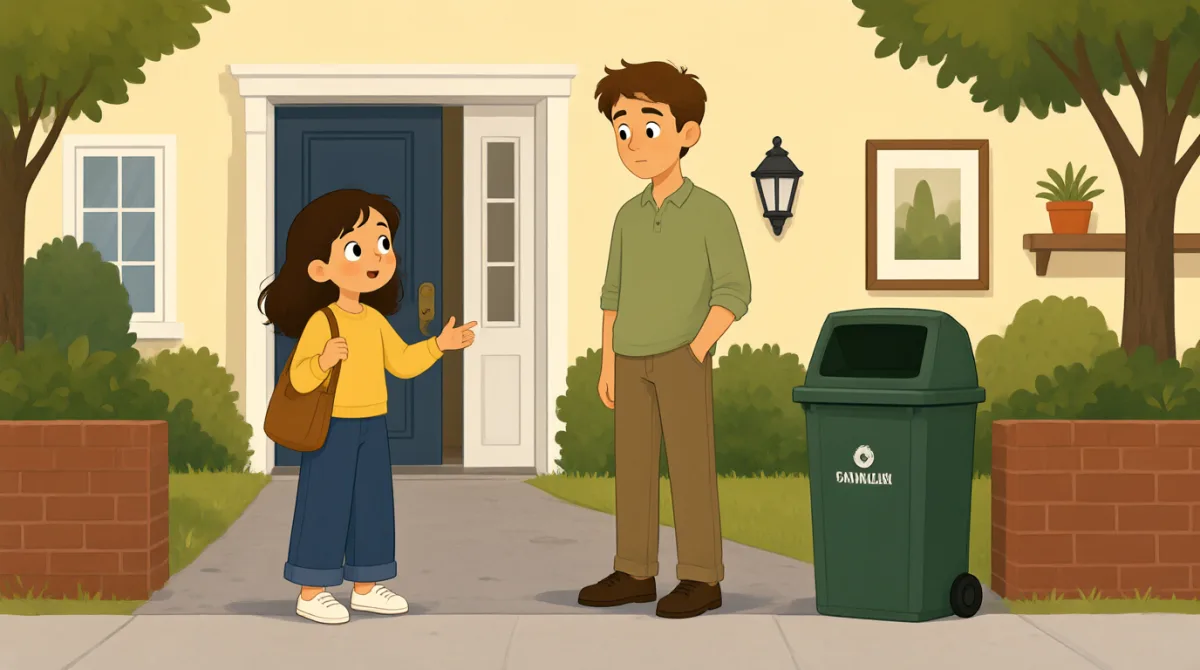

Jack, I wanted to check on a couple of house rules. Are there quiet hours in the evening?
ジャック、家のルールについていくつか確認したいんだけど。夜は静かにする時間帯ってある?

Yes, please keep things quiet after ten. The neighbors are friendly, but sound carries pretty easily here.
うん、10時以降は静かにしてね。近所の人たちは親切だけど、ここは音がけっこう響きやすいんだ。
Of course. And what should I do with the trash? Should I put it outside before I leave?
もちろん。それから、ゴミはどうすればいい?出かける前に外に出しておけばいい?
There are bins beside the shed. Please separate recycling, and take the bags out before checkout if they're full.
物置の横にゴミ箱があるよ。リサイクルごみは分けて、袋がいっぱいならチェックアウト前に外に出してね。
Got it. One more thing: where should I park? I noticed the driveway looks a little narrow.
わかった。もう一つだけ。どこに駐車すればいい? driveway が少し狭そうだなと思って。
You can park in the space by the fence. The driveway is tight, so it’s easier to back in slowly from the street.
フェンスのそばのスペースに停めていいよ。 driveway が狭いから、道路からゆっくりバックで入れるほうが楽だよ。
Thanks for the heads-up. Is it okay if I leave my car there overnight?
教えてくれてありがとう。車をそこに一晩置いておいても大丈夫?
Absolutely. Just leave enough room for the gate to open, and you’ll be all set.
もちろん。ゲートが開けられるように十分なスペースだけ空けておけば、それで大丈夫だよ。
語彙8
- quiet hoursquiet hours
Times when people are expected to keep noise down. Here, guests should be quiet after ten in the evening.
静かにしておくことが求められる時間帯のことです。ここでは、宿泊者は夜10時以降静かにする必要があります。
- sound carriessound carries
Sound travels easily from one place to another. You can use this phrase to explain why people nearby may hear noise.
音がある場所から別の場所へ簡単に伝わる、という意味です。近くの人に騒音が聞こえるかもしれない理由を説明するときに使えます。
- separate recyclingseparate recycling
Sort recyclable items from other trash. This phrase is useful when asking or explaining how to dispose of waste.
リサイクルできるものをほかのゴミと分ける、という意味です。ゴミの捨て方を尋ねたり説明したりするときに便利な表現です。
- before checkoutbefore checkout
Before you leave the rental at the end of your stay. Use it to describe a task that needs to be done before departing.
滞在の最後に、レンタル先を出る前に、という意味です。出発前に済ませる必要がある作業を説明するときに使います。
- heads-upheads-up
A helpful warning or piece of information given in advance. You can say “Thanks for the heads-up” when someone alerts you to something useful.
前もって伝える役立つ注意や情報のことです。誰かが便利な情報を教えてくれたとき、「Thanks for the heads-up」と言えます。
- back inback in
To drive a vehicle into a parking space in reverse. It is often used when giving instructions about how to park.
車をバックさせて駐車スペースに入れる、という意味です。駐車方法を指示するときによく使われます。
- tighttight
Narrow or difficult to move through, with little extra space. Here, it describes a driveway that may be hard to drive into.
狭くて通りにくく、余分なスペースがほとんどない、という意味です。ここでは、車で入るのが難しいかもしれない driveway を表しています。
- all setall set
Ready, finished, or arranged without any problems. It’s a casual way to reassure someone that everything is taken care of.
問題なく準備ができている、またはすべて整っている、という意味です。すべて大丈夫だと相手を安心させるカジュアルな表現です。
重要な文7
- 1
Are there quiet hours in the evening?
夜は静かにする時間帯ってある?
Use this polite question to ask about rules for noise at a place you are visiting. You can replace “quiet hours” with another rule or restriction.
訪問先の騒音に関するルールを尋ねる、丁寧な質問です。「quiet hours」を別のルールや制限に置き換えることもできます。
- 2
And what should I do with the trash?
それから、ゴミはどうすればいい?
This is a natural way to ask how to handle something during your stay. Replace “the trash” with another item or task, such as the towels or dishes.
滞在中に何かをどう扱えばよいか尋ねる自然な言い方です。「the trash」を「the towels」や「dishes」など、別の物や作業に置き換えられます。
- 3
Should I put it outside before I leave?
出かける前に外に出しておけばいい?
Use this question to check whether you need to do something before departing. Replace “put it outside” with the action you want to confirm.
出発前に何かをする必要があるか確認するときに使う質問です。「put it outside」を、確認したい行動に置き換えられます。
- 4
Please separate recycling, and take the bags out before checkout if they're full.
リサイクルごみは分けて、袋がいっぱいならチェックアウト前に外に出してね。
This sentence gives two practical instructions and includes a condition with “if.” You can use the same pattern to explain what someone should do and when.
この文では、実用的な指示を2つ伝え、「if」を使って条件も加えています。同じ形を使って、相手が何をすべきか、またそれをいつ行うべきか説明できます。
- 5
I noticed the driveway looks a little narrow.
driveway が少し狭そうだなと思って。
Use “I noticed…” to introduce something you have observed before asking a follow-up question. “A little” softens the description and makes it sound less direct.
「I noticed…」は、追加の質問をする前に、自分が気づいたことを伝える表現です。「A little」を使うと表現がやわらぎ、直接的すぎない印象になります。
- 6
The driveway is tight, so it’s easier to back in slowly from the street.
driveway が狭いから、道路からゆっくりバックで入れるほうが楽だよ。
This explains a problem and offers a practical solution using “so.” You can use this structure to give advice and a reason for it.
「so」を使って問題を説明し、実用的な解決策を提案しています。この形を使うと、理由を添えてアドバイスできます。
- 7
Just leave enough room for the gate to open, and you’ll be all set.
ゲートが開けられるように十分なスペースだけ空けておけば、それで大丈夫だよ。
This gives a simple instruction followed by reassurance. Use “leave enough room for…” when someone needs to keep space clear for something.
簡単な指示のあとに、安心させる言葉を続けています。何かのためにスペースを空けておく必要があるときは、「leave enough room for…」を使います。