Reporting a Hot Water Problem
After the shower runs cold, Emma lets Jack know that the hot water isn't working. Jack asks a few questions and arranges to come by and check the heater.
Dialogue10
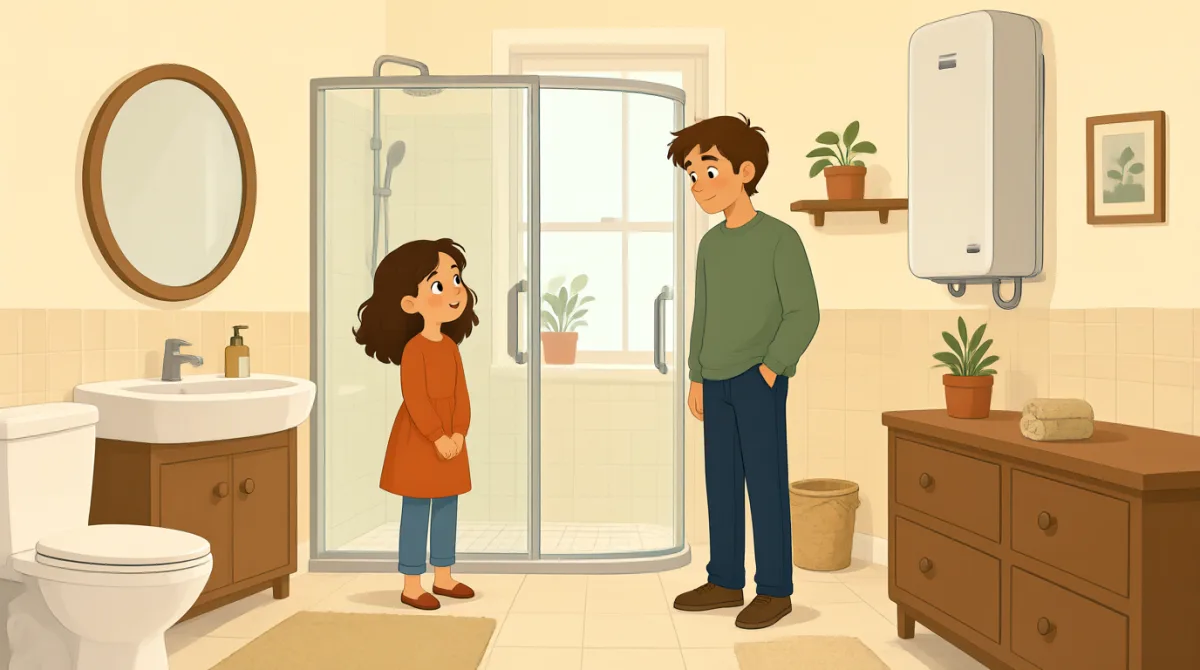

Hi, Jack. I wanted to let you know the shower went cold after a few minutes, and I couldn't get the hot water back.

Sorry about that, Emma. Did the water start out hot, or was it cold from the beginning?
It was hot at first, then gradually turned cold. I waited a bit and tried again, but it didn't help.
Thanks for checking. Is the heater switch in the bathroom turned on? It’s next to the light switch.
Yes, it’s on. I also checked the kitchen tap, and that water is cold too, so it seems to be the whole place.
Got it. It sounds like the heater may have switched off. I can come by and take a look in about twenty minutes.
That works for me. I’ll be here. Should I leave the heater alone until you arrive?
Yes, please don’t touch the controls. I’ll check the unit and get it going again if it’s a simple fix.
Thanks for sorting it out so quickly. I was hoping to take another shower before heading out, so I appreciate the help.
No problem. If it needs more than a quick fix, I’ll let you know what the next step is. See you soon.
Vocabulary7
- let you know
To tell someone something or give them an update. You can use it when reporting a problem or sharing important information.
- went cold
Became cold after being warm. This phrase is useful for describing water or another thing that changes temperature.
- from the beginning
From the very start. Use it to clarify whether something was happening right away or began later.
- gradually turned cold
Became cold little by little, rather than all at once. This describes how a temperature or situation changed over time.
- take a look
To examine or check something. It’s a casual way to say you’ll inspect a problem.
- come by
To visit a place, usually for a short time. You can use it when arranging for someone to stop at your home or rental.
- quick fix
A simple repair that can be done quickly. Use it when a problem may not need extensive work.
Key Sentences7
- 1
I wanted to let you know the shower went cold after a few minutes, and I couldn't get the hot water back.
This is a polite, clear way to report a problem and explain what happened. You can reuse “I wanted to let you know…” when informing someone about an issue.
- 2
Did the water start out hot, or was it cold from the beginning?
This question helps clarify when a problem started. You can use “Did [something] start out [one way], or was it [another way] from the beginning?” to compare possibilities.
- 3
I waited a bit and tried again, but it didn't help.
This explains what you did to solve a problem and whether it worked. Replace “waited a bit” and “tried again” with the steps you took.
- 4
I also checked the kitchen tap, and that water is cold too, so it seems to be the whole place.
This gives evidence that a problem affects more than one area. You can use “so it seems to be…” to share a reasonable conclusion.
- 5
I can come by and take a look in about twenty minutes.
This is a natural way to offer a visit and give an estimated time. Replace “come by” and the time to arrange another visit.
- 6
Should I leave the heater alone until you arrive?
This is a useful way to ask whether you should avoid touching or changing something. Replace “the heater” with the item you’re asking about.
- 7
If it needs more than a quick fix, I’ll let you know what the next step is.
This explains what someone will do if a problem is more complicated than expected. You can reuse “If it needs more than…, I’ll let you know…” when discussing repairs or plans.