Getting the Key and a Tour
鍵の受け取りと室内の案内
Jack meets Emma at the rental, hands over the key, and shows her around. Emma asks where to find a few useful things before settling in.
ジャックは貸別荘でエマを迎え、鍵を渡して室内を案内します。エマは荷物を片づける前に、いくつか必要なものがどこにあるか尋ねます。
会話9
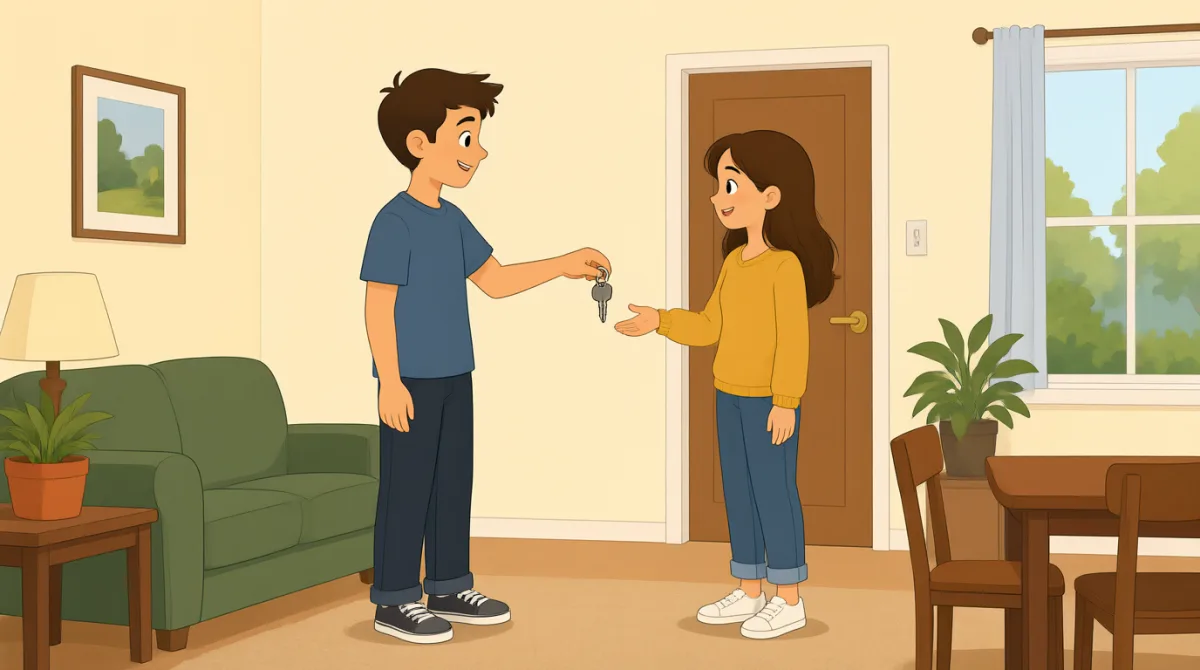

Hi, Emma! You made it. Here’s the key. Let me show you around before you get settled.
やあ、エマ!無事に着いたね。はい、鍵だよ。落ち着く前に中を案内するね。

Thanks! The place looks lovely. Where should I leave my shoes, and is it okay to open the windows?
ありがとう!素敵なところだね。靴はどこに置けばいい?窓を開けても大丈夫?
You can leave your shoes by the front door. And sure, open the windows—just remember to close them if it rains.
靴は玄関のそばに置いてね。窓は開けて大丈夫だよ。雨が降ったら閉めるのを忘れないでね。
Got it. Could you show me where the towels are? I’d also like to find the extra blankets before tonight.
わかった。タオルがどこにあるか教えてくれる?今夜に備えて、予備の毛布も見つけておきたいんだ。
The towels are in the bathroom cabinet, and the extra blankets are in the bedroom closet on the top shelf.
タオルは浴室の洗面台の下の棚にあるよ。予備の毛布は寝室のクローゼットのいちばん上の棚。
Perfect. And how does the coffee maker work? I’m hoping to have a cup before I head out tomorrow.
いいね。コーヒーメーカーの使い方も教えてくれる?明日出かける前に一杯飲みたいんだ。
Just add water here and a scoop of coffee in the filter. I’ve left a few packets on the counter to get you started.
ここに水を入れて、フィルターにコーヒーを一杯分入れるだけだよ。使い始められるように、カウンターに小袋をいくつか置いておいたよ。
That’s really helpful, thanks. One last thing—where can I find a flashlight in case I need it at night?
すごく助かる、ありがとう。あと一つだけ。夜に必要になったとき、懐中電灯はどこにある?
There’s one in the kitchen drawer by the fridge. If anything else comes up, just message me and I’ll be happy to help.
冷蔵庫のそばにあるキッチンの引き出しに入ってるよ。ほかにも何かあったら、気軽にメッセージして。喜んで手伝うよ。
語彙7
- You made it.無事に着いたね
This is a friendly way to say someone has arrived. You can use it to welcome a guest or friend.
相手が到着したことを歓迎する、親しみのある言い方です。ゲストや友人を迎えるときに使えます。
- show you around中を案内する
To show someone the different rooms or areas of a place. It is useful when welcoming someone to a home, hotel, or workplace.
建物の部屋や場所を人に見せて案内することです。家やホテル、職場に人を迎えるときに便利な表現です。
- get settled落ち着く
To unpack and become comfortable in a new place. You can use it when talking about arriving at a rental or moving into a new home.
荷ほどきをして、新しい場所でくつろげるようになることです。貸別荘に着いたときや、新しい家に引っ越したときに使えます。
- by the front door玄関のそばに
This means next to or near the main entrance. Use “by” to describe where something is located.
主な出入り口のすぐ近く、という意味です。by は、物がどこにあるかを表すときに使えます。
- get you started使い始められるように
This means to provide what someone needs at the beginning. You can use it when offering a small amount of help or supplies.
相手が最初に必要とするものを用意する、という意味です。ちょっとした手助けや物を提供するときに使えます。
- in case I need it必要になったときのために
This means for a possible situation when something might be needed. Use “in case” to explain why you are preparing for something.
何かが必要になるかもしれない場合に備えて、という意味です。in case は、何かに備える理由を説明するときに使います。
- comes up起こる
In this context, something that “comes up” is an unexpected question or problem. You can use this phrase when offering help if a need arises.
この場合、comes up は予想外の質問や問題が生じることを指します。必要なことが出てきたら手伝うよ、と伝えるときに使えます。
重要な文6
- 1
Let me show you around before you get settled.
落ち着く前に中を案内するね。
This is a welcoming way to offer someone a tour before they unpack or relax. You can reuse “Let me show you around” when introducing someone to a new place.
荷ほどきしたりくつろいだりする前に、場所を案内しようと申し出る歓迎の表現です。新しい場所を紹介するときは、Let me show you around をそのまま使えます。
- 2
Where should I leave my shoes, and is it okay to open the windows?
靴はどこに置けばいい?窓を開けても大丈夫?
This politely asks about two practical house rules. You can replace “leave my shoes” or “open the windows” with other actions you want permission or guidance for.
家の実用的なルールを二つ、丁寧に尋ねる表現です。許可や案内を求めたい別の行動に合わせて、“leave my shoes” や “open the windows” を入れ替えられます。
- 3
Could you show me where the towels are?
タオルがどこにあるか教えてくれる?
This is a polite way to ask where something is. Reuse “Could you show me where the ___ is/are?” to ask about items in a home or other place.
物の場所を尋ねる丁寧な言い方です。家やほかの場所にある物について尋ねるときは、“Could you show me where the ___ is/are?” の形を使えます。
- 4
I’d also like to find the extra blankets before tonight.
今夜に備えて、予備の毛布も見つけておきたいんだ。
This explains what you want to locate and when you will need it. You can use “I’d also like to find…” to add another request.
何を見つけたいのか、いつ必要なのかを伝える表現です。もう一つお願いを付け加えるときは、“I’d also like to find…” が使えます。
- 5
I’m hoping to have a cup before I head out tomorrow.
明日出かける前に一杯飲みたいんだ。
This naturally explains a plan using “I’m hoping to” and “head out,” which means leave. You can change the activity and time to describe your own plans.
“I’m hoping to” と「出かける」という意味の “head out” を使って、予定を自然に伝えています。行動や時間を入れ替えれば、自分の予定を説明できます。
- 6
If anything else comes up, just message me and I’ll be happy to help.
ほかにも何かあったら、気軽にメッセージして。喜んで手伝うよ。
This offers help in a friendly, reassuring way. You can reuse “If anything else comes up” when inviting someone to contact you with further questions.
親しみを込めて、安心させるように手助けを申し出る表現です。追加の質問があれば連絡してね、と伝えるときに “If anything else comes up” を使えます。