Joining an Orientation Event
オリエンテーションに参加する
At an orientation event, Emma and Leo join a small group led by Grace and introduce themselves to other students. They exchange ideas about settling in and decide to meet up for lunch.
オリエンテーションで、エマとレオはグレースが進行する小グループに加わり、ほかの学生に自己紹介をする。新生活について情報を交換し、ランチに行く約束をする。
会話9
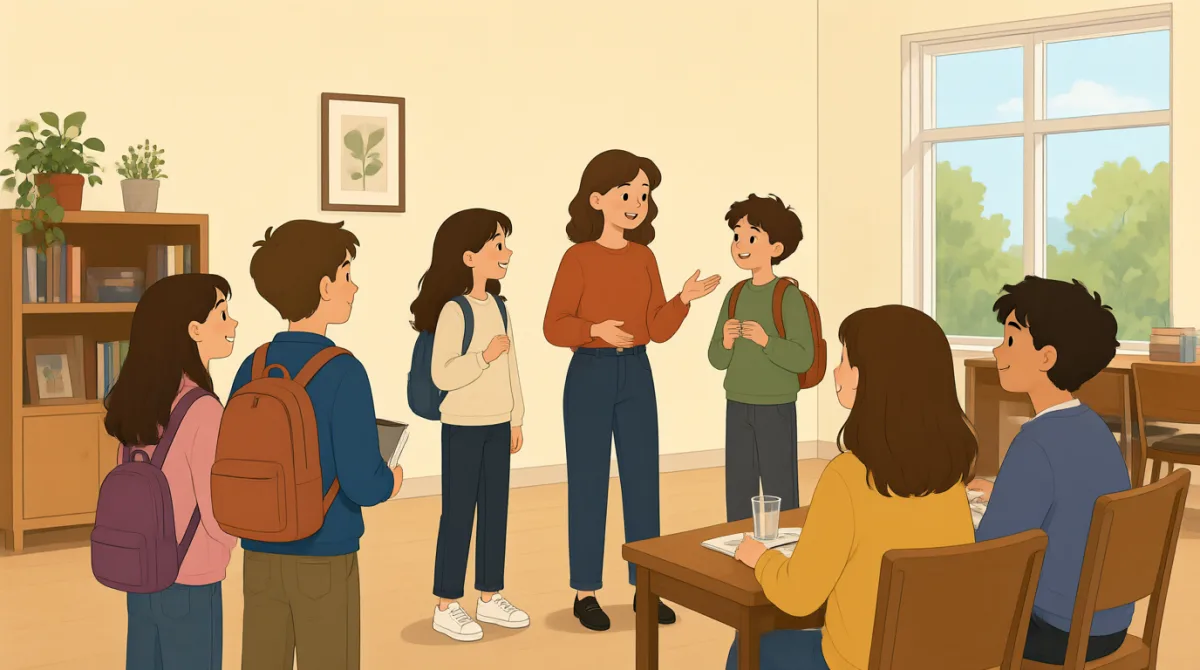

Welcome to orientation! Let’s start with a quick introduction. Share your name, what you’re studying, and one thing you’re hoping to do this week.
オリエンテーションへようこそ!まずは簡単に自己紹介しよう。名前と専攻、それから今週やってみたいことを一つ教えてね。

I’m Emma, and I’m studying environmental science. I’d love to find a good place to study and get to know the campus.
エマだよ。環境科学を専攻してるんだ。勉強にいい場所を見つけて、キャンパスのことももっと知りたいな。

I’m Leo, a business student. I’ve been here a few days, but I still get turned around trying to find my classes.
レオだよ。経営学専攻。こっちに来て数日たつけど、教室を探そうとするとまだ道に迷っちゃうんだ。
That’s completely normal. The campus map helps, but the best way to learn is to walk around with someone who knows the area.
それは全然普通だよ。キャンパスマップも役に立つけど、いちばんいいのは、この辺に詳しい人と一緒に歩き回ってみることだね。
I’m still figuring out the buses and where to get groceries. It’s a lot to take in, but everyone’s been really welcoming.
バスの乗り方とか、食料品をどこで買うかとか、まだいろいろ覚えてるところなんだ。覚えることがたくさんあるけど、みんなすごく親切にしてくれるよ。
I know what you mean. I found a little café near the library yesterday, and the sandwiches are pretty good.
わかるよ。昨日、図書館の近くに小さなカフェを見つけたんだ。サンドイッチがけっこうおいしいよ。
That sounds like a useful tip. Why don’t you two grab lunch together after this? It’s an easy way to make the first week feel less overwhelming.
それはいい情報だね。このあと、二人でランチに行ったらどう?最初の週の大変さも、少し気楽に感じられるよ。
I’d love to. Leo, want to show me that café? We can compare notes on getting around campus.
ぜひ行きたい!レオ、そのカフェを案内してくれる?キャンパスの移動について情報交換できるね。
Sure! Let’s meet by the library entrance at noon. And if we get lost, we’ll just call it a campus tour.
もちろん!正午に図書館の入口のところで待ち合わせよう。迷ったら、キャンパスツアーってことにしちゃおう。
語彙8
- get to know the campusキャンパスのことを知る
To become familiar with the campus and the places there. You might use this phrase when talking about exploring a new school.
キャンパスやそこにある場所に詳しくなることです。新しい学校を見て回る話をするときに使えます。
- get turned around道に迷う
To become confused about which way to go or where you are. It is a casual way to describe getting lost.
どちらへ行けばいいか、または自分がどこにいるのか分からなくなることです。道に迷ったことをくだけた言い方で表します。
- figuring out理解しようとしている、やり方を覚えている
Learning how something works or finding a solution. Here, Emma is learning how to use the buses and where to shop.
何かの仕組みを学んだり、解決方法を見つけたりすることです。ここでは、エマがバスの利用方法や買い物をする場所を覚えているところです。
- a lot to take in覚えることがたくさんある
A lot of new information or experiences to understand at once. You can use this when a new situation feels overwhelming.
一度に理解しなければならない新しい情報や経験がたくさんあることです。新しい状況に圧倒されそうなときに使えます。
- welcoming親切な、温かく迎えてくれる
Friendly and making someone feel accepted. It is useful for describing people or a place that helps newcomers feel comfortable.
親しみやすく、相手を受け入れていると感じさせることです。新しく来た人が安心できるようにしてくれる人や場所を表すのに便利です。
- compare notes情報交換をする
To share and discuss what you each know or have experienced. Students might compare notes about classes, campus, or settling in.
お互いが知っていることや経験したことを共有して話し合うことです。学生同士で授業やキャンパス、新生活について情報交換するときなどに使えます。
- grab lunch気軽にランチをする
To have lunch, often in a casual or informal way. You can use this phrase to suggest eating together.
多くの場合、気軽な雰囲気で昼食をとることです。一緒に食事をしようと誘うときに使えます。
- meet by〜の近くで待ち合わせる
To arrange to meet near a particular place. For example, you can say, “Let’s meet by the main entrance.”
特定の場所の近くで会う約束をすることです。たとえば、“Let’s meet by the main entrance.”(正面入口のところで待ち合わせよう)と言えます。
重要な文8
- 1
The campus map helps, but the best way to learn is to walk around with someone who knows the area.
キャンパスマップも役に立つけど、いちばんいいのは、この辺に詳しい人と一緒に歩き回ってみることだね。
This sentence gives advice and contrasts two ways of learning a place. Reuse “The best way to learn is to…” to suggest a practical way to gain experience.
この文では、場所を知る二つの方法を比べながら、アドバイスをしています。“The best way to learn is to…”(学ぶのにいちばんいい方法は〜すること)を使うと、実際に経験を積むための方法を提案できます。
- 2
I’m still figuring out the buses and where to get groceries.
バスの乗り方とか、食料品をどこで買うかとか、まだいろいろ覚えてるところなんだ。
This is a natural way to explain what you are still learning in a new place. Replace “the buses” and “where to get groceries” with other things you are working out.
新しい場所で、まだ何を学んでいるところなのかを伝える自然な言い方です。“the buses”や“where to get groceries”を、自分が覚えようとしている別のことに置き換えて使えます。
- 3
It’s a lot to take in, but everyone’s been really welcoming.
覚えることがたくさんあるけど、みんなすごく親切にしてくれるよ。
This sentence acknowledges that a new experience can feel overwhelming while also sharing a positive impression. Use “It’s a lot to take in, but…” to balance a challenge with a reassuring point.
新しい経験に圧倒されそうだと認めつつ、よい印象も伝える文です。“It’s a lot to take in, but…”(覚えることがたくさんあるけど……)を使うと、大変なことと安心できる点をバランスよく伝えられます。
- 4
I know what you mean.
言いたいこと、わかるよ。
This short phrase shows that you understand and relate to someone’s experience. It is useful in conversation before adding your own example or opinion.
相手の経験を理解し、自分も共感していることを示す短い表現です。自分の例や意見を付け加える前に使うと、会話が自然につながります。
- 5
Why don’t you two grab lunch together after this?
このあと、二人でランチに行ったらどう?
This is a friendly way to suggest an activity. Use “Why don’t you…?” to make an informal suggestion to one person or a group.
何かをしようと気軽に提案する言い方です。“Why don’t you…?”(〜したらどう?)を使うと、一人またはグループにくだけた提案ができます。
- 6
I’d love to.
ぜひ行きたい!
This is a warm, enthusiastic way to accept an invitation. You can use it on its own before confirming the details.
誘いを喜んで受ける、温かくて前向きな表現です。詳細を確認する前に、この一言だけで返事をすることもできます。
- 7
We can compare notes on getting around campus.
キャンパスの移動について情報交換できるね。
This sentence suggests sharing information about a common topic. Reuse “We can compare notes on…” when you want to discuss what you each know or have experienced.
共通の話題について情報を共有しようと提案する文です。“We can compare notes on…”(〜について情報交換できるね)を使うと、お互いが知っていることや経験したことを話し合えます。
- 8
Let’s meet by the library entrance at noon.
正午に図書館の入口のところで待ち合わせよう。
This clearly sets a meeting place and time. Use “Let’s meet by [place] at [time]” to make a simple plan.
待ち合わせる場所と時間をはっきり決める表現です。“Let’s meet by [place] at [time]”の形を使うと、簡単に予定を立てられます。