Meeting Your Dorm Roommate
寮のルームメイトとの出会い
Emma meets Leo in their dorm room and they talk about where they’re from, what they’re studying, and how to share the space. They find a few things they have in common and make plans to explore campus together.
エマは寮の部屋でレオと出会い、出身地や専攻、部屋の使い方について話します。共通点がいくつか見つかり、一緒にキャンパスを回る約束をします。
会話9
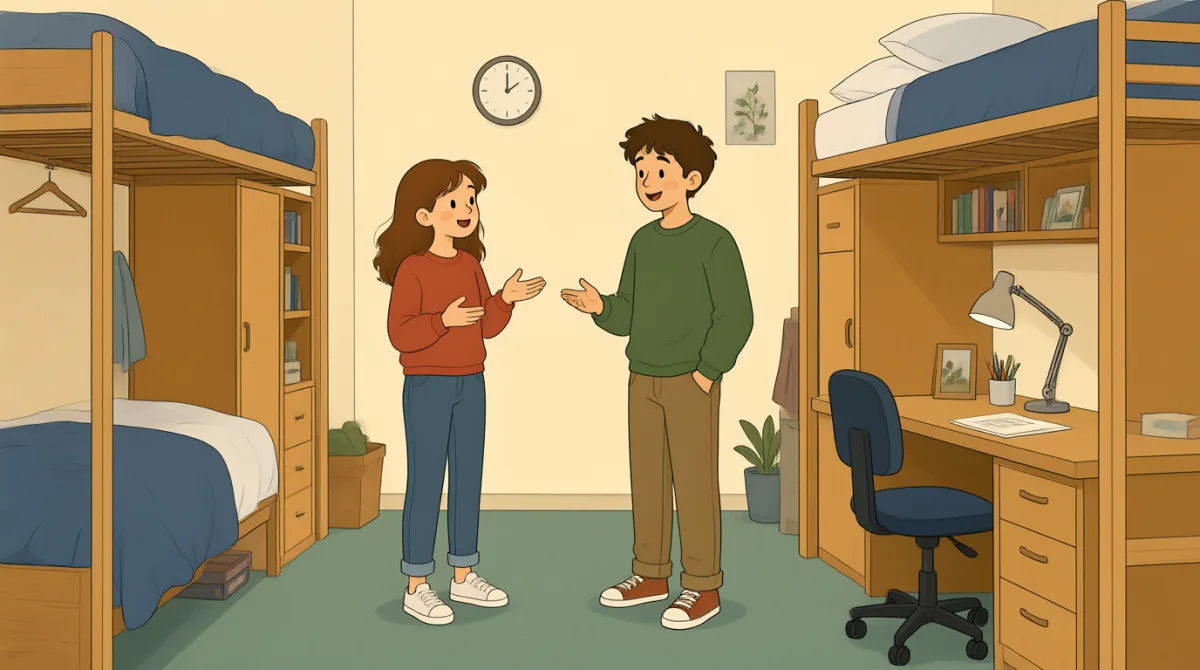

Hey, you must be Leo. I’m Emma—your new roommate. I just got here, and I’m still figuring out where everything goes.
やあ、レオだよね。私はエマ。新しいルームメイトだよ。着いたばかりで、荷物をどこに置けばいいかまだ考えてるところ。

That’s me! Welcome in. I’m from California, and I’m studying environmental science. What brought you here?
そうだよ!ようこそ。カリフォルニア出身で、環境科学を専攻してるんだ。君はどうしてここに来たの?
I’m from Canada, and I’m studying business. I wanted to experience life somewhere new, though I’m a little nervous about being so far from home.
カナダ出身で、経営学を専攻してるよ。どこか新しい場所での暮らしを経験してみたかったんだ。でも、家からこんなに遠くにいるのは少し不安かな。
I get that. Moving in was a lot to take in, but everyone I’ve met has been friendly. We’ll get the hang of things pretty quickly.
わかるよ。引っ越しは覚えることが多かったけど、会った人はみんな親切だった。すぐに慣れるよ。
I hope so! How should we share the room? I’m happy to keep my side tidy, and I’d rather check before borrowing anything.
そうだといいな!部屋はどうやって使おうか?自分の側はきれいにしておくし、何か借りる前には確認したいな。
That sounds fair. Let’s each use one desk and one closet, and we can agree on quiet hours when we need to study or sleep.
それがよさそうだね。それぞれ机とクローゼットを一つずつ使って、勉強したり寝たりするときの静かにする時間も決めよう。
Deal. I also like hiking and trying new food, so maybe we have a few things in common already.
いいね。私もハイキングと新しい食べ物を試すのが好きだから、もう共通点がいくつかあるかもね。
For sure! There’s a campus trail and a food hall nearby. Want to explore them together tomorrow after our morning classes?
もちろん!近くにキャンパスの遊歩道とフードホールがあるよ。明日、午前の授業のあと一緒に見に行かない?
I’d love to. It’ll be nice to have someone show me around—and maybe I can finally find my way back without checking a map.
ぜひ!誰かに案内してもらえるとうれしいな。それに、地図を見なくてもやっと帰り道がわかるようになるかも。
語彙8
- figuring out where everything goesfiguring out where everything goes:物をどこに置くか考える
Working out where things should be placed. You can use “figuring out” when you are learning how to do something or understand a new place.
物をどこに置けばいいかを考えている、という意味です。“figuring out”は、何かのやり方を覚えたり、新しい場所のことを理解したりするときに使えます。
- What brought you here?What brought you here?:どうしてここに来たの?
A friendly way to ask why someone came to a place. You can also use it to ask what led someone to a school, city, or event.
相手がなぜその場所に来たのかを尋ねる、親しみのある表現です。学校や街、イベントに来たきっかけを聞くときにも使えます。
- get the hang of thingsget the hang of things:物事に慣れる
Become comfortable with how things work. Use this phrase when someone is learning a new routine or skill.
物事の仕組みに慣れる、という意味です。新しい習慣やスキルを身につけている人について話すときに使います。
- keep my side tidykeep my side tidy:自分の側をきれいにしておく
Keep my part of a shared space neat and organized. You can change “my side” to name another area you share.
共有スペースの自分の場所を、きちんと片づけておくという意味です。“my side”は、一緒に使うほかの場所を表す言葉に変えられます。
- check before borrowing anythingcheck before borrowing anything:何かを借りる前に確認する
Ask for permission before using someone else’s things. This is a considerate phrase for shared living situations.
人の物を使う前に、許可をもらうという意味です。共同生活で相手を気づかうときに使える表現です。
- quiet hoursquiet hours:静かにする時間
Times when people agree to keep noise low. You can use this phrase when discussing study or sleep schedules.
音を立てないようにしようと決めた時間のことです。勉強や睡眠の時間について相談するときに使えます。
- have a few things in commonhave a few things in common:いくつか共通点がある
Share some interests or qualities with another person. Use this phrase when you discover that you like some of the same things.
相手と共通の趣味や性質がある、という意味です。同じものが好きだとわかったときに使います。
- show me aroundshow me around:あちこち案内する
Take me to different places and help me become familiar with them. You can use this when asking someone to introduce you to a new area.
いろいろな場所に連れて行って、どんなところか教えてくれる、という意味です。新しい場所を案内してほしいときに使えます。
重要な文8
- 1
I’m from Canada, and I’m studying business.
カナダ出身で、経営学を専攻してるよ。
This is a simple way to introduce your home country and what you study. You can replace “Canada” and “business” with your own details.
出身国と専攻を簡単に紹介する表現です。“Canada”と“business”を自分の情報に置き換えて使えます。
- 2
I wanted to experience life somewhere new, though I’m a little nervous about being so far from home.
どこか新しい場所での暮らしを経験してみたかったんだ。でも、家からこんなに遠くにいるのは少し不安かな。
This sentence explains a reason for moving while also sharing a feeling. Use “though” to add a contrast or a concern.
引っ越しをした理由を話しながら、自分の気持ちも伝える文です。“though”は、対比や心配なことを付け加えるときに使います。
- 3
We’ll get the hang of things pretty quickly.
すぐに慣れるよ。
This is a reassuring way to say that people will soon become comfortable with a new situation. Use “get the hang of” when learning a routine or skill.
新しい状況にも、すぐ慣れるよと相手を安心させる表現です。“get the hang of”は、新しい習慣やスキルを身につけるときに使います。
- 4
I’d rather check before borrowing anything.
何か借りる前には確認したいな。
This is a polite way to explain that you prefer to ask permission first. You can use “I’d rather” to state what you prefer to do.
まず許可をもらいたいという希望を丁寧に伝える表現です。“I’d rather”を使うと、自分がどちらを好むかを伝えられます。
- 5
Let’s each use one desk and one closet, and we can agree on quiet hours when we need to study or sleep.
それぞれ机とクローゼットを一つずつ使って、勉強したり寝たりするときの静かにする時間も決めよう。
This sentence suggests a practical plan for sharing a room. Use “Let’s” to propose an arrangement, then add details about what everyone will do.
部屋を共有するための現実的な案を提案する文です。“Let’s”で決めごとを提案し、そのあとにみんながどうするかを付け加えています。
- 6
I also like hiking and trying new food, so maybe we have a few things in common already.
私もハイキングと新しい食べ物を試すのが好きだから、もう共通点がいくつかあるかもね。
This sentence shares interests and helps start a friendly conversation. Use “we have a few things in common” when you discover shared interests.
自分の趣味を話して、親しみのある会話を始める文です。“we have a few things in common”は、共通の趣味があるとわかったときに使います。
- 7
Want to explore them together tomorrow after our morning classes?
明日、午前の授業のあと一緒に見に行かない?
This is a casual way to invite someone to do something at a specific time. You can replace the activity and time with your own plans.
具体的な日時を伝えて、気軽に誘う表現です。自分の予定に合わせて、することや時間を入れ替えられます。
- 8
It’ll be nice to have someone show me around—and maybe I can finally find my way back without checking a map.
誰かに案内してもらえるとうれしいな。それに、地図を見なくてもやっと帰り道がわかるようになるかも。
This sentence expresses appreciation and adds a lighthearted detail about getting familiar with a place. Use “show me around” when someone can help you explore a new area.
感謝の気持ちを伝えながら、その場所に慣れることについて軽い冗談を加えています。“show me around”は、新しい場所を一緒に回って案内してもらうときに使います。