Joining an Orientation Event
ओरिएंटेशन कार्यक्रम में शामिल होना
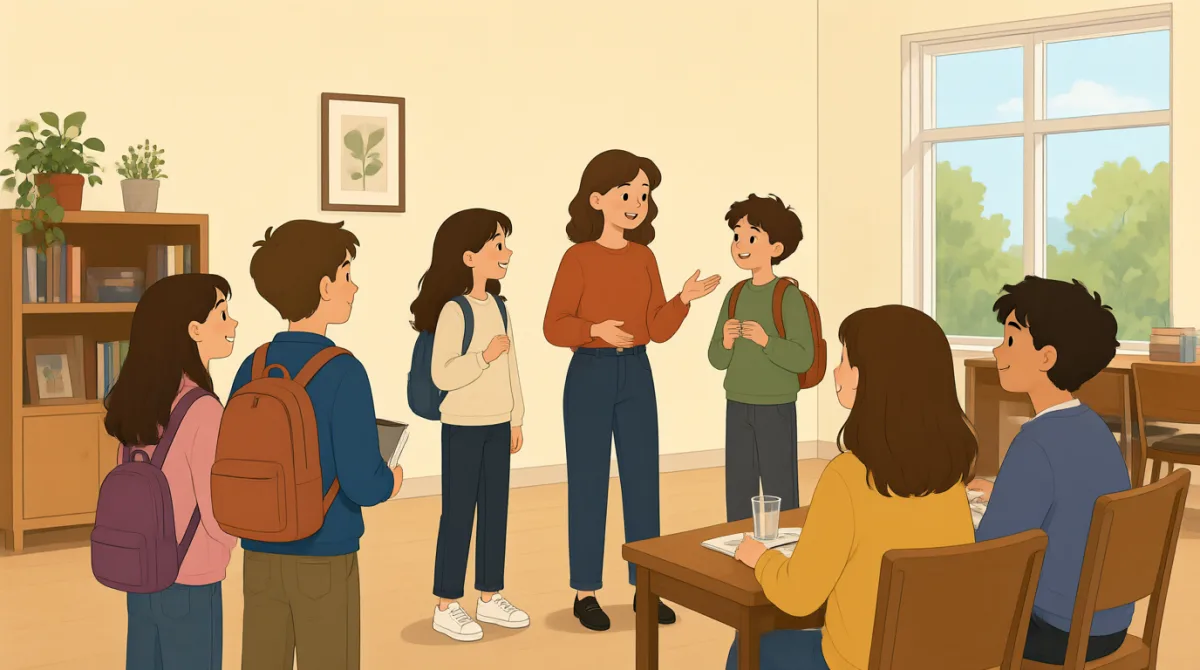
At an orientation event, Emma and Leo join a small group led by Grace and introduce themselves to other students. They exchange ideas about settling in and decide to meet up for lunch.
एक ओरिएंटेशन कार्यक्रम में Emma और Leo, Grace के नेतृत्व वाले एक छोटे समूह में शामिल होते हैं और दूसरे विद्यार्थियों से अपना परिचय देते हैं। वे नए माहौल में ढलने के तरीकों पर विचार साझा करते हैं और दोपहर के भोजन के लिए मिलने का तय करते हैं।
संवाद9

Welcome to orientation! Let’s start with a quick introduction. Share your name, what you’re studying, and one thing you’re hoping to do this week.
ओरिएंटेशन में आपका स्वागत है! चलिए, जल्दी से अपना परिचय देते हैं। अपना नाम, आप क्या पढ़ रहे हैं और इस हफ्ते आप कौन-सा काम करना चाहते हैं, यह बताइए।

I’m Emma, and I’m studying environmental science. I’d love to find a good place to study and get to know the campus.
मैं Emma हूँ और पर्यावरण विज्ञान पढ़ रही हूँ। मैं पढ़ाई करने के लिए कोई अच्छी जगह ढूँढ़ना और कैंपस को अच्छी तरह जानना चाहती हूँ।

I’m Leo, a business student. I’ve been here a few days, but I still get turned around trying to find my classes.
मैं Leo हूँ और बिज़नेस पढ़ रहा हूँ। मुझे यहाँ आए कुछ दिन हो गए हैं, लेकिन अपनी कक्षाएँ ढूँढ़ते समय मैं अभी भी रास्ता भटक जाता हूँ।
That’s completely normal. The campus map helps, but the best way to learn is to walk around with someone who knows the area.
यह बिल्कुल सामान्य है। कैंपस का नक्शा मदद करता है, लेकिन जगह को समझने का सबसे अच्छा तरीका है कि किसी ऐसे व्यक्ति के साथ घूमा जाए जो इस इलाके को जानता हो।
I’m still figuring out the buses and where to get groceries. It’s a lot to take in, but everyone’s been really welcoming.
मैं अभी भी बसों और किराने का सामान खरीदने की जगहों के बारे में पता लगा रही हूँ। एक साथ बहुत कुछ समझना पड़ रहा है, लेकिन यहाँ सब लोग बहुत मददगार और स्वागत करने वाले रहे हैं।
I know what you mean. I found a little café near the library yesterday, and the sandwiches are pretty good.
मैं समझ सकता हूँ कि तुम क्या कहना चाहती हो। कल मुझे लाइब्रेरी के पास एक छोटा-सा कैफ़े मिला, और वहाँ के सैंडविच काफ़ी अच्छे हैं।
That sounds like a useful tip. Why don’t you two grab lunch together after this? It’s an easy way to make the first week feel less overwhelming.
यह तो काफ़ी उपयोगी सुझाव है। तुम दोनों इसके बाद साथ में दोपहर का खाना क्यों नहीं खा लेते? इससे पहला हफ्ता कम मुश्किल लगेगा।
I’d love to. Leo, want to show me that café? We can compare notes on getting around campus.
मुझे बहुत अच्छा लगेगा। Leo, क्या तुम मुझे वह कैफ़े दिखाना चाहोगे? हम कैंपस में आने-जाने के बारे में अपने अनुभव साझा कर सकते हैं।
Sure! Let’s meet by the library entrance at noon. And if we get lost, we’ll just call it a campus tour.
ज़रूर! दोपहर बारह बजे लाइब्रेरी के प्रवेश द्वार के पास मिलते हैं। और अगर हम रास्ता भटक गए, तो इसे कैंपस का दौरा ही कह देंगे।
शब्दावली8
- get to know the campusकैंपस को अच्छी तरह जानना
To become familiar with the campus and the places there. You might use this phrase when talking about exploring a new school.
कैंपस और वहाँ की जगहों से परिचित होना। नए स्कूल को जानने-समझने की बात करते समय आप इस वाक्यांश का इस्तेमाल कर सकते हैं।
- get turned aroundरास्ता भटक जाना
To become confused about which way to go or where you are. It is a casual way to describe getting lost.
किधर जाना है या आप कहाँ हैं, इसे लेकर भ्रमित हो जाना। रास्ता खो जाने का अनौपचारिक ढंग से वर्णन करने के लिए यह वाक्यांश इस्तेमाल किया जाता है।
- figuring outपता लगाना
Learning how something works or finding a solution. Here, Emma is learning how to use the buses and where to shop.
यह सीखना कि कोई चीज़ कैसे काम करती है या किसी समस्या का समाधान ढूँढ़ना। यहाँ Emma बसों का इस्तेमाल करना और खरीदारी की जगह ढूँढ़ना सीख रही है।
- a lot to take inएक साथ बहुत कुछ समझना
A lot of new information or experiences to understand at once. You can use this when a new situation feels overwhelming.
एक ही समय में समझने के लिए बहुत-सी नई जानकारी या अनुभव होना। जब कोई नई स्थिति भारी या परेशान करने वाली लगे, तब आप इसका इस्तेमाल कर सकते हैं।
- welcomingस्वागत करने वाला
Friendly and making someone feel accepted. It is useful for describing people or a place that helps newcomers feel comfortable.
मिलनसार और किसी को अपनापन महसूस कराने वाला। ऐसे लोगों या जगहों का वर्णन करने के लिए यह शब्द उपयोगी है जो नए लोगों को सहज महसूस कराते हैं।
- compare notesअनुभव साझा करना
To share and discuss what you each know or have experienced. Students might compare notes about classes, campus, or settling in.
आप दोनों जो जानते हैं या अनुभव कर चुके हैं, उसे साझा करके उस पर चर्चा करना। विद्यार्थी कक्षाओं, कैंपस या नए माहौल में ढलने के बारे में अपने अनुभव साझा कर सकते हैं।
- grab lunchदोपहर का खाना खा लेना
To have lunch, often in a casual or informal way. You can use this phrase to suggest eating together.
अक्सर अनौपचारिक ढंग से दोपहर का भोजन करना। साथ में खाना खाने का सुझाव देने के लिए आप इस वाक्यांश का इस्तेमाल कर सकते हैं।
- meet byके पास मिलना
To arrange to meet near a particular place. For example, you can say, “Let’s meet by the main entrance.”
किसी खास जगह के पास मिलने की योजना बनाना। उदाहरण के लिए, आप कह सकते हैं, “Let’s meet by the main entrance.”
मुख्य वाक्य8
- 1
The campus map helps, but the best way to learn is to walk around with someone who knows the area.
कैंपस का नक्शा मदद करता है, लेकिन जगह को समझने का सबसे अच्छा तरीका है कि किसी ऐसे व्यक्ति के साथ घूमा जाए जो इस इलाके को जानता हो।
This sentence gives advice and contrasts two ways of learning a place. Reuse “The best way to learn is to…” to suggest a practical way to gain experience.
यह वाक्य किसी जगह को सीखने के दो तरीकों की तुलना करते हुए सलाह देता है। व्यावहारिक अनुभव पाने का तरीका सुझाने के लिए “The best way to learn is to…” का दोबारा इस्तेमाल करें।
- 2
I’m still figuring out the buses and where to get groceries.
मैं अभी भी बसों और किराने का सामान खरीदने की जगहों के बारे में पता लगा रही हूँ।
This is a natural way to explain what you are still learning in a new place. Replace “the buses” and “where to get groceries” with other things you are working out.
नई जगह पर आप अभी क्या-क्या सीख रहे हैं, यह बताने का यह एक स्वाभाविक तरीका है। “the buses” और “where to get groceries” की जगह उन दूसरी चीज़ों के नाम रखें जिनके बारे में आप जानकारी जुटा रहे हैं।
- 3
It’s a lot to take in, but everyone’s been really welcoming.
एक साथ बहुत कुछ समझना पड़ रहा है, लेकिन यहाँ सब लोग बहुत मददगार और स्वागत करने वाले रहे हैं।
This sentence acknowledges that a new experience can feel overwhelming while also sharing a positive impression. Use “It’s a lot to take in, but…” to balance a challenge with a reassuring point.
यह वाक्य मानता है कि नया अनुभव भारी लग सकता है, और साथ ही एक सकारात्मक प्रभाव भी साझा करता है। किसी चुनौती के साथ आश्वस्त करने वाली बात जोड़ने के लिए “It’s a lot to take in, but…” का इस्तेमाल करें।
- 4
I know what you mean.
मैं समझ सकता हूँ कि तुम क्या कहना चाहती हो।
This short phrase shows that you understand and relate to someone’s experience. It is useful in conversation before adding your own example or opinion.
यह छोटा वाक्य दिखाता है कि आप सामने वाले के अनुभव को समझते हैं और उससे जुड़ाव महसूस करते हैं। अपनी मिसाल या राय बताने से पहले बातचीत में इसका इस्तेमाल करना उपयोगी है।
- 5
Why don’t you two grab lunch together after this?
तुम दोनों इसके बाद साथ में दोपहर का खाना क्यों नहीं खा लेते?
This is a friendly way to suggest an activity. Use “Why don’t you…?” to make an informal suggestion to one person or a group.
यह किसी गतिविधि का सुझाव देने का दोस्ताना तरीका है। किसी एक व्यक्ति या समूह को अनौपचारिक सुझाव देने के लिए “Why don’t you…?” का इस्तेमाल करें।
- 6
I’d love to.
मुझे बहुत अच्छा लगेगा।
This is a warm, enthusiastic way to accept an invitation. You can use it on its own before confirming the details.
किसी निमंत्रण को स्वीकार करने का यह गर्मजोशी भरा और उत्साहपूर्ण तरीका है। विवरण पक्का करने से पहले आप इसे अकेले भी कह सकते हैं।
- 7
We can compare notes on getting around campus.
हम कैंपस में आने-जाने के बारे में अपने अनुभव साझा कर सकते हैं।
This sentence suggests sharing information about a common topic. Reuse “We can compare notes on…” when you want to discuss what you each know or have experienced.
यह वाक्य किसी साझा विषय के बारे में जानकारी बाँटने का सुझाव देता है। जब आप दोनों के ज्ञान या अनुभव पर चर्चा करना चाहें, तब “We can compare notes on…” का दोबारा इस्तेमाल करें।
- 8
Let’s meet by the library entrance at noon.
दोपहर बारह बजे लाइब्रेरी के प्रवेश द्वार के पास मिलते हैं।
This clearly sets a meeting place and time. Use “Let’s meet by [place] at [time]” to make a simple plan.
यह मिलने की जगह और समय को स्पष्ट रूप से तय करता है। एक आसान योजना बनाने के लिए “Let’s meet by [place] at [time]” का इस्तेमाल करें।