Feeling Sick at the Hotel
ホテルで具合が悪くなる
After feeling worse during the night, Emma tells her travel companion Mia about her fever and stomach pain. They decide she should see a doctor before continuing their trip.
夜の間に具合が悪化したエマは、熱と腹痛について旅の同行者ミアに話します。二人は、旅を続ける前に医師に診てもらうことにします。
会話10
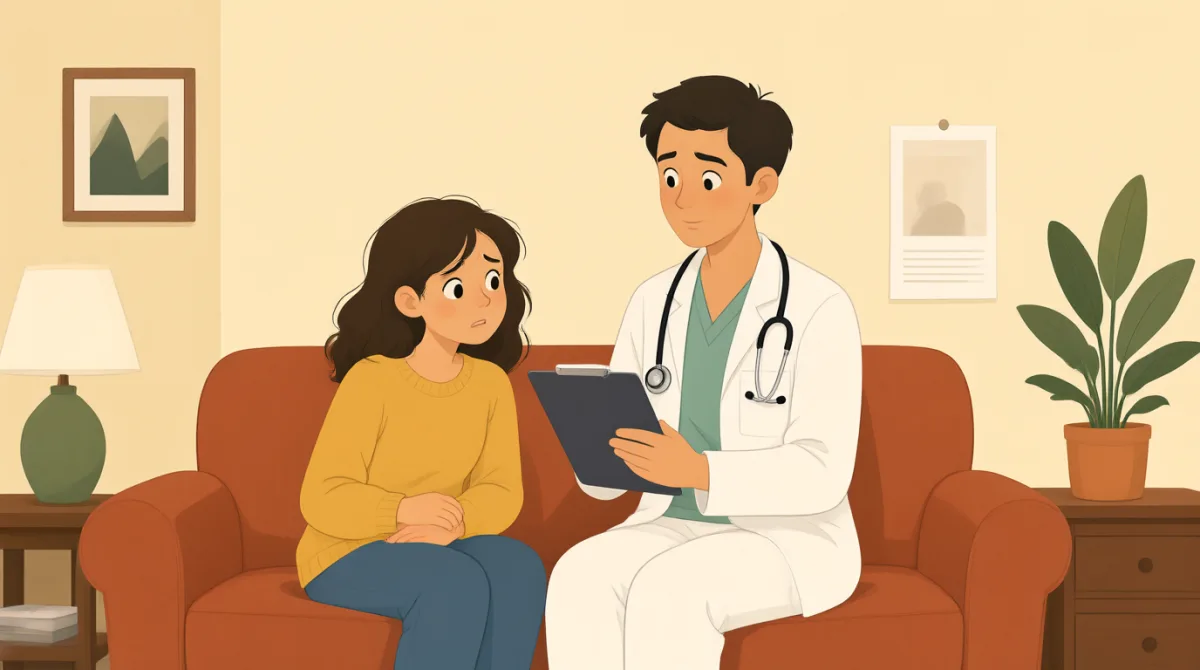

Mia, are you awake? I’ve been feeling worse since last night, and I think I have a fever.
ミア、起きてる?昨夜から具合が悪くなってきて、熱があると思うんだ。

I’m awake. You look pale. Do you have a thermometer, or should I feel your forehead?
起きてるよ。顔色が悪いね。体温計はある?それとも、おでこを触ってみようか?
I checked earlier. It was almost 102, and my stomach still hurts. I barely slept at all.
さっき測ったよ。102度近くあって、お腹もまだ痛いんだ。ほとんど眠れなかったよ。
That’s pretty high. Have you been able to keep any water or food down?
かなり高いね。水や食べ物は少しでも吐かずにいられた?
A little water, but I feel queasy whenever I try to eat. I don’t think I should just wait it out.
水なら少し。でも、食べようとするといつも気持ち悪くなるんだ。このまま様子を見るだけじゃだめだと思う。
I agree. We should find a doctor before we continue the trip. I can ask the hotel desk for help.
そうだね。旅を続ける前にお医者さんを探そう。ホテルのフロントに相談してみるよ。
Thanks. I hate to throw off our plans, but I’d rather get checked than risk feeling worse on the road.
ありがとう。予定を台無しにするのは嫌だけど、旅先で具合がもっと悪くなる危険を冒すより、診てもらいたいな。
Don’t worry about the plans right now. Let’s get you seen today, and then we can decide what to do next.
今は予定のことは心配しなくていいよ。まず今日診てもらおう。それから次にどうするか決めればいいよ。
Okay. I’ll get dressed slowly. Could you bring me some water and my insurance card?
わかった。ゆっくり着替えるね。水と保険証を持ってきてくれる?
Of course. Stay in bed until I’m back. We’ll take it one step at a time.
もちろん。戻るまでベッドで休んでてね。一つずつ進めていこう。
語彙8
- feeling worse具合が悪くなる
This means becoming more ill or uncomfortable. Use “I’m feeling worse” to explain that your condition is getting more serious.
病気や不快感が強くなるという意味です。体調が悪化していることを伝えるときは、“I’m feeling worse”(具合が悪くなってきた)と言えます。
- pale顔色が悪い
“Pale” describes a face that looks lighter than usual, often because someone is sick or tired. You can say, “You look pale” when someone seems unwell.
“Pale”は、顔がいつもより青白く見える様子を表します。具合が悪そうな人に“You look pale”(顔色が悪いね)と言えます。
- keep any water or food down水や食べ物を吐かずにいられる
This means being able to swallow food or drink without vomiting. It’s a useful way to ask about someone’s symptoms.
食べたり飲んだりしても吐かずにいられる、という意味です。相手の症状を尋ねるときに便利な表現です。
- queasy吐き気がする
“Queasy” means feeling as if you might vomit. You can use it to describe an upset stomach.
“Queasy”は、吐きそうな感じがするという意味です。胃の調子が悪いことを表すのに使えます。
- wait it outそのまま様子を見る
This means to wait and hope a problem goes away on its own. In this conversation, Emma says she doesn’t think waiting is a good idea.
問題が自然に解決することを期待して、しばらく待つという意味です。この会話ではエマは、ただ待つのはよくないと思うと伝えています。
- throw off our plans予定を台無しにする
This means to disrupt or change plans. Use it when an unexpected problem affects what you planned to do.
予定を狂わせたり、変更させたりするという意味です。予想外の問題で計画に影響が出たときに使えます。
- get checked診てもらう
This means to have a health professional examine you. You can say, “I’d like to get checked” when you want medical advice.
医療関係者に体の状態を診察してもらうという意味です。医師の診察を受けたいときは、“I’d like to get checked”(診てもらいたいです)と言えます。
- one step at a time一つずつ
This means dealing with a situation gradually, without trying to solve everything at once. It’s a reassuring phrase to use when someone feels overwhelmed.
一度にすべてを解決しようとせず、少しずつ対処するという意味です。相手が困っているときに、安心させる表現として使えます。
重要な文8
- 1
I’ve been feeling worse since last night, and I think I have a fever.
昨夜から具合が悪くなってきて、熱があると思うんだ。
This explains how long you’ve felt unwell and gives a possible symptom. Reuse “I’ve been feeling worse since [time]” to describe a change in your condition.
具合が悪くなってからどれくらい経つかを伝え、症状の可能性も説明する文です。“I’ve been feeling worse since [time]”の[time]に時間を入れると、体調の変化を伝えられます。
- 2
Have you been able to keep any water or food down?
水や食べ物は少しでも吐かずにいられた?
This is a considerate way to ask whether someone can eat or drink without vomiting. Replace “water or food” with another relevant item if needed.
相手が吐かずに食べたり飲んだりできるかを、気遣いながら尋ねる表現です。必要に応じて、“water or food”を別の具体的なものに置き換えられます。
- 3
I don’t think I should just wait it out.
このまま様子を見るだけじゃだめだと思う。
This expresses the opinion that a problem needs attention rather than more time. Use “I don’t think I should…” to explain a decision or concern.
もう少し待つのではなく、問題に対処する必要があるという考えを伝えます。“I don’t think I should…”は、自分の判断や心配を説明するときに使えます。
- 4
We should find a doctor before we continue the trip.
旅を続ける前にお医者さんを探そう。
This suggests a practical next step and explains its timing. Reuse “We should [action] before we [next activity]” when prioritizing tasks.
次に取るべき現実的な行動と、そのタイミングを伝える文です。“We should [action] before we [next activity]”を使うと、先にすることを提案できます。
- 5
I hate to throw off our plans, but I’d rather get checked than risk feeling worse on the road.
予定を台無しにするのは嫌だけど、旅先で具合がもっと悪くなる危険を冒すより、診てもらいたいな。
This acknowledges an inconvenience while explaining why a safer choice is preferable. “I’d rather [option] than [alternative]” is useful for comparing choices.
不便をかけることに触れながら、より安全な選択が望ましい理由を伝える文です。“I’d rather [option] than [alternative]”は、二つの選択肢を比べるときに便利です。
- 6
Let’s get you seen today, and then we can decide what to do next.
まず今日診てもらおう。それから次にどうするか決めればいいよ。
This offers reassurance and breaks a decision into manageable steps. Use “Let’s [action] today, and then we can…” to suggest a plan.
相手を安心させながら、決めることを取り組みやすい段階に分けています。“Let’s [action] today, and then we can…”を使うと、計画を提案できます。
- 7
Could you bring me some water and my insurance card?
水と保険証を持ってきてくれる?
This is a polite way to ask someone to bring two things. Use “Could you bring me…” to make a clear, courteous request.
二つの物を持ってきてほしいときの丁寧な頼み方です。“Could you bring me…”を使うと、要件をはっきり伝えながら、礼儀正しくお願いできます。
- 8
We’ll take it one step at a time.
一つずつ進めていこう。
This reassures someone that they don’t need to solve everything immediately. Use it when encouraging someone to handle a difficult situation gradually.
すぐにすべてを解決しなくてもいいと相手を安心させる表現です。難しい状況に少しずつ対処するよう励ますときに使えます。