Feeling Sick at the Hotel
在酒店感到不舒服
After feeling worse during the night, Emma tells her travel companion Mia about her fever and stomach pain. They decide she should see a doctor before continuing their trip.
夜裡感覺越來越不舒服後,Emma向旅伴Mia說明自己發燒並且胃痛。她們決定在繼續行程前先去看醫生。
對話10
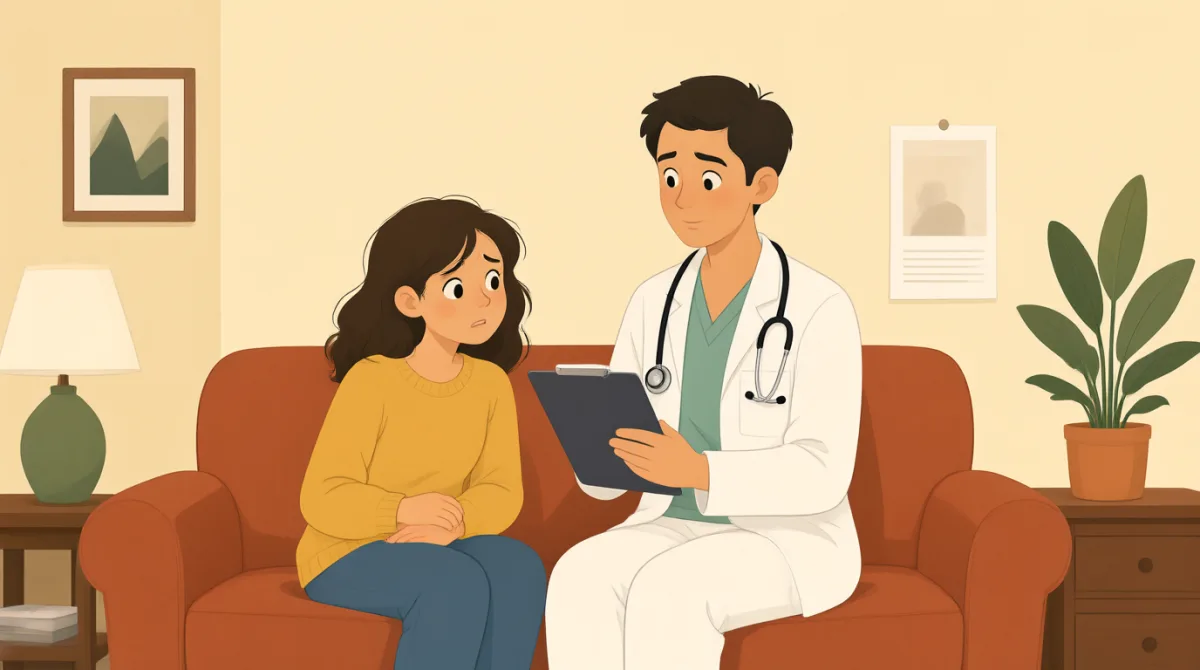

Mia, are you awake? I’ve been feeling worse since last night, and I think I have a fever.
Mia,你醒著嗎?我從昨晚開始感覺越來越糟,好像發燒了。

I’m awake. You look pale. Do you have a thermometer, or should I feel your forehead?
我醒著呢。你臉色很蒼白。你有體溫計嗎?還是我摸摸你的額頭?
I checked earlier. It was almost 102, and my stomach still hurts. I barely slept at all.
我剛才量過,快到102華氏度了,而且胃還是很疼。我幾乎一夜沒睡。
That’s pretty high. Have you been able to keep any water or food down?
這溫度挺高的。你喝水或吃東西后能留得住嗎?
A little water, but I feel queasy whenever I try to eat. I don’t think I should just wait it out.
能喝一點水,但一想吃東西就覺得噁心。我覺得不能就這麼硬熬下去。
I agree. We should find a doctor before we continue the trip. I can ask the hotel desk for help.
我同意。繼續旅行之前,我們應該先找醫生看看。我可以請酒店前臺幫忙。
Thanks. I hate to throw off our plans, but I’d rather get checked than risk feeling worse on the road.
謝謝。打亂我們的計劃我也挺過意不去的,但我寧願先去檢查一下,也不想路上病得更重。
Don’t worry about the plans right now. Let’s get you seen today, and then we can decide what to do next.
現在先別擔心行程。我們今天先帶你去看醫生,然後再決定接下來怎麼辦。
Okay. I’ll get dressed slowly. Could you bring me some water and my insurance card?
好。我慢慢穿衣服。你能幫我拿點水和我的保險卡嗎?
Of course. Stay in bed until I’m back. We’ll take it one step at a time.
當然可以。我回來之前你先躺著。我們一步一步來。
詞彙8
- feeling worse感覺更糟
This means becoming more ill or uncomfortable. Use “I’m feeling worse” to explain that your condition is getting more serious.
這個短語表示病情或不適感加重了。你可以用“I’m feeling worse”來說明自己的狀況變得更嚴重。
- pale臉色蒼白
“Pale” describes a face that looks lighter than usual, often because someone is sick or tired. You can say, “You look pale” when someone seems unwell.
“Pale”形容臉色比平時蒼白,常常是因為身體不舒服或疲倦。有人看起來不舒服時,你可以說“You look pale”。
- keep any water or food down喝水或吃東西后不吐
This means being able to swallow food or drink without vomiting. It’s a useful way to ask about someone’s symptoms.
這個短語表示能把食物或飲料嚥下去而不吐出來。詢問別人的症狀時,這是一種實用的說法。
- queasy噁心的
“Queasy” means feeling as if you might vomit. You can use it to describe an upset stomach.
“Queasy”表示覺得自己可能要吐了。你可以用它來形容胃不舒服。
- wait it out硬熬過去
This means to wait and hope a problem goes away on its own. In this conversation, Emma says she doesn’t think waiting is a good idea.
這個短語表示先等一等,希望問題能自行消失。在這段對話中,艾瑪說她覺得硬熬下去不是個好主意。
- throw off our plans打亂我們的計劃
This means to disrupt or change plans. Use it when an unexpected problem affects what you planned to do.
這個短語表示打亂或改變計劃。意外情況影響了原定安排時,可以用它來表達。
- get checked檢查一下
This means to have a health professional examine you. You can say, “I’d like to get checked” when you want medical advice.
這個短語表示請醫護人員檢查身體。想諮詢醫生時,你可以說“I’d like to get checked”。
- one step at a time一步一步來
This means dealing with a situation gradually, without trying to solve everything at once. It’s a reassuring phrase to use when someone feels overwhelmed.
這個短語表示逐步處理情況,而不是試圖一下子解決所有問題。有人感到不知所措時,可以用它來安慰對方。
關鍵句8
- 1
I’ve been feeling worse since last night, and I think I have a fever.
我從昨晚開始感覺越來越糟,好像發燒了。
This explains how long you’ve felt unwell and gives a possible symptom. Reuse “I’ve been feeling worse since [time]” to describe a change in your condition.
這句話說明了你從什麼時候開始不舒服,並提到了一個可能的症狀。你可以套用“I’ve been feeling worse since [time]”來描述自己的狀況有所變化。
- 2
Have you been able to keep any water or food down?
你喝水或吃東西后能留得住嗎?
This is a considerate way to ask whether someone can eat or drink without vomiting. Replace “water or food” with another relevant item if needed.
這是一種體貼的問法,用來詢問對方能不能吃喝而不嘔吐。需要時,可以把“water or food”換成其他相關的食物或飲料。
- 3
I don’t think I should just wait it out.
我覺得不能就這麼硬熬下去。
This expresses the opinion that a problem needs attention rather than more time. Use “I don’t think I should…” to explain a decision or concern.
這句話表達了問題需要得到處理,而不是繼續等下去的想法。你可以用“I don’t think I should…”來說明自己的決定或擔憂。
- 4
We should find a doctor before we continue the trip.
繼續旅行之前,我們應該先找醫生看看。
This suggests a practical next step and explains its timing. Reuse “We should [action] before we [next activity]” when prioritizing tasks.
這句話提出了一個實際的下一步,並說明了什麼時候去做。需要安排事情的先後時,可以套用“We should [action] before we [next activity]”。
- 5
I hate to throw off our plans, but I’d rather get checked than risk feeling worse on the road.
我也不想打亂我們的計劃,但我寧願先檢查一下,也不想冒著在路上病得更重的風險。
This acknowledges an inconvenience while explaining why a safer choice is preferable. “I’d rather [option] than [alternative]” is useful for comparing choices.
這句話先承認這樣做會帶來不便,再說明為什麼更安全的選擇更可取。“I’d rather [option] than [alternative]”可以用來比較兩種選擇。
- 6
Let’s get you seen today, and then we can decide what to do next.
我們今天先帶你去看醫生,然後再決定接下來怎麼辦。
This offers reassurance and breaks a decision into manageable steps. Use “Let’s [action] today, and then we can…” to suggest a plan.
這句話既讓人安心,也把決定分成了容易處理的幾個步驟。你可以用“Let’s [action] today, and then we can…”來提出計劃。
- 7
Could you bring me some water and my insurance card?
你能幫我拿點水和我的保險卡嗎?
This is a polite way to ask someone to bring two things. Use “Could you bring me…” to make a clear, courteous request.
這是一種禮貌地請別人拿兩樣東西的說法。用“Could you bring me…”可以清楚又客氣地提出請求。
- 8
We’ll take it one step at a time.
我們一步一步來。
This reassures someone that they don’t need to solve everything immediately. Use it when encouraging someone to handle a difficult situation gradually.
這句話是在安慰對方,不必馬上解決所有問題。鼓勵別人逐步應對困難時,可以用這句話。