Feeling Sick at the Hotel
होटल में तबीयत खराब होना
After feeling worse during the night, Emma tells her travel companion Mia about her fever and stomach pain. They decide she should see a doctor before continuing their trip.
रात में तबीयत और बिगड़ने के बाद, एमा अपनी यात्रा की साथी मिया को बुखार और पेट दर्द के बारे में बताती है। वे तय करती हैं कि यात्रा आगे जारी रखने से पहले एमा को डॉक्टर को दिखाना चाहिए।
संवाद10
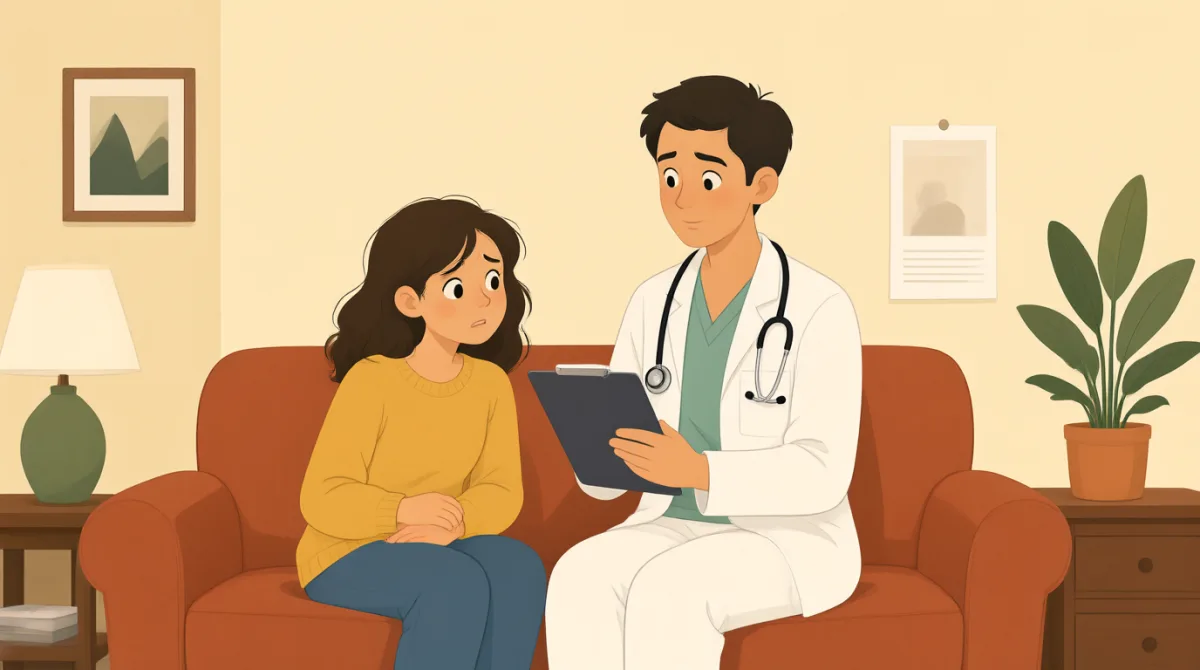

Mia, are you awake? I’ve been feeling worse since last night, and I think I have a fever.
मिया, क्या तुम जाग रही हो? कल रात से मेरी तबीयत और बिगड़ रही है, और मुझे लगता है कि मुझे बुखार है।

I’m awake. You look pale. Do you have a thermometer, or should I feel your forehead?
मैं जाग रही हूँ। तुम्हारा चेहरा पीला लग रहा है। तुम्हारे पास थर्मामीटर है, या मैं तुम्हारा माथा छूकर देखूँ?
I checked earlier. It was almost 102, and my stomach still hurts. I barely slept at all.
मैंने पहले तापमान देखा था। लगभग 102 था, और मेरा पेट अब भी दुख रहा है। मैं मुश्किल से सो पाई।
That’s pretty high. Have you been able to keep any water or food down?
यह तो काफ़ी ज़्यादा है। क्या तुम थोड़ा पानी या खाना पेट में रख पा रही हो?
A little water, but I feel queasy whenever I try to eat. I don’t think I should just wait it out.
थोड़ा पानी पी पाई, लेकिन कुछ खाने की कोशिश करती हूँ तो जी मिचलाने लगता है। मुझे नहीं लगता कि मुझे बस इंतज़ार करते रहना चाहिए।
I agree. We should find a doctor before we continue the trip. I can ask the hotel desk for help.
मैं भी यही सोचती हूँ। यात्रा आगे जारी रखने से पहले हमें डॉक्टर ढूँढ़ना चाहिए। मैं होटल के रिसेप्शन से मदद माँग सकती हूँ।
Thanks. I hate to throw off our plans, but I’d rather get checked than risk feeling worse on the road.
शुक्रिया। मुझे अच्छा नहीं लग रहा कि हमारी योजनाएँ बिगड़ रही हैं, लेकिन रास्ते में तबीयत और बिगड़ने का जोखिम लेने से बेहतर है कि मैं डॉक्टर से जाँच करवा लूँ।
Don’t worry about the plans right now. Let’s get you seen today, and then we can decide what to do next.
अभी योजनाओं की चिंता मत करो। चलो, आज ही तुम्हें डॉक्टर को दिखाते हैं, फिर तय करेंगे कि आगे क्या करना है।
Okay. I’ll get dressed slowly. Could you bring me some water and my insurance card?
ठीक है। मैं धीरे-धीरे कपड़े पहन लूँगी। क्या तुम मेरे लिए थोड़ा पानी और मेरा बीमा कार्ड ला दोगी?
Of course. Stay in bed until I’m back. We’ll take it one step at a time.
बिल्कुल। मेरे लौटने तक बिस्तर पर ही रहना। हम एक-एक कदम करके आगे बढ़ेंगे।
शब्दावली8
- feeling worseतबीयत और बिगड़ना
This means becoming more ill or uncomfortable. Use “I’m feeling worse” to explain that your condition is getting more serious.
इसका मतलब है कि बीमारी या बेचैनी बढ़ रही है। अपनी हालत और गंभीर होने की बात बताने के लिए “I’m feeling worse” (मेरी तबीयत और बिगड़ रही है) कह सकते हो।
- paleपीला
“Pale” describes a face that looks lighter than usual, often because someone is sick or tired. You can say, “You look pale” when someone seems unwell.
“Pale” का मतलब है चेहरे का सामान्य से ज़्यादा फीका दिखना, अक्सर बीमारी या थकान की वजह से। जब कोई अस्वस्थ लगे, तो तुम कह सकते हो, “You look pale” (तुम्हारा चेहरा पीला लग रहा है)।
- keep any water or food downपानी या खाना पेट में रख पाना
This means being able to swallow food or drink without vomiting. It’s a useful way to ask about someone’s symptoms.
इसका मतलब है बिना उल्टी किए खाना या पेय निगल पाना। किसी के लक्षणों के बारे में पूछने का यह एक उपयोगी तरीका है।
- queasyजी मिचलाना
“Queasy” means feeling as if you might vomit. You can use it to describe an upset stomach.
“Queasy” का मतलब है ऐसा महसूस होना जैसे उल्टी हो सकती है। पेट खराब होने की बात बताने के लिए इस शब्द का इस्तेमाल कर सकते हो।
- wait it outइंतज़ार करके देखना
This means to wait and hope a problem goes away on its own. In this conversation, Emma says she doesn’t think waiting is a good idea.
इसका मतलब है इंतज़ार करना और उम्मीद करना कि समस्या अपने आप ठीक हो जाएगी। इस बातचीत में एमा कहती है कि उसे नहीं लगता कि इंतज़ार करना सही होगा।
- throw off our plansहमारी योजनाएँ बिगाड़ना
This means to disrupt or change plans. Use it when an unexpected problem affects what you planned to do.
इसका मतलब है योजनाओं में बाधा डालना या उन्हें बदल देना। जब कोई अनपेक्षित समस्या तुम्हारे तय किए हुए कामों पर असर डालती है, तब इसका इस्तेमाल करो।
- get checkedजाँच करवाना
This means to have a health professional examine you. You can say, “I’d like to get checked” when you want medical advice.
इसका मतलब है किसी स्वास्थ्य पेशेवर से अपनी जाँच करवाना। चिकित्सा सलाह लेने की इच्छा जताने के लिए तुम कह सकते हो, “I’d like to get checked” (मैं अपनी जाँच करवाना चाहूँगा/चाहूँगी)।
- one step at a timeएक-एक कदम करके
This means dealing with a situation gradually, without trying to solve everything at once. It’s a reassuring phrase to use when someone feels overwhelmed.
इसका मतलब है पूरी समस्या को एक साथ सुलझाने की कोशिश किए बिना धीरे-धीरे उससे निपटना। जब कोई परेशान या घबराया हुआ हो, तो उसे ढाढ़स बँधाने के लिए यह वाक्यांश इस्तेमाल किया जा सकता है।
मुख्य वाक्य8
- 1
I’ve been feeling worse since last night, and I think I have a fever.
कल रात से मेरी तबीयत और बिगड़ रही है, और मुझे लगता है कि मुझे बुखार है।
This explains how long you’ve felt unwell and gives a possible symptom. Reuse “I’ve been feeling worse since [time]” to describe a change in your condition.
इस वाक्य से पता चलता है कि तुम कब से अस्वस्थ महसूस कर रहे हो और एक संभावित लक्षण भी बताया जाता है। अपनी हालत में बदलाव बताने के लिए “I’ve been feeling worse since [time]” ( [समय] से मेरी तबीयत और बिगड़ रही है) का इस्तेमाल कर सकते हो।
- 2
Have you been able to keep any water or food down?
क्या तुम थोड़ा पानी या खाना पेट में रख पा रही हो?
This is a considerate way to ask whether someone can eat or drink without vomiting. Replace “water or food” with another relevant item if needed.
यह पूछने का एक संवेदनशील तरीका है कि कोई बिना उल्टी किए खा या पी पा रहा है या नहीं। ज़रूरत पड़ने पर “water or food” की जगह किसी दूसरी उपयुक्त चीज़ का नाम रखो।
- 3
I don’t think I should just wait it out.
मुझे नहीं लगता कि मुझे बस इंतज़ार करते रहना चाहिए।
This expresses the opinion that a problem needs attention rather than more time. Use “I don’t think I should…” to explain a decision or concern.
इससे यह राय जाहिर होती है कि समस्या पर ध्यान देना चाहिए, न कि बस और समय देना चाहिए। अपना फ़ैसला या चिंता बताने के लिए “I don’t think I should…” (मुझे नहीं लगता कि मुझे...) का इस्तेमाल करो।
- 4
We should find a doctor before we continue the trip.
यात्रा आगे जारी रखने से पहले हमें डॉक्टर ढूँढ़ना चाहिए।
This suggests a practical next step and explains its timing. Reuse “We should [action] before we [next activity]” when prioritizing tasks.
इस वाक्य में एक व्यावहारिक अगला कदम सुझाया गया है और यह भी बताया गया है कि उसे कब करना चाहिए। कामों को प्राथमिकता देते समय “We should [action] before we [next activity]” (हमें [अगली गतिविधि] से पहले [काम] करना चाहिए) का इस्तेमाल कर सकते हो।
- 5
I hate to throw off our plans, but I’d rather get checked than risk feeling worse on the road.
मुझे अच्छा नहीं लग रहा कि हमारी योजनाएँ बिगड़ रही हैं, लेकिन रास्ते में तबीयत और बिगड़ने का जोखिम लेने से बेहतर है कि मैं जाँच करवा लूँ।
This acknowledges an inconvenience while explaining why a safer choice is preferable. “I’d rather [option] than [alternative]” is useful for comparing choices.
इससे एक असुविधा को स्वीकार करते हुए बताया जाता है कि ज़्यादा सुरक्षित विकल्प क्यों बेहतर है। विकल्पों की तुलना करने के लिए “I’d rather [option] than [alternative]” ([दूसरे विकल्प] के बजाय मैं [विकल्प] चुनूँगा/चुनूँगी) उपयोगी है।
- 6
Let’s get you seen today, and then we can decide what to do next.
चलो, आज ही तुम्हें डॉक्टर को दिखाते हैं, फिर तय करेंगे कि आगे क्या करना है।
This offers reassurance and breaks a decision into manageable steps. Use “Let’s [action] today, and then we can…” to suggest a plan.
इससे सामने वाले को ढाढ़स मिलता है और फ़ैसले को आसान चरणों में बाँट दिया जाता है। कोई योजना सुझाने के लिए “Let’s [action] today, and then we can…” (चलो, आज [काम] करते हैं, फिर हम...) का इस्तेमाल करो।
- 7
Could you bring me some water and my insurance card?
क्या तुम मेरे लिए थोड़ा पानी और मेरा बीमा कार्ड ला दोगी?
This is a polite way to ask someone to bring two things. Use “Could you bring me…” to make a clear, courteous request.
किसी से दो चीज़ें लाने के लिए कहने का यह एक विनम्र तरीका है। साफ़ और शिष्ट अनुरोध करने के लिए “Could you bring me…” (क्या तुम मेरे लिए ... ला सकते/सकती हो?) का इस्तेमाल करो।
- 8
We’ll take it one step at a time.
हम एक-एक कदम करके आगे बढ़ेंगे।
This reassures someone that they don’t need to solve everything immediately. Use it when encouraging someone to handle a difficult situation gradually.
इससे सामने वाले को भरोसा दिलाया जाता है कि उसे सब कुछ तुरंत सुलझाने की ज़रूरत नहीं है। किसी को मुश्किल परिस्थिति से धीरे-धीरे निपटने के लिए प्रोत्साहित करते समय इसका इस्तेमाल करो।