Feeling Sick at the Hotel
รู้สึกไม่สบายที่โรงแรม
After feeling worse during the night, Emma tells her travel companion Mia about her fever and stomach pain. They decide she should see a doctor before continuing their trip.
หลังจากอาการแย่ลงในช่วงกลางคืน เอ็มมาบอกมีอา เพื่อนร่วมเดินทางของเธอ ว่าเธอมีไข้และปวดท้อง ทั้งคู่ตัดสินใจว่าเธอควรไปพบแพทย์ก่อนเดินทางต่อ
บทสนทนา10
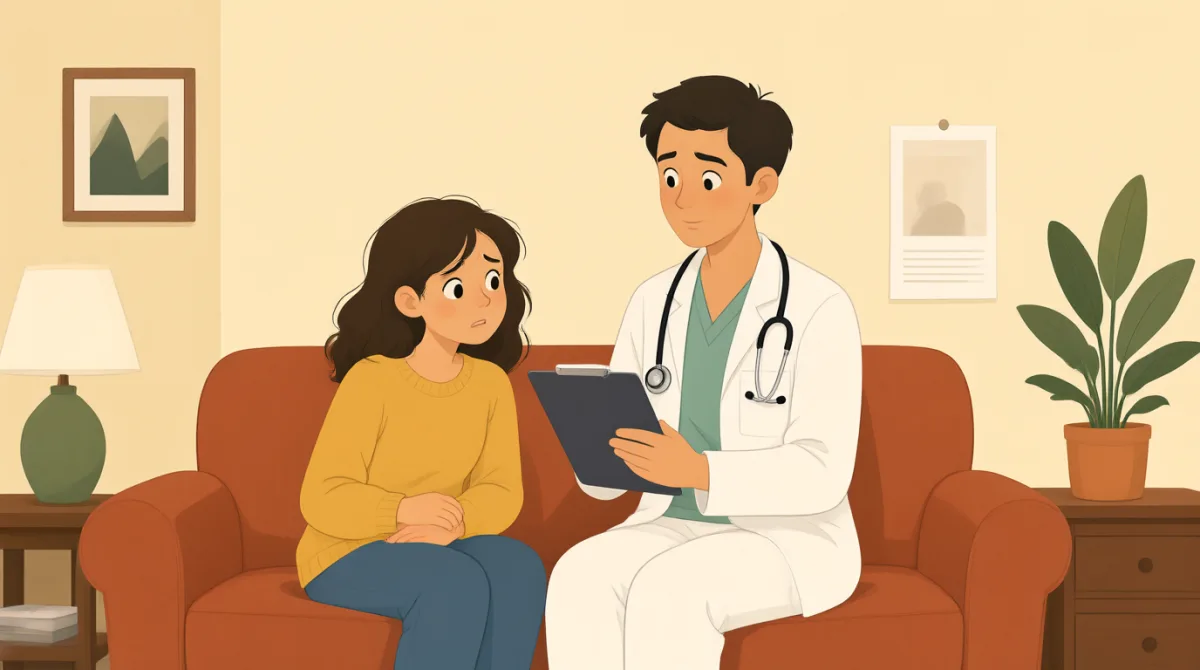

Mia, are you awake? I’ve been feeling worse since last night, and I think I have a fever.
มีอา ตื่นอยู่ไหม? ฉันรู้สึกแย่ลงตั้งแต่เมื่อคืน แล้วก็คิดว่าตัวเองมีไข้

I’m awake. You look pale. Do you have a thermometer, or should I feel your forehead?
ตื่นอยู่ เธอดูซีดนะ มีปรอทวัดไข้ไหม หรือจะให้ฉันลองแตะหน้าผากดู?
I checked earlier. It was almost 102, and my stomach still hurts. I barely slept at all.
ฉันวัดไปก่อนหน้านี้แล้ว เกือบ 102 องศาแน่ะ แล้วก็ยังปวดท้องอยู่ ฉันแทบไม่ได้นอนเลย
That’s pretty high. Have you been able to keep any water or food down?
สูงมากเลยนะ เธอดื่มน้ำหรือกินอะไรแล้วไม่อาเจียนออกมาได้บ้างไหม?
A little water, but I feel queasy whenever I try to eat. I don’t think I should just wait it out.
ดื่มน้ำได้นิดหน่อย แต่พอพยายามกินอะไรก็รู้สึกคลื่นไส้ ฉันว่าไม่ควรแค่รอดูอาการไปก่อน
I agree. We should find a doctor before we continue the trip. I can ask the hotel desk for help.
เห็นด้วย เราควรหาหมอก่อนเดินทางต่อ ฉันไปขอความช่วยเหลือที่เคาน์เตอร์โรงแรมได้นะ
Thanks. I hate to throw off our plans, but I’d rather get checked than risk feeling worse on the road.
ขอบใจนะ ฉันไม่อยากให้แผนของเราต้องเปลี่ยนไป แต่ฉันอยากให้หมอตรวจก่อน ดีกว่าเสี่ยงอาการแย่ลงระหว่างทาง
Don’t worry about the plans right now. Let’s get you seen today, and then we can decide what to do next.
ตอนนี้ไม่ต้องห่วงเรื่องแผนหรอก วันนี้พาเธอไปหาหมอก่อน แล้วค่อยตัดสินใจว่าจะทำอะไรต่อ
Okay. I’ll get dressed slowly. Could you bring me some water and my insurance card?
โอเค ฉันจะค่อย ๆ แต่งตัว เธอช่วยเอาน้ำกับบัตรประกันสุขภาพมาให้หน่อยได้ไหม?
Of course. Stay in bed until I’m back. We’ll take it one step at a time.
ได้สิ นอนพักบนเตียงจนกว่าฉันจะกลับมานะ เราค่อย ๆ จัดการไปทีละอย่าง
คำศัพท์8
- feeling worseอาการแย่ลง
This means becoming more ill or uncomfortable. Use “I’m feeling worse” to explain that your condition is getting more serious.
คำนี้หมายถึงอาการป่วยหรือความไม่สบายที่รุนแรงขึ้น ใช้ “I’m feeling worse” เพื่อบอกว่าอาการของคุณกำลังแย่ลง
- paleซีด
“Pale” describes a face that looks lighter than usual, often because someone is sick or tired. You can say, “You look pale” when someone seems unwell.
“Pale” ใช้บรรยายใบหน้าที่ดูซีดกว่าปกติ ซึ่งมักเกิดจากการป่วยหรือเหนื่อยล้า คุณพูดว่า “You look pale” ได้เมื่อเห็นว่าใครสักคนดูไม่สบาย
- keep any water or food downกินหรือดื่มแล้วไม่อาเจียน
This means being able to swallow food or drink without vomiting. It’s a useful way to ask about someone’s symptoms.
วลีนี้หมายถึงการกลืนอาหารหรือเครื่องดื่มลงไปได้โดยไม่อาเจียน เป็นวิธีที่มีประโยชน์ในการถามอาการของใครสักคน
- queasyคลื่นไส้
“Queasy” means feeling as if you might vomit. You can use it to describe an upset stomach.
“Queasy” หมายถึงรู้สึกเหมือนจะอาเจียน ใช้บรรยายอาการท้องไส้ปั่นป่วนได้
- wait it outรอดูอาการไปก่อน
This means to wait and hope a problem goes away on its own. In this conversation, Emma says she doesn’t think waiting is a good idea.
วลีนี้หมายถึงรอและหวังว่าปัญหาจะหายไปเอง ในบทสนทนานี้ เอมมาบอกว่าเธอไม่คิดว่าการรอดูอาการเป็นความคิดที่ดี
- throw off our plansทำให้แผนของเราต้องเปลี่ยนไป
This means to disrupt or change plans. Use it when an unexpected problem affects what you planned to do.
วลีนี้หมายถึงทำให้แผนสะดุดหรือเปลี่ยนแปลง ใช้เมื่อเกิดปัญหาที่ไม่คาดคิดและส่งผลต่อสิ่งที่คุณวางแผนไว้
- get checkedให้หมอตรวจ
This means to have a health professional examine you. You can say, “I’d like to get checked” when you want medical advice.
วลีนี้หมายถึงให้บุคลากรทางการแพทย์ตรวจร่างกาย คุณพูดว่า “I’d like to get checked” เมื่อต้องการขอคำแนะนำทางการแพทย์
- one step at a timeค่อย ๆ ทำไปทีละอย่าง
This means dealing with a situation gradually, without trying to solve everything at once. It’s a reassuring phrase to use when someone feels overwhelmed.
วลีนี้หมายถึงจัดการสถานการณ์ไปทีละขั้น โดยไม่พยายามแก้ทุกอย่างพร้อมกัน เป็นคำพูดที่ช่วยให้กำลังใจคนที่รู้สึกว่ามีเรื่องให้รับมือมากเกินไป
ประโยคสำคัญ8
- 1
I’ve been feeling worse since last night, and I think I have a fever.
ฉันรู้สึกแย่ลงตั้งแต่เมื่อคืน แล้วก็คิดว่าตัวเองมีไข้
This explains how long you’ve felt unwell and gives a possible symptom. Reuse “I’ve been feeling worse since [time]” to describe a change in your condition.
ประโยคนี้บอกว่าคุณรู้สึกไม่สบายมานานแค่ไหนและเล่าอาการที่อาจเกิดขึ้น ลองใช้ “I’ve been feeling worse since [time]” เพื่อบอกว่าอาการของคุณเปลี่ยนไปอย่างไร
- 2
Have you been able to keep any water or food down?
เธอดื่มน้ำหรือกินอะไรแล้วไม่อาเจียนออกมาได้บ้างไหม?
This is a considerate way to ask whether someone can eat or drink without vomiting. Replace “water or food” with another relevant item if needed.
นี่เป็นวิธีถามอย่างใส่ใจว่าอีกฝ่ายกินหรือดื่มได้โดยไม่อาเจียนไหม หากต้องการก็เปลี่ยน “water or food” เป็นสิ่งอื่นที่เกี่ยวข้องได้
- 3
I don’t think I should just wait it out.
ฉันว่าไม่ควรแค่รอดูอาการไปก่อน
This expresses the opinion that a problem needs attention rather than more time. Use “I don’t think I should…” to explain a decision or concern.
ประโยคนี้บอกว่าคุณคิดว่าควรจัดการปัญหา แทนที่จะปล่อยเวลาให้ผ่านไป ใช้ “I don’t think I should…” เพื่ออธิบายการตัดสินใจหรือข้อกังวลของคุณ
- 4
We should find a doctor before we continue the trip.
เราควรหาหมอก่อนเดินทางต่อ
This suggests a practical next step and explains its timing. Reuse “We should [action] before we [next activity]” when prioritizing tasks.
ประโยคนี้เสนอขั้นตอนต่อไปที่ทำได้จริง พร้อมบอกว่าควรทำเมื่อไร ลองใช้ “We should [action] before we [next activity]” เมื่อต้องจัดลำดับสิ่งที่ต้องทำ
- 5
I hate to throw off our plans, but I’d rather get checked than risk feeling worse on the road.
ฉันไม่อยากให้แผนของเราต้องเปลี่ยนไป แต่ฉันอยากให้หมอตรวจก่อน ดีกว่าเสี่ยงอาการแย่ลงระหว่างทาง
This acknowledges an inconvenience while explaining why a safer choice is preferable. “I’d rather [option] than [alternative]” is useful for comparing choices.
ประโยคนี้ยอมรับว่ามีเรื่องไม่สะดวกเกิดขึ้น พร้อมอธิบายว่าทำไมทางเลือกที่ปลอดภัยกว่าจึงดีกว่า “I’d rather [option] than [alternative]” ใช้เปรียบเทียบทางเลือกสองอย่างได้
- 6
Let’s get you seen today, and then we can decide what to do next.
วันนี้พาเธอไปหาหมอก่อน แล้วค่อยตัดสินใจว่าจะทำอะไรต่อ
This offers reassurance and breaks a decision into manageable steps. Use “Let’s [action] today, and then we can…” to suggest a plan.
ประโยคนี้ช่วยให้อีกฝ่ายสบายใจและแบ่งการตัดสินใจออกเป็นขั้น ๆ ใช้ “Let’s [action] today, and then we can…” เพื่อเสนอแผนได้
- 7
Could you bring me some water and my insurance card?
เธอช่วยเอาน้ำกับบัตรประกันสุขภาพมาให้หน่อยได้ไหม?
This is a polite way to ask someone to bring two things. Use “Could you bring me…” to make a clear, courteous request.
นี่เป็นวิธีสุภาพในการขอให้ใครสักคนหยิบของสองอย่างมาให้ ใช้ “Could you bring me…” เพื่อขออย่างชัดเจนและสุภาพ
- 8
We’ll take it one step at a time.
เราค่อย ๆ จัดการไปทีละอย่าง
This reassures someone that they don’t need to solve everything immediately. Use it when encouraging someone to handle a difficult situation gradually.
ประโยคนี้ช่วยให้อีกฝ่ายสบายใจว่าไม่จำเป็นต้องแก้ทุกอย่างให้เสร็จทันที ใช้เมื่อต้องการให้กำลังใจใครสักคนให้ค่อย ๆ รับมือกับสถานการณ์ยากลำบาก