Feeling Sick at the Hotel
호텔에서 몸이 아플 때
After feeling worse during the night, Emma tells her travel companion Mia about her fever and stomach pain. They decide she should see a doctor before continuing their trip.
밤사이 몸이 더 안 좋아진 에마는 여행 동반자인 미아에게 열이 나고 배가 아프다고 말해요. 두 사람은 여행을 계속하기 전에 의사에게 진찰을 받아야겠다고 결정해요.
대화10
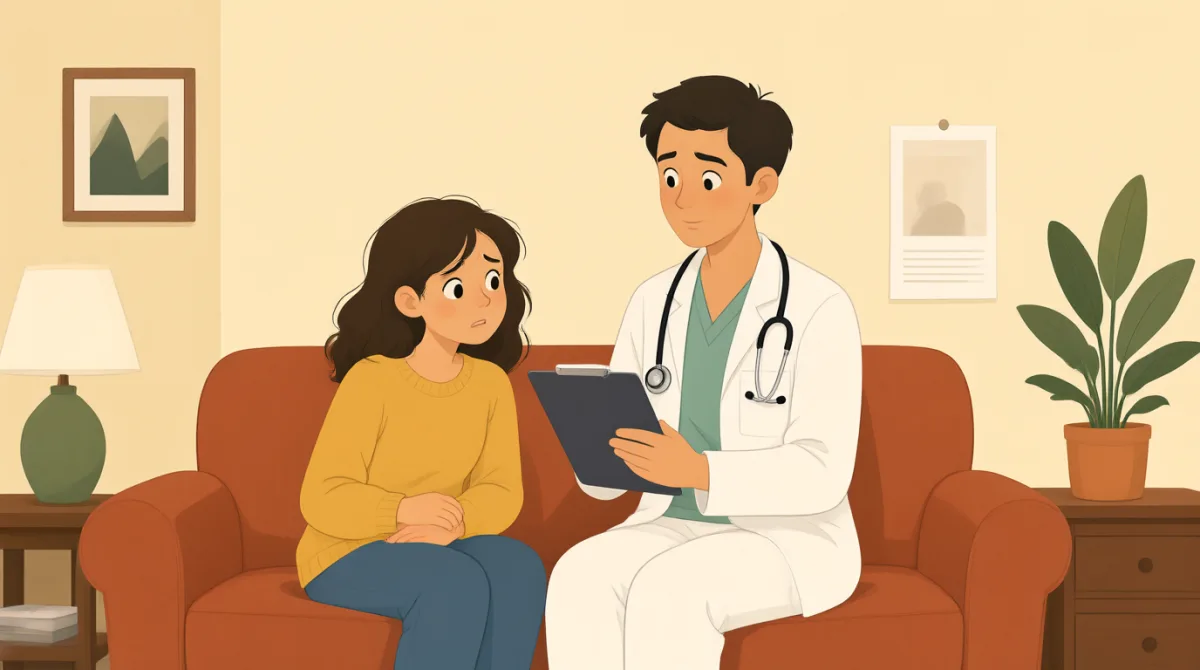

Mia, are you awake? I’ve been feeling worse since last night, and I think I have a fever.
미아, 깨어 있어? 어젯밤부터 몸이 더 안 좋아졌어. 열도 나는 것 같아.

I’m awake. You look pale. Do you have a thermometer, or should I feel your forehead?
응, 깨어 있어. 얼굴이 창백해 보여. 체온계 있어? 아니면 내가 이마를 짚어 볼까?
I checked earlier. It was almost 102, and my stomach still hurts. I barely slept at all.
아까 재 봤는데 거의 102도였어. 배도 아직 아프고. 거의 한숨도 못 잤어.
That’s pretty high. Have you been able to keep any water or food down?
꽤 높네. 물이나 음식은 조금이라도 먹고 토하지 않았어?
A little water, but I feel queasy whenever I try to eat. I don’t think I should just wait it out.
물은 조금 마셨어. 그런데 먹으려고 하면 속이 메스꺼워. 그냥 참고 기다리면 될 것 같진 않아.
I agree. We should find a doctor before we continue the trip. I can ask the hotel desk for help.
나도 그렇게 생각해. 여행을 계속하기 전에 의사를 찾아보자. 호텔 프런트에 도움을 요청해 볼게.
Thanks. I hate to throw off our plans, but I’d rather get checked than risk feeling worse on the road.
고마워. 우리 계획에 차질을 주고 싶진 않지만, 이동 중에 더 아파질 위험을 감수하느니 진찰을 받는 게 나을 것 같아.
Don’t worry about the plans right now. Let’s get you seen today, and then we can decide what to do next.
지금은 계획 걱정하지 마. 오늘 진찰받고 나서 다음에 어떻게 할지 정하면 돼.
Okay. I’ll get dressed slowly. Could you bring me some water and my insurance card?
알겠어. 천천히 옷 입을게. 물이랑 보험증 좀 가져다줄래?
Of course. Stay in bed until I’m back. We’ll take it one step at a time.
물론이지. 내가 돌아올 때까지 침대에 누워 있어. 하나씩 차근차근 하자.
어휘8
- feeling worse몸이 더 안 좋아지는
This means becoming more ill or uncomfortable. Use “I’m feeling worse” to explain that your condition is getting more serious.
이 표현은 몸이 더 아프거나 불편해지는 것을 뜻해요. 상태가 더 심각해지고 있다고 말할 때 “I’m feeling worse”라고 할 수 있어요.
- pale창백한
“Pale” describes a face that looks lighter than usual, often because someone is sick or tired. You can say, “You look pale” when someone seems unwell.
“Pale”은 얼굴색이 평소보다 하얗게 보이는 상태를 나타내요. 아프거나 피곤할 때 그런 경우가 많아요. 누군가 아파 보일 때 “You look pale”이라고 할 수 있어요.
- keep any water or food down물이나 음식을 토하지 않고 먹다
This means being able to swallow food or drink without vomiting. It’s a useful way to ask about someone’s symptoms.
이 표현은 음식이나 음료를 삼킨 뒤 토하지 않고 몸에 받아들일 수 있다는 뜻이에요. 누군가의 증상을 물어볼 때 유용하게 쓸 수 있어요.
- queasy속이 메스꺼운
“Queasy” means feeling as if you might vomit. You can use it to describe an upset stomach.
“Queasy”는 토할 것 같은 느낌이 든다는 뜻이에요. 속이 불편한 상태를 설명할 때 쓸 수 있어요.
- wait it out저절로 나아지기를 기다리다
This means to wait and hope a problem goes away on its own. In this conversation, Emma says she doesn’t think waiting is a good idea.
이 표현은 문제가 저절로 사라지기를 바라며 기다린다는 뜻이에요. 이 대화에서 에마는 그냥 기다리는 건 좋은 생각이 아니라고 말해요.
- throw off our plans우리 계획에 차질을 주다
This means to disrupt or change plans. Use it when an unexpected problem affects what you planned to do.
이 표현은 계획을 방해하거나 바꾸게 한다는 뜻이에요. 예상치 못한 문제 때문에 하려던 일이 영향을 받을 때 쓸 수 있어요.
- get checked진찰을 받다
This means to have a health professional examine you. You can say, “I’d like to get checked” when you want medical advice.
이 표현은 의료 전문가에게 진찰을 받는다는 뜻이에요. 의학적인 조언이나 진료를 받고 싶을 때 “I’d like to get checked”라고 할 수 있어요.
- one step at a time하나씩 차근차근
This means dealing with a situation gradually, without trying to solve everything at once. It’s a reassuring phrase to use when someone feels overwhelmed.
이 표현은 모든 문제를 한꺼번에 해결하려 하지 않고, 상황을 천천히 처리한다는 뜻이에요. 막막해하는 사람을 안심시킬 때 쓰기 좋아요.
핵심 문장8
- 1
I’ve been feeling worse since last night, and I think I have a fever.
어젯밤부터 몸이 더 안 좋아졌어. 열도 나는 것 같아.
This explains how long you’ve felt unwell and gives a possible symptom. Reuse “I’ve been feeling worse since [time]” to describe a change in your condition.
이 문장은 몸이 언제부터 안 좋았는지 말하고, 증상이 있을 가능성도 알려 줘요. 상태가 달라진 시점을 설명할 때 “I’ve been feeling worse since [time]”을 활용해 보세요.
- 2
Have you been able to keep any water or food down?
물이나 음식은 조금이라도 먹고 토하지 않았어?
This is a considerate way to ask whether someone can eat or drink without vomiting. Replace “water or food” with another relevant item if needed.
상대가 토하지 않고 먹거나 마실 수 있는지 배려하며 묻는 표현이에요. 필요하면 “water or food” 대신 상황에 맞는 다른 것을 넣어 보세요.
- 3
I don’t think I should just wait it out.
그냥 참고 기다리면 될 것 같진 않아.
This expresses the opinion that a problem needs attention rather than more time. Use “I don’t think I should…” to explain a decision or concern.
이 문장은 문제를 더 기다리기보다 조치를 취해야 한다는 생각을 나타내요. 결정이나 걱정을 설명할 때 “I don’t think I should…”를 사용해 보세요.
- 4
We should find a doctor before we continue the trip.
여행을 계속하기 전에 의사를 찾아보자.
This suggests a practical next step and explains its timing. Reuse “We should [action] before we [next activity]” when prioritizing tasks.
이 문장은 실용적인 다음 단계를 제안하고 언제 해야 하는지도 설명해요. 일의 우선순위를 정할 때 “We should [action] before we [next activity]”를 활용해 보세요.
- 5
I hate to throw off our plans, but I’d rather get checked than risk feeling worse on the road.
우리 계획에 차질을 주고 싶진 않지만, 이동 중에 더 아파질 위험을 감수하느니 진찰을 받는 게 나을 것 같아.
This acknowledges an inconvenience while explaining why a safer choice is preferable. “I’d rather [option] than [alternative]” is useful for comparing choices.
이 문장은 불편을 끼치는 점을 인정하면서도 더 안전한 선택이 나은 이유를 설명해요. 두 가지 선택지를 비교할 때 “I’d rather [option] than [alternative]”을 쓰면 유용해요.
- 6
Let’s get you seen today, and then we can decide what to do next.
오늘 진찰받고 나서 다음에 어떻게 할지 정하면 돼.
This offers reassurance and breaks a decision into manageable steps. Use “Let’s [action] today, and then we can…” to suggest a plan.
이 문장은 상대를 안심시키면서 결정을 감당할 만한 단계로 나눠요. 계획을 제안할 때 “Let’s [action] today, and then we can…”을 활용해 보세요.
- 7
Could you bring me some water and my insurance card?
물과 보험증 좀 가져다줄래?
This is a polite way to ask someone to bring two things. Use “Could you bring me…” to make a clear, courteous request.
두 가지 물건을 가져다 달라고 정중하게 부탁하는 표현이에요. 명확하고 예의 바르게 요청할 때 “Could you bring me…”를 사용해 보세요.
- 8
We’ll take it one step at a time.
하나씩 차근차근 하자.
This reassures someone that they don’t need to solve everything immediately. Use it when encouraging someone to handle a difficult situation gradually.
이 문장은 모든 일을 당장 다 해결하지 않아도 된다고 상대를 안심시켜요. 어려운 상황을 천천히 하나씩 처리하도록 격려할 때 쓸 수 있어요.