Asking a Classmate for Notes
クラスメートにノートを見せてもらう
Emma asks her classmate Mia for notes from a class she missed while handling family responsibilities. Mia shares her notes and offers to clarify the main points.
家のことで忙しく、授業を休んだエマは、クラスメートのミアにノートを見せてほしいと頼みます。ミアはノートを共有し、要点が分かりにくければ説明すると申し出ます。
会話9
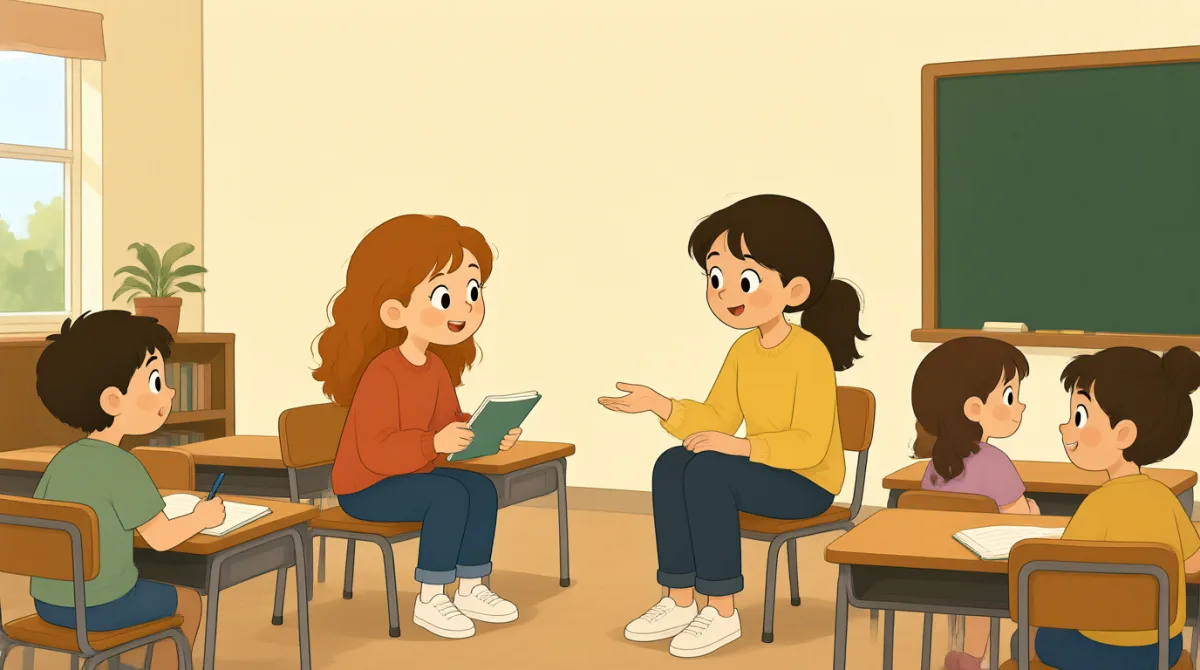

Hey, Mia, do you have a minute? I missed class last week because I had to help out with some family responsibilities.
ねえ、ミア、ちょっといい?先週、家のことで手伝わなきゃいけなくて授業を休んじゃったんだ。

Of course. I was wondering where you were. Is everything okay now?
もちろん。どこにいるのかなって思ってたんだ。もう大丈夫?
Things are getting better, thanks. I’m catching up on the assignment, but I’m missing the notes from that class.
おかげさまで、少しずつ落ち着いてきたよ。課題には取りかかってるんだけど、あの授業のノートがなくて。
I took pretty detailed notes. You’re welcome to look at them, and I can explain the main points if anything’s unclear.
けっこう詳しくノート取ったよ。見ていいよ。分かりにくいところがあったら、要点を説明するね。
That would be a huge help. I got an extension, so I have a little more time, but I don’t want to fall behind again.
それはすごく助かるよ。締め切りを延ばしてもらえたから、もう少し時間はあるんだけど、また遅れを取りたくないんだ。
No problem. We covered how to organize the research and connect each source to your main argument.
いいよ。研究内容をどう整理するかと、それぞれの資料を中心となる主張にどう結びつけるかをやったよ。
Great. Could I take a photo of your notes? I’ll make sure to write up my own version tonight.
よかった。ノートの写真を撮ってもいい?今夜、自分のノートにまとめ直すね。
Sure. And if you want, we can go over the parts you missed after class tomorrow.
もちろん。よかったら、明日の授業のあとで休んだところを一緒に確認しよう。
Thanks, Mia. That’s really kind of you. I’ll read through everything first, then I’ll bring you any questions.
ありがとう、ミア。本当に親切だね。まず全部読んでみて、それから質問があったら聞きに行くね。
語彙7
- help out with some family responsibilities家のことで手伝う
To help take care of things your family needs. Here, Emma explains why she missed class.
家族が必要としていることを手伝う、という意味です。ここでは、エマが授業を休んだ理由を説明しています。
- catching up on遅れを取り戻す
Doing work you missed or did not finish earlier. You can use it for schoolwork, tasks, or messages.
前にできなかったことや終わらなかったことに取り組む、という意味です。学校の課題や用事、メッセージなどにも使えます。
- detailed notes詳しいノート
Notes that include a lot of information. This phrase is useful when asking or offering study materials.
情報がたくさん書かれているノートのことです。勉強の資料を頼んだり、相手に見せると申し出たりするときに便利な表現です。
- a huge helpすごく助かる
Something that is very useful or makes a situation much easier. Use it to show strong appreciation.
とても役に立つことや、状況を大きく楽にしてくれることを表します。強い感謝を伝えるときに使えます。
- fall behind遅れをとる
To make less progress than expected or than other people. It is often used when talking about school or work.
期待されるペースや周りの人より進みが遅くなることです。学校や仕事の話でよく使います。
- go over一緒に確認する
To review or discuss something carefully. You can go over notes, instructions, or a difficult topic.
何かを注意深く見直したり、話し合ったりすることです。ノートや指示、難しいテーマなどを確認するときに使えます。
- write up my own version自分なりにまとめ直す
To create your own written copy or summary. Here, Emma plans to use Mia’s notes to make her own study notes.
自分用の文章や要約を作ることです。ここではエマがミアのノートを参考に、自分の勉強用ノートを作ろうとしています。
重要な文8
- 1
I missed class last week because I had to help out with some family responsibilities.
先週、家のことで手伝わなきゃいけなくて授業を休んじゃったんだ。
This is a polite way to explain why you were absent. Replace the reason with your own, such as an appointment or a work shift.
欠席した理由を伝える丁寧な言い方です。理由の部分は、通院や仕事のシフトなど、自分の事情に置き換えられます。
- 2
I’m catching up on the assignment, but I’m missing the notes from that class.
課題には取りかかってるんだけど、あの授業のノートがなくて。
Use this sentence to explain what you are working on and what you still need. You can replace “the assignment” or “the notes” with other things you need to catch up on.
今取り組んでいることと、まだ必要なものを説明するときに使えます。“the assignment” や “the notes” を、追いつきたいほかの課題や必要なものに置き換えてもいいですよ。
- 3
You’re welcome to look at them, and I can explain the main points if anything’s unclear.
見ていいよ。分かりにくいところがあったら、要点を説明するね。
This is a friendly way to offer both materials and extra help. You can use “if anything’s unclear” when offering to answer questions.
資料を見せることと、追加で手伝うことの両方を親しみを込めて申し出る表現です。質問に答えると申し出るときは “if anything’s unclear” を使えます。
- 4
That would be a huge help.
それはすごく助かるよ。
This is a natural way to show that someone’s offer would be very useful. You can use it when accepting help with school, work, or everyday tasks.
相手の申し出がとても役に立つと伝える自然な言い方です。学校や仕事、日常の用事を手伝ってもらうときに使えます。
- 5
I got an extension, so I have a little more time, but I don’t want to fall behind again.
締め切りを延ばしてもらえたから、もう少し時間はあるんだけど、また遅れをとりたくないんだ。
This sentence explains that you have extra time while showing you still want to stay on track. Replace “extension” with another change to your deadline or schedule.
時間に余裕ができたことを伝えつつ、予定どおりに進めたい気持ちも表せる文です。“extension” は、締め切りや予定のほかの変更に置き換えられます。
- 6
Could I take a photo of your notes?
ノートの写真を撮ってもいい?
Use this polite question to ask permission to photograph someone’s notes or other materials. You can change “a photo of your notes” to the thing you want to photograph.
人のノートやほかの資料を写真に撮ってよいか、丁寧に尋ねるときに使います。“a photo of your notes” を、撮りたいものに置き換えられます。
- 7
And if you want, we can go over the parts you missed after class tomorrow.
よかったら、明日の授業のあとで休んだところを一緒に確認しよう。
This is a casual offer to review something together at a suggested time. You can change “the parts you missed” and “after class tomorrow” to fit your situation.
時間を提案しながら、何かを一緒に確認しようと気軽に申し出る表現です。“the parts you missed” と “after class tomorrow” は、自分の状況に合わせて変えられます。
- 8
I’ll read through everything first, then I’ll bring you any questions.
まず全部読んでみて、それから質問があったら聞きに行くね。
This is a useful way to explain your plan before asking for more help. “Read through” means to review something from beginning to end.
さらに助けを求める前に、自分がどうするつもりかを伝える便利な言い方です。“Read through” は、最初から最後まで目を通して確認するという意味です。