Where You Grew Up
네가 자란 곳
Emma and Mia talk about the towns and neighborhoods where they grew up. They ask what their homes and streets were like.
에마와 미아가 자란 동네와 지역에 관해 이야기해요. 집과 거리가 어땠는지 서로 물어봐요.
대화9
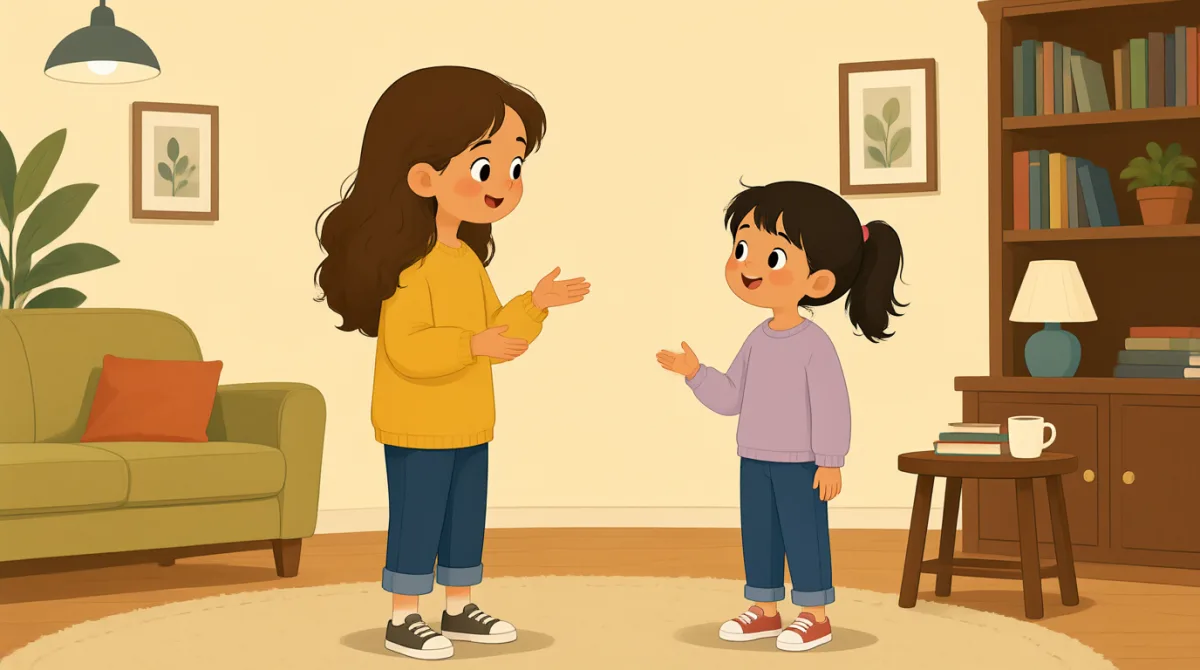

Mia, where did you grow up? Was it a big city?
미아, 어디서 자랐어? 큰 도시였어?

I grew up in a small town near the mountains. It was very quiet.
산 근처 작은 마을에서 자랐어. 정말 조용했어.
That sounds lovely. What was your neighborhood like?
정말 좋았겠다. 네 동네는 어땠어?
There were little houses and a park. The streets were safe for children.
작은 집들이랑 공원이 있었어. 아이들이 다니기에도 안전한 거리였어.
Did you play outside with other kids after school?
학교 끝나고 다른 애들이랑 밖에서 놀았어?
Yes, we rode our bikes and played in the park until dinner.
응, 저녁 먹을 때까지 자전거를 타고 공원에서 놀았어.
I grew up in a busy city. Our street had shops and buses.
난 번화한 도시에서 자랐어. 우리 거리에는 가게랑 버스가 있었어.
Did you like living there?
거기 사는 거 좋았어?
Yes. It was noisy, but my friends lived close by.
응. 시끄럽긴 했지만 친구들이 가까이 살았어.
어휘6
- grew up자라다
This means lived as a child in a particular place. Use it to talk about where you spent your childhood.
특정한 곳에서 어릴 때 살았다는 뜻이에요. 어린 시절을 보낸 곳을 말할 때 써요.
- small town작은 마을
A small town is a place with fewer people and buildings than a city. You can use this phrase to describe where you grew up.
도시보다 사람과 건물이 적은 곳이에요. 어디서 자랐는지 설명할 때 쓸 수 있어요.
- near the mountains산 근처에
This means close to the mountains. Use “near” to say that one place is not far from another.
산과 가까운 곳이라는 뜻이에요. “near”는 한 장소가 다른 장소에서 멀지 않다고 말할 때 써요.
- neighborhood동네
A neighborhood is an area of a town or city where people live. Use this word when talking about the homes and streets around you.
사람들이 사는 마을이나 도시의 한 구역이에요. 주변의 집과 거리에 관해 이야기할 때 써요.
- after school학교 끝나고
This means after classes finish for the day. You can use it to talk about activities children do later in the day.
그날 수업이 끝난 뒤라는 뜻이에요. 아이들이 하루 중 나중에 하는 활동을 이야기할 때 쓸 수 있어요.
- lived close by가까이 살았다
This means lived nearby. Use it to say that someone’s home was not far away.
근처에 살았다는 뜻이에요. 누군가의 집이 멀지 않았다고 말할 때 써요.
핵심 문장8
- 1
Mia, where did you grow up?
미아, 어디서 자랐어?
This is a friendly way to ask where someone spent their childhood. You can replace “Mia” with another person’s name.
상대가 어린 시절을 어디서 보냈는지 친근하게 물어보는 표현이에요. “Mia” 대신 다른 사람의 이름을 넣어도 돼요.
- 2
Was it a big city?
큰 도시였어?
Use this yes-or-no question to ask whether a place was a large city. You can change “big city” to another kind of place.
어떤 곳이 큰 도시였는지 예, 아니요로 답할 수 있게 물어보는 질문이에요. “big city”를 다른 종류의 장소로 바꿔 쓸 수 있어요.
- 3
What was your neighborhood like?
네 동네는 어땠어?
This asks someone to describe the area where they lived. You can use “What was [place] like?” to ask about a place in the past.
상대가 살던 곳에 대해 설명해 달라고 물어보는 표현이에요. 과거의 장소에 관해 물을 때 “What was [place] like?”를 쓸 수 있어요.
- 4
The streets were safe for children.
그 거리는 아이들이 다니기에도 안전했어.
This describes a neighborhood in the past. You can replace “safe” with another adjective, such as “quiet” or “busy.”
과거의 동네가 어땠는지 설명하는 문장이에요. “safe” 대신 “quiet”이나 “busy” 같은 다른 형용사를 넣을 수 있어요.
- 5
Did you play outside with other kids after school?
학교 끝나고 다른 애들이랑 밖에서 놀았어?
Use this question to ask about a past activity. Start with “Did you” and use the simple form of the verb, such as “play.”
과거에 한 활동을 물어보는 질문이에요. “Did you”로 시작하고 “play”처럼 동사의 기본형을 써요.
- 6
Yes, we rode our bikes and played in the park until dinner.
응, 저녁 먹을 때까지 자전거를 타고 공원에서 놀았어.
This sentence describes activities that continued until a certain time. You can reuse the pattern “We [past activity] until [time or event].”
어떤 시점까지 계속한 활동을 설명하는 문장이에요. “We [과거 활동] until [시간이나 사건].”이라는 표현을 활용해 보세요.
- 7
Our street had shops and buses.
우리 거리에는 가게랑 버스가 있었어.
This is a simple way to describe what was on a street in the past. Replace “shops and buses” with other things you remember.
과거에 거리에 무엇이 있었는지 간단히 설명하는 표현이에요. “shops and buses”를 기억나는 다른 것들로 바꿔 보세요.
- 8
It was noisy, but my friends lived close by.
시끄럽긴 했지만 친구들이 가까이 살았어.
Use “but” to connect two different ideas: the street was noisy, and friends lived nearby. You can use this pattern to describe both a problem and something positive.
“but”은 서로 다른 두 가지 생각을 연결해요. 거리는 시끄러웠지만 친구들은 가까이 살았다는 뜻이에요. 이 표현으로 문제와 좋은 점을 함께 설명할 수 있어요.