Where You Grew Up
ที่ที่คุณเติบโตมา
Emma and Mia talk about the towns and neighborhoods where they grew up. They ask what their homes and streets were like.
เอ็มมาและมีอาพูดคุยเกี่ยวกับเมืองและย่านที่พวกเธอเติบโตมา พวกเธอถามว่าบ้านและถนนแถวนั้นเป็นอย่างไร
บทสนทนา9
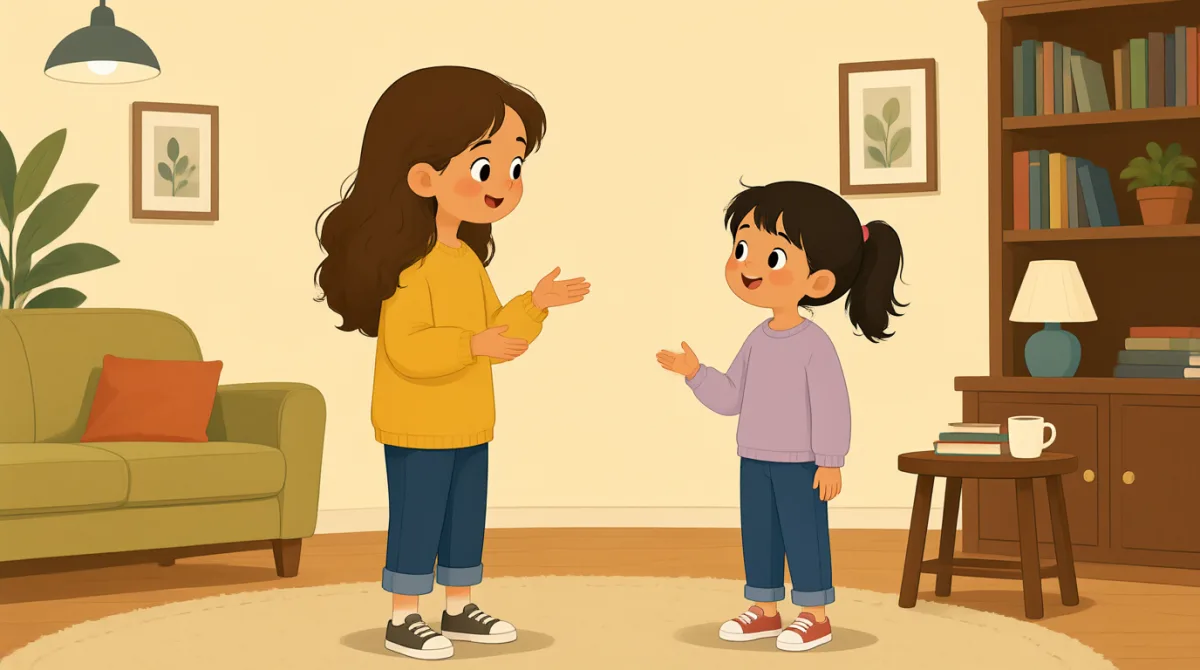

Mia, where did you grow up? Was it a big city?
มีอา เธอโตมาที่ไหนเหรอ เป็นเมืองใหญ่ไหม

I grew up in a small town near the mountains. It was very quiet.
ฉันโตมาในเมืองเล็ก ๆ ใกล้ภูเขา ที่นั่นเงียบมากเลย
That sounds lovely. What was your neighborhood like?
ฟังดูน่าอยู่จัง ย่านที่เธออยู่เป็นยังไงบ้าง
There were little houses and a park. The streets were safe for children.
มีบ้านหลังเล็ก ๆ แล้วก็สวนสาธารณะ ถนนหนทางปลอดภัยสำหรับเด็ก ๆ
Did you play outside with other kids after school?
หลังเลิกเรียน เธอออกไปเล่นข้างนอกกับเด็กคนอื่น ๆ ไหม
Yes, we rode our bikes and played in the park until dinner.
ใช่ พวกเราปั่นจักรยานแล้วก็เล่นในสวนสาธารณะจนถึงเวลาอาหารเย็น
I grew up in a busy city. Our street had shops and buses.
ฉันโตมาในเมืองที่วุ่นวาย ถนนที่บ้านฉันมีร้านค้าและรถประจำทาง
Did you like living there?
เธอชอบอยู่ที่นั่นไหม
Yes. It was noisy, but my friends lived close by.
ชอบนะ ถึงจะเสียงดัง แต่เพื่อน ๆ ของฉันก็อยู่ใกล้ ๆ กัน
คำศัพท์6
- grew upเติบโตมา
This means lived as a child in a particular place. Use it to talk about where you spent your childhood.
คำนี้หมายถึงอาศัยอยู่ในสถานที่ใดสถานที่หนึ่งตอนเป็นเด็ก ใช้พูดถึงสถานที่ที่คุณใช้ชีวิตในวัยเด็ก
- small townเมืองเล็ก
A small town is a place with fewer people and buildings than a city. You can use this phrase to describe where you grew up.
เมืองเล็กคือสถานที่ที่มีผู้คนและอาคารน้อยกว่าเมืองใหญ่ คุณใช้วลีนี้เพื่อบอกว่าคุณเติบโตมาในที่ไหน
- near the mountainsใกล้ภูเขา
This means close to the mountains. Use “near” to say that one place is not far from another.
คำนี้หมายถึงอยู่ไม่ไกลจากภูเขา ใช้ “near” เพื่อบอกว่าสถานที่หนึ่งอยู่ไม่ไกลจากอีกสถานที่หนึ่ง
- neighborhoodย่านที่อยู่อาศัย
A neighborhood is an area of a town or city where people live. Use this word when talking about the homes and streets around you.
ย่านที่อยู่อาศัยคือบริเวณหนึ่งของเมืองที่ผู้คนอาศัยอยู่ ใช้คำนี้เมื่อพูดถึงบ้านและถนนรอบ ๆ ตัวคุณ
- after schoolหลังเลิกเรียน
This means after classes finish for the day. You can use it to talk about activities children do later in the day.
คำนี้หมายถึงหลังจากเรียนเสร็จในวันนั้น ใช้พูดถึงกิจกรรมที่เด็ก ๆ ทำในช่วงหลังของวันได้
- lived close byอยู่ใกล้ ๆ
This means lived nearby. Use it to say that someone’s home was not far away.
คำนี้หมายถึงอาศัยอยู่ใกล้ ๆ ใช้บอกว่าบ้านของใครบางคนอยู่ไม่ไกล
ประโยคสำคัญ8
- 1
Mia, where did you grow up?
มีอา เธอโตมาที่ไหนเหรอ
This is a friendly way to ask where someone spent their childhood. You can replace “Mia” with another person’s name.
นี่เป็นวิธีถามอย่างเป็นกันเองว่าใครบางคนใช้ชีวิตในวัยเด็กที่ไหน คุณเปลี่ยน “Mia” เป็นชื่อของคนอื่นได้
- 2
Was it a big city?
เป็นเมืองใหญ่ไหม
Use this yes-or-no question to ask whether a place was a large city. You can change “big city” to another kind of place.
ใช้คำถามแบบตอบใช่หรือไม่ใช่นี้เพื่อถามว่าสถานที่นั้นเป็นเมืองใหญ่หรือเปล่า คุณเปลี่ยน “big city” เป็นสถานที่ประเภทอื่นได้
- 3
What was your neighborhood like?
ย่านที่เธออยู่เป็นยังไงบ้าง
This asks someone to describe the area where they lived. You can use “What was [place] like?” to ask about a place in the past.
ประโยคนี้ใช้ขอให้ใครบางคนบรรยายบริเวณที่พวกเขาเคยอาศัยอยู่ คุณใช้ “What was [place] like?” เพื่อถามว่าสถานที่หนึ่งในอดีตเป็นอย่างไรได้
- 4
The streets were safe for children.
ถนนหนทางปลอดภัยสำหรับเด็ก ๆ
This describes a neighborhood in the past. You can replace “safe” with another adjective, such as “quiet” or “busy.”
ประโยคนี้บรรยายย่านหนึ่งในอดีต คุณเปลี่ยน “safe” เป็นคำคุณศัพท์อื่นได้ เช่น “quiet” หรือ “busy”
- 5
Did you play outside with other kids after school?
หลังเลิกเรียน เธอออกไปเล่นข้างนอกกับเด็กคนอื่น ๆ ไหม
Use this question to ask about a past activity. Start with “Did you” and use the simple form of the verb, such as “play.”
ใช้คำถามนี้เพื่อถามเกี่ยวกับกิจกรรมในอดีต เริ่มต้นด้วย “Did you” แล้วใช้คำกริยารูปพื้นฐาน เช่น “play”
- 6
Yes, we rode our bikes and played in the park until dinner.
ใช่ พวกเราปั่นจักรยานแล้วก็เล่นในสวนสาธารณะจนถึงเวลาอาหารเย็น
This sentence describes activities that continued until a certain time. You can reuse the pattern “We [past activity] until [time or event].”
ประโยคนี้บรรยายกิจกรรมที่ดำเนินต่อเนื่องจนถึงเวลาหนึ่ง คุณนำรูปแบบ “We [past activity] until [time or event].” ไปใช้ซ้ำได้
- 7
Our street had shops and buses.
ถนนที่บ้านฉันมีร้านค้าและรถประจำทาง
This is a simple way to describe what was on a street in the past. Replace “shops and buses” with other things you remember.
นี่เป็นวิธีง่าย ๆ ในการบรรยายว่าในอดีตมีอะไรอยู่บนถนนสายหนึ่ง แทนที่ “shops and buses” ด้วยสิ่งอื่น ๆ ที่คุณจำได้
- 8
It was noisy, but my friends lived close by.
ถึงจะเสียงดัง แต่เพื่อน ๆ ของฉันก็อยู่ใกล้ ๆ กัน
Use “but” to connect two different ideas: the street was noisy, and friends lived nearby. You can use this pattern to describe both a problem and something positive.
ใช้ “but” เพื่อเชื่อมความคิดสองอย่างที่แตกต่างกัน ได้แก่ ถนนเสียงดัง แต่เพื่อน ๆ อาศัยอยู่ใกล้ ๆ คุณใช้รูปแบบนี้เพื่อบรรยายทั้งปัญหาและสิ่งดี ๆ ได้