Where You Grew Up
Donde creciste
Emma and Mia talk about the towns and neighborhoods where they grew up. They ask what their homes and streets were like.
Emma y Mia hablan de los pueblos y barrios donde crecieron. Se preguntan cómo eran sus casas y sus calles.
Diálogo9
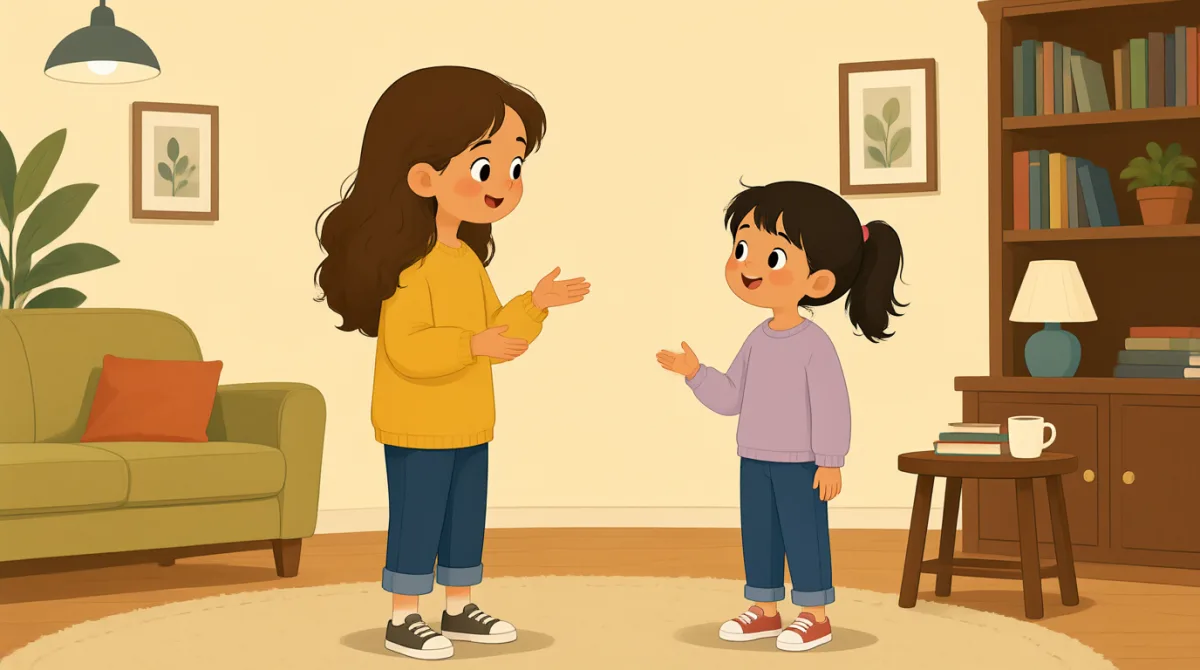

Mia, where did you grow up? Was it a big city?
Mia, ¿dónde creciste? ¿Era una ciudad grande?

I grew up in a small town near the mountains. It was very quiet.
Crecí en un pueblo pequeño cerca de las montañas. Era muy tranquilo.
That sounds lovely. What was your neighborhood like?
Qué bonito. ¿Cómo era tu barrio?
There were little houses and a park. The streets were safe for children.
Había casitas y un parque. Las calles eran seguras para los niños.
Did you play outside with other kids after school?
¿Jugabas afuera con otros niños después de la escuela?
Yes, we rode our bikes and played in the park until dinner.
Sí, andábamos en bicicleta y jugábamos en el parque hasta la hora de cenar.
I grew up in a busy city. Our street had shops and buses.
Yo crecí en una ciudad muy animada. En nuestra calle había tiendas y pasaban autobuses.
Did you like living there?
¿Te gustaba vivir allí?
Yes. It was noisy, but my friends lived close by.
Sí. Había mucho ruido, pero mis amigos vivían cerca.
Vocabulario6
- grew upcrecer
This means lived as a child in a particular place. Use it to talk about where you spent your childhood.
Significa vivir de niño en un lugar determinado. Úsalo para hablar del lugar donde pasaste tu infancia.
- small townpueblo pequeño
A small town is a place with fewer people and buildings than a city. You can use this phrase to describe where you grew up.
Un pueblo pequeño tiene menos habitantes y edificios que una ciudad. Puedes usar esta expresión para describir dónde creciste.
- near the mountainscerca de las montañas
This means close to the mountains. Use “near” to say that one place is not far from another.
Significa que está a poca distancia de las montañas. Usa “near” para decir que un lugar no está lejos de otro.
- neighborhoodbarrio
A neighborhood is an area of a town or city where people live. Use this word when talking about the homes and streets around you.
Un barrio es una zona de una ciudad o un pueblo donde vive la gente. Usa esta palabra para hablar de las casas y calles que te rodean.
- after schooldespués de la escuela
This means after classes finish for the day. You can use it to talk about activities children do later in the day.
Significa cuando terminan las clases del día. Puedes usarlo para hablar de las actividades que hacen los niños más tarde.
- lived close byvivían cerca
This means lived nearby. Use it to say that someone’s home was not far away.
Significa que vivían en las inmediaciones. Úsalo para decir que la casa de alguien no estaba lejos.
Frases clave8
- 1
Mia, where did you grow up?
Mia, ¿dónde creciste?
This is a friendly way to ask where someone spent their childhood. You can replace “Mia” with another person’s name.
Es una forma amigable de preguntarle a alguien dónde pasó su infancia. Puedes reemplazar “Mia” por el nombre de otra persona.
- 2
Was it a big city?
¿Era una ciudad grande?
Use this yes-or-no question to ask whether a place was a large city. You can change “big city” to another kind of place.
Usa esta pregunta de sí o no para preguntar si un lugar era una ciudad grande. Puedes cambiar “big city” por otro tipo de lugar.
- 3
What was your neighborhood like?
¿Cómo era tu barrio?
This asks someone to describe the area where they lived. You can use “What was [place] like?” to ask about a place in the past.
Esta pregunta invita a alguien a describir la zona donde vivía. Puedes usar “What was [place] like?” para preguntar cómo era un lugar en el pasado.
- 4
The streets were safe for children.
Las calles eran seguras para los niños.
This describes a neighborhood in the past. You can replace “safe” with another adjective, such as “quiet” or “busy.”
Esta frase describe un barrio en el pasado. Puedes reemplazar “safe” por otro adjetivo, como “quiet” o “busy.”
- 5
Did you play outside with other kids after school?
¿Jugabas afuera con otros niños después de la escuela?
Use this question to ask about a past activity. Start with “Did you” and use the simple form of the verb, such as “play.”
Usa esta pregunta para preguntar por una actividad pasada. Empieza con “Did you” y usa la forma simple del verbo, como “play.”
- 6
Yes, we rode our bikes and played in the park until dinner.
Sí, andábamos en bicicleta y jugábamos en el parque hasta la hora de cenar.
This sentence describes activities that continued until a certain time. You can reuse the pattern “We [past activity] until [time or event].”
Esta frase describe actividades que continuaron hasta cierto momento. Puedes reutilizar el patrón “We [past activity] until [time or event].”
- 7
Our street had shops and buses.
En nuestra calle había tiendas y pasaban autobuses.
This is a simple way to describe what was on a street in the past. Replace “shops and buses” with other things you remember.
Esta es una forma sencilla de describir lo que había en una calle en el pasado. Reemplaza “shops and buses” por otras cosas que recuerdes.
- 8
It was noisy, but my friends lived close by.
Había mucho ruido, pero mis amigos vivían cerca.
Use “but” to connect two different ideas: the street was noisy, and friends lived nearby. You can use this pattern to describe both a problem and something positive.
Usa “but” para conectar dos ideas distintas: la calle era ruidosa y tus amigos vivían cerca. Puedes usar este patrón para describir tanto un problema como algo positivo.