Where You Grew Up
Emma and Mia talk about the towns and neighborhoods where they grew up. They ask what their homes and streets were like.
Dialogue9
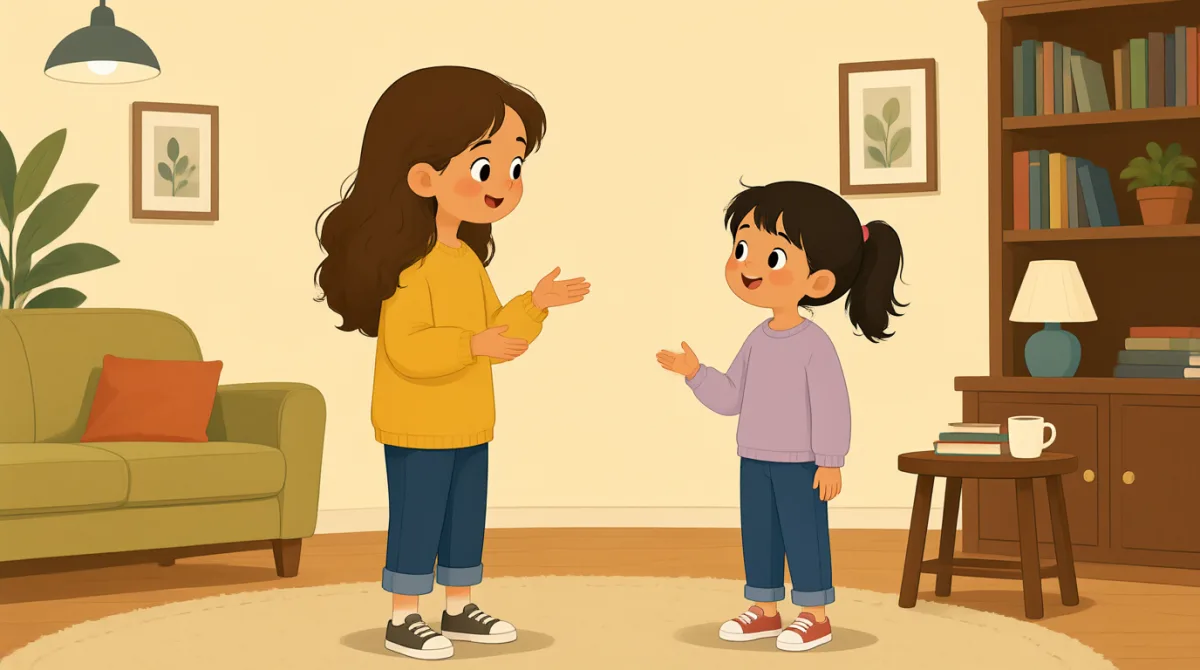

Mia, where did you grow up? Was it a big city?

I grew up in a small town near the mountains. It was very quiet.
That sounds lovely. What was your neighborhood like?
There were little houses and a park. The streets were safe for children.
Did you play outside with other kids after school?
Yes, we rode our bikes and played in the park until dinner.
I grew up in a busy city. Our street had shops and buses.
Did you like living there?
Yes. It was noisy, but my friends lived close by.
Vocabulary6
- grew up
This means lived as a child in a particular place. Use it to talk about where you spent your childhood.
- small town
A small town is a place with fewer people and buildings than a city. You can use this phrase to describe where you grew up.
- near the mountains
This means close to the mountains. Use “near” to say that one place is not far from another.
- neighborhood
A neighborhood is an area of a town or city where people live. Use this word when talking about the homes and streets around you.
- after school
This means after classes finish for the day. You can use it to talk about activities children do later in the day.
- lived close by
This means lived nearby. Use it to say that someone’s home was not far away.
Key Sentences8
- 1
Mia, where did you grow up?
This is a friendly way to ask where someone spent their childhood. You can replace “Mia” with another person’s name.
- 2
Was it a big city?
Use this yes-or-no question to ask whether a place was a large city. You can change “big city” to another kind of place.
- 3
What was your neighborhood like?
This asks someone to describe the area where they lived. You can use “What was [place] like?” to ask about a place in the past.
- 4
The streets were safe for children.
This describes a neighborhood in the past. You can replace “safe” with another adjective, such as “quiet” or “busy.”
- 5
Did you play outside with other kids after school?
Use this question to ask about a past activity. Start with “Did you” and use the simple form of the verb, such as “play.”
- 6
Yes, we rode our bikes and played in the park until dinner.
This sentence describes activities that continued until a certain time. You can reuse the pattern “We [past activity] until [time or event].”
- 7
Our street had shops and buses.
This is a simple way to describe what was on a street in the past. Replace “shops and buses” with other things you remember.
- 8
It was noisy, but my friends lived close by.
Use “but” to connect two different ideas: the street was noisy, and friends lived nearby. You can use this pattern to describe both a problem and something positive.