Where You Grew Up
你在哪里长大
Emma and Mia talk about the towns and neighborhoods where they grew up. They ask what their homes and streets were like.
Emma和Mia聊起她们长大的城镇和街区。她们询问彼此的家和街道是什么样的。
对话9
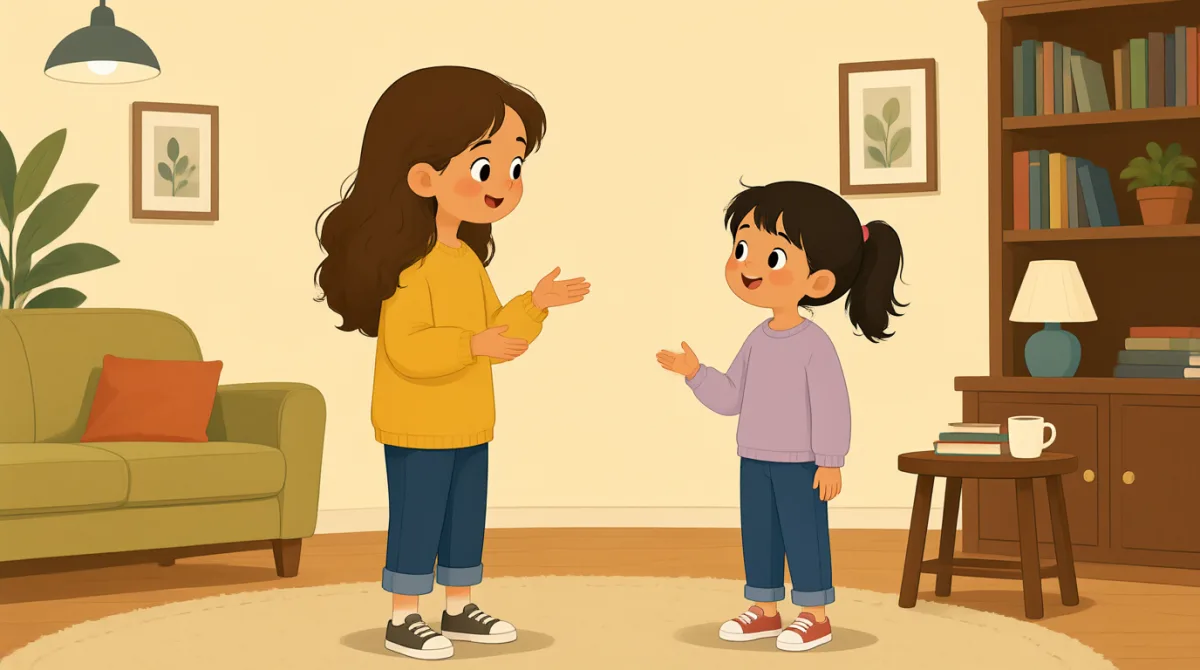

Mia, where did you grow up? Was it a big city?
Mia,你在哪里长大的?那里是个大城市吗?

I grew up in a small town near the mountains. It was very quiet.
我在山附近的一个小镇长大。那里非常安静。
That sounds lovely. What was your neighborhood like?
听起来真不错。你小时候住的街区是什么样的?
There were little houses and a park. The streets were safe for children.
那里有一些小房子,还有一个公园。街道对孩子们来说很安全。
Did you play outside with other kids after school?
你放学后会和其他孩子在外面玩吗?
Yes, we rode our bikes and played in the park until dinner.
会,我们骑自行车,在公园里玩到晚饭时间。
I grew up in a busy city. Our street had shops and buses.
我在一个热闹的城市长大。我们那条街上有商店和公交车。
Did you like living there?
你喜欢住在那里吗?
Yes. It was noisy, but my friends lived close by.
喜欢。那里很吵,不过我的朋友们就住在附近。
词汇6
- grew up长大
This means lived as a child in a particular place. Use it to talk about where you spent your childhood.
这表示小时候生活在某个地方。谈到你在哪里度过童年时,可以用这个表达。
- small town小镇
A small town is a place with fewer people and buildings than a city. You can use this phrase to describe where you grew up.
小镇的人口和建筑都比城市少。你可以用这个短语来描述自己长大的地方。
- near the mountains在山附近
This means close to the mountains. Use “near” to say that one place is not far from another.
这表示离山不远。用“near”来说明一个地方离另一个地方不远。
- neighborhood街区
A neighborhood is an area of a town or city where people live. Use this word when talking about the homes and streets around you.
街区是城镇或城市中人们居住的区域。聊到周围的住宅和街道时,可以用这个词。
- after school放学后
This means after classes finish for the day. You can use it to talk about activities children do later in the day.
这表示一天的课程结束后。你可以用它来谈论孩子们在一天稍晚些时候做的活动。
- lived close by住在附近
This means lived nearby. Use it to say that someone’s home was not far away.
这表示住得不远。可以用它来说明某人的家离这里不远。
重点句子8
- 1
Mia, where did you grow up?
米娅,你在哪里长大的?
This is a friendly way to ask where someone spent their childhood. You can replace “Mia” with another person’s name.
这是友好地询问别人在哪里度过童年的一种说法。你可以把“米娅”换成其他人的名字。
- 2
Was it a big city?
那里是个大城市吗?
Use this yes-or-no question to ask whether a place was a large city. You can change “big city” to another kind of place.
用这个一般疑问句来问一个地方是不是大城市。你可以把“big city”换成其他类型的地方。
- 3
What was your neighborhood like?
你小时候住的街区是什么样的?
This asks someone to describe the area where they lived. You can use “What was [place] like?” to ask about a place in the past.
这是在请别人描述他们住过的地方。你可以用“What was [place] like?”来询问过去某个地方的情况。
- 4
The streets were safe for children.
街道对孩子们来说很安全。
This describes a neighborhood in the past. You can replace “safe” with another adjective, such as “quiet” or “busy.”
这句话描述过去的一个街区。你可以把“safe”换成其他形容词,比如“quiet”或“busy”。
- 5
Did you play outside with other kids after school?
你放学后会和其他孩子在外面玩吗?
Use this question to ask about a past activity. Start with “Did you” and use the simple form of the verb, such as “play.”
用这个问句来询问过去做过的事。以“Did you”开头,后面接动词原形,比如“play”。
- 6
Yes, we rode our bikes and played in the park until dinner.
会,我们骑自行车,在公园里玩到晚饭时间。
This sentence describes activities that continued until a certain time. You can reuse the pattern “We [past activity] until [time or event].”
这句话描述了一直持续到某个时间的活动。你可以套用“We [past activity] until [time or event].”这个句型。
- 7
Our street had shops and buses.
我们那条街上有商店和公交车。
This is a simple way to describe what was on a street in the past. Replace “shops and buses” with other things you remember.
这是简单描述过去一条街上有什么的说法。你可以把“shops and buses”换成其他让你记忆深刻的事物。
- 8
It was noisy, but my friends lived close by.
那里很吵,不过我的朋友们就住在附近。
Use “but” to connect two different ideas: the street was noisy, and friends lived nearby. You can use this pattern to describe both a problem and something positive.
用“but”连接两个不同的想法:街道很吵,朋友们却住在附近。你可以用这个句型同时描述一个问题和一件好事。