Where You Grew Up
তুমি কোথায় বড় হয়েছ
Emma and Mia talk about the towns and neighborhoods where they grew up. They ask what their homes and streets were like.
এমা আর মিয়া যে শহর আর পাড়ায় বড় হয়েছে, তা নিয়ে কথা বলে। তারা জানতে চায়, তাদের বাড়ি আর রাস্তাঘাট কেমন ছিল।
সংলাপ9
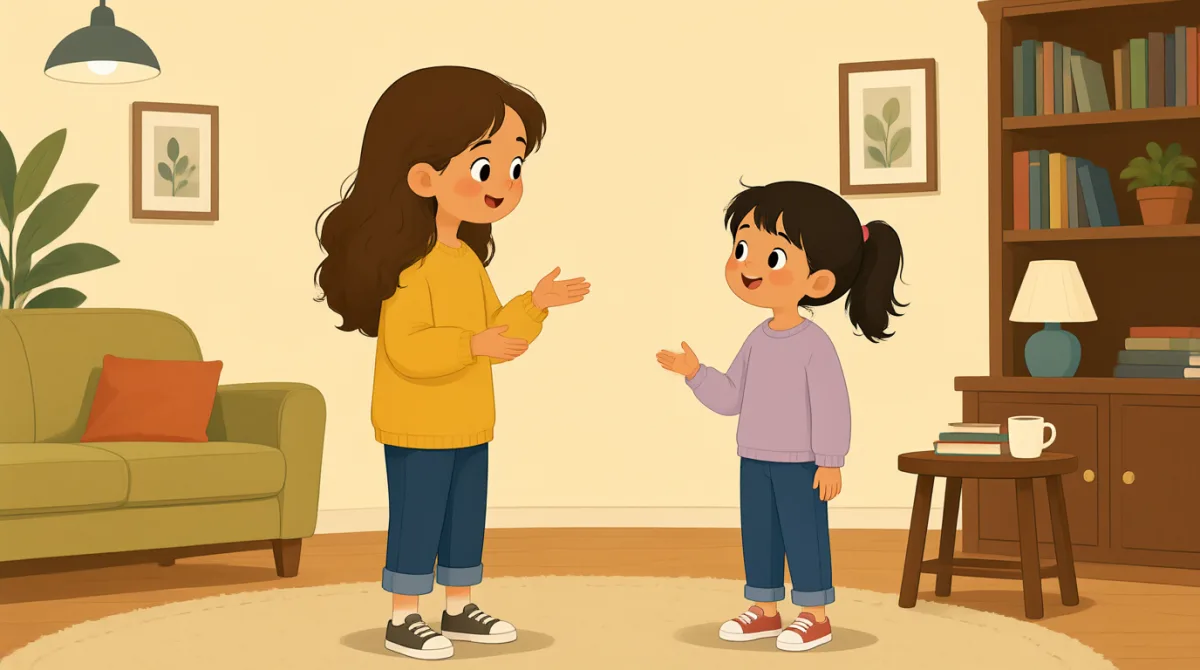

Mia, where did you grow up? Was it a big city?
মিয়া, তুমি কোথায় বড় হয়েছ? জায়গাটা কি বড় শহর ছিল?

I grew up in a small town near the mountains. It was very quiet.
আমি পাহাড়ের কাছে একটা ছোট শহরে বড় হয়েছি। জায়গাটা খুব শান্ত ছিল।
That sounds lovely. What was your neighborhood like?
শুনে তো বেশ সুন্দর মনে হচ্ছে। তোমাদের পাড়াটা কেমন ছিল?
There were little houses and a park. The streets were safe for children.
ছোট ছোট বাড়ি আর একটা পার্ক ছিল। রাস্তাগুলো শিশুদের জন্য নিরাপদ ছিল।
Did you play outside with other kids after school?
স্কুলের পর অন্য বাচ্চাদের সঙ্গে বাইরে খেলতে?
Yes, we rode our bikes and played in the park until dinner.
হ্যাঁ, আমরা সাইকেল চালাতাম আর রাতের খাবারের সময় পর্যন্ত পার্কে খেলতাম।
I grew up in a busy city. Our street had shops and buses.
আমি একটা ব্যস্ত শহরে বড় হয়েছি। আমাদের রাস্তায় দোকান আর বাস ছিল।
Did you like living there?
সেখানে থাকতে তোমার ভালো লাগত?
Yes. It was noisy, but my friends lived close by.
হ্যাঁ। জায়গাটা কোলাহলপূর্ণ ছিল, কিন্তু আমার বন্ধুরা কাছেই থাকত।
শব্দভান্ডার6
- grew upবড় হয়েছি
This means lived as a child in a particular place. Use it to talk about where you spent your childhood.
এর অর্থ, শৈশবে কোনো নির্দিষ্ট জায়গায় থাকা। শৈশব কোথায় কেটেছে, তা বলতে এই কথাটি ব্যবহার করো।
- small townছোট শহর
A small town is a place with fewer people and buildings than a city. You can use this phrase to describe where you grew up.
শহরের তুলনায় যেখানে মানুষ আর ভবন কম, সেটাই ছোট শহর। তুমি কোথায় বড় হয়েছ, তা বোঝাতে এই কথাটি ব্যবহার করতে পারো।
- near the mountainsপাহাড়ের কাছে
This means close to the mountains. Use “near” to say that one place is not far from another.
এর অর্থ পাহাড়ের কাছাকাছি। কোনো জায়গা অন্য জায়গা থেকে খুব দূরে নয় বোঝাতে “near” ব্যবহার করো।
- neighborhoodপাড়া
A neighborhood is an area of a town or city where people live. Use this word when talking about the homes and streets around you.
পাড়া হলো শহর বা নগরের এমন একটি এলাকা, যেখানে মানুষ বসবাস করে। তোমার আশপাশের বাড়ি আর রাস্তাঘাট নিয়ে কথা বলার সময় এই শব্দটি ব্যবহার করো।
- after schoolস্কুলের পর
This means after classes finish for the day. You can use it to talk about activities children do later in the day.
এর অর্থ দিনের ক্লাস শেষ হওয়ার পর। দিনের বাকি সময়ে শিশুরা কী করে, তা বলতে এই কথাটি ব্যবহার করতে পারো।
- lived close byকাছাকাছি থাকত
This means lived nearby. Use it to say that someone’s home was not far away.
এর অর্থ আশেপাশে থাকত। কারও বাড়ি খুব দূরে ছিল না বোঝাতে এই কথাটি ব্যবহার করো।
গুরুত্বপূর্ণ বাক্য8
- 1
Mia, where did you grow up?
মিয়া, তুমি কোথায় বড় হয়েছ?
This is a friendly way to ask where someone spent their childhood. You can replace “Mia” with another person’s name.
কেউ কোথায় শৈশব কাটিয়েছে, তা বন্ধুত্বপূর্ণভাবে জিজ্ঞেস করার উপায় এটি। “Mia”-এর বদলে অন্য কারও নাম বসাতে পারো।
- 2
Was it a big city?
জায়গাটা কি বড় শহর ছিল?
Use this yes-or-no question to ask whether a place was a large city. You can change “big city” to another kind of place.
কোনো জায়গা বড় শহর ছিল কি না, তা হ্যাঁ-না প্রশ্নে জানতে এটি ব্যবহার করো। “big city”-এর বদলে অন্য ধরনের জায়গার কথা বলতে পারো।
- 3
What was your neighborhood like?
তোমাদের পাড়াটা কেমন ছিল?
This asks someone to describe the area where they lived. You can use “What was [place] like?” to ask about a place in the past.
এটি কাউকে তার বসবাসের এলাকা বর্ণনা করতে বলে। অতীতের কোনো জায়গা সম্পর্কে জানতে “What was [place] like?” ব্যবহার করতে পারো।
- 4
The streets were safe for children.
রাস্তাগুলো শিশুদের জন্য নিরাপদ ছিল।
This describes a neighborhood in the past. You can replace “safe” with another adjective, such as “quiet” or “busy.”
এটি অতীতের কোনো পাড়া সম্পর্কে বর্ণনা দেয়। “safe”-এর বদলে “quiet” বা “busy”-এর মতো অন্য বিশেষণ বসাতে পারো।
- 5
Did you play outside with other kids after school?
স্কুলের পর অন্য বাচ্চাদের সঙ্গে বাইরে খেলতে?
Use this question to ask about a past activity. Start with “Did you” and use the simple form of the verb, such as “play.”
অতীতে কোনো কাজ করতে কি না জানতে এই প্রশ্নটি করো। “Did you” দিয়ে শুরু করে ক্রিয়ার সাধারণ রূপ ব্যবহার করো, যেমন “play”।
- 6
Yes, we rode our bikes and played in the park until dinner.
হ্যাঁ, আমরা সাইকেল চালাতাম আর রাতের খাবারের সময় পর্যন্ত পার্কে খেলতাম।
This sentence describes activities that continued until a certain time. You can reuse the pattern “We [past activity] until [time or event].”
এই বাক্যে বোঝানো হয়েছে, কোনো কাজ নির্দিষ্ট সময় পর্যন্ত চলেছিল। “We [past activity] until [time or event].” ছকটি আবার ব্যবহার করতে পারো।
- 7
Our street had shops and buses.
আমাদের রাস্তায় দোকান আর বাস ছিল।
This is a simple way to describe what was on a street in the past. Replace “shops and buses” with other things you remember.
অতীতে কোনো রাস্তায় কী ছিল, তা বর্ণনা করার সহজ উপায় এটি। “shops and buses”-এর বদলে তোমার মনে থাকা অন্য জিনিস বসাও।
- 8
It was noisy, but my friends lived close by.
জায়গাটা কোলাহলপূর্ণ ছিল, কিন্তু আমার বন্ধুরা কাছেই থাকত।
Use “but” to connect two different ideas: the street was noisy, and friends lived nearby. You can use this pattern to describe both a problem and something positive.
দুটি ভিন্ন ভাবনা জুড়তে “but” ব্যবহার করো: রাস্তাটা কোলাহলপূর্ণ ছিল, আর বন্ধুরা কাছাকাছি থাকত। কোনো সমস্যা আর তার পাশাপাশি ইতিবাচক দিক বর্ণনা করতেও এই ছক ব্যবহার করতে পারো।