Where You Grew Up
जहाँ तुम बड़े हुए
Emma and Mia talk about the towns and neighborhoods where they grew up. They ask what their homes and streets were like.
एमा और मिया उन कस्बों और मोहल्लों के बारे में बात करती हैं जहाँ वे बड़ी हुईं। वे पूछती हैं कि उनके घर और गलियाँ कैसी थीं।
संवाद9
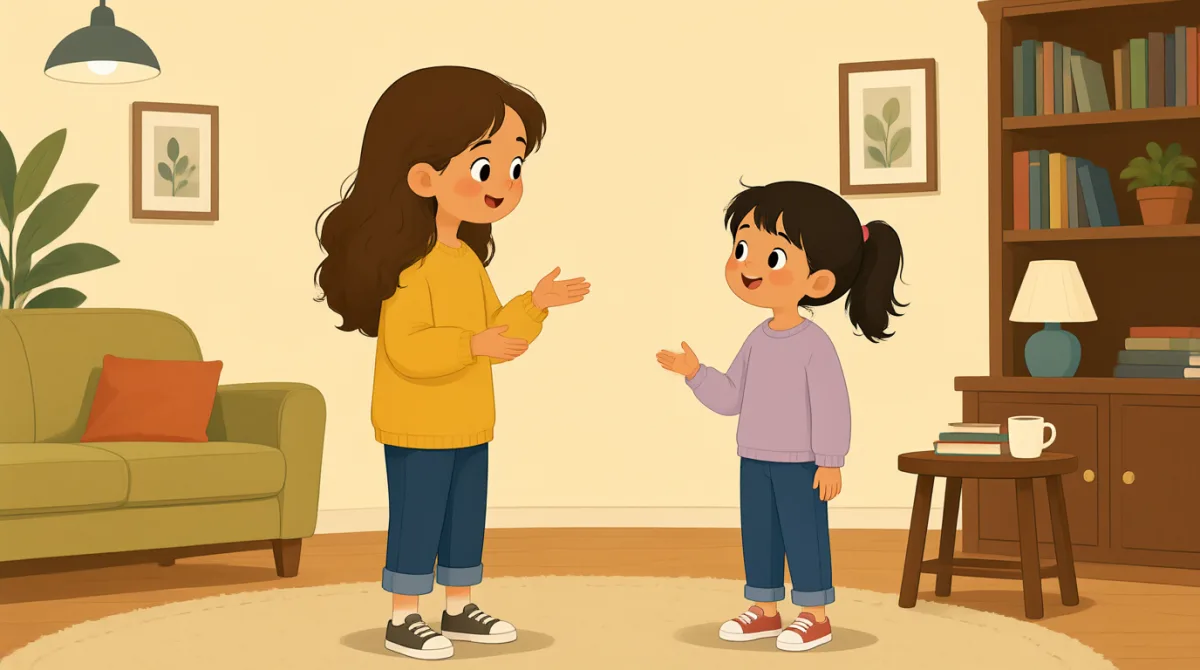

Mia, where did you grow up? Was it a big city?
मिया, तुम कहाँ बड़ी हुईं? क्या वह बड़ा शहर था?

I grew up in a small town near the mountains. It was very quiet.
मैं पहाड़ों के पास एक छोटे-से कस्बे में बड़ी हुई। वहाँ बहुत शांति थी।
That sounds lovely. What was your neighborhood like?
यह तो बहुत प्यारा लगता है। तुम्हारा मोहल्ला कैसा था?
There were little houses and a park. The streets were safe for children.
वहाँ छोटे-छोटे घर और एक पार्क था। बच्चों के लिए गलियाँ सुरक्षित थीं।
Did you play outside with other kids after school?
क्या तुम स्कूल के बाद दूसरे बच्चों के साथ बाहर खेलती थीं?
Yes, we rode our bikes and played in the park until dinner.
हाँ, हम रात के खाने तक साइकिल चलाते और पार्क में खेलते थे।
I grew up in a busy city. Our street had shops and buses.
मैं एक व्यस्त शहर में बड़ी हुई। हमारी गली में दुकानें और बसें थीं।
Did you like living there?
क्या तुम्हें वहाँ रहना पसंद था?
Yes. It was noisy, but my friends lived close by.
हाँ। वहाँ शोर तो बहुत था, लेकिन मेरे दोस्त पास ही रहते थे।
शब्दावली6
- grew upबड़ा होना
This means lived as a child in a particular place. Use it to talk about where you spent your childhood.
इसका मतलब है किसी खास जगह पर बचपन बिताना। अपने बचपन की जगह के बारे में बताने के लिए इसका इस्तेमाल करो।
- small townछोटा कस्बा
A small town is a place with fewer people and buildings than a city. You can use this phrase to describe where you grew up.
छोटा कस्बा ऐसी जगह होती है जहाँ शहर के मुकाबले लोग और इमारतें कम होते हैं। जहाँ तुम बड़े हुए, उसका वर्णन करने के लिए इस वाक्यांश का इस्तेमाल कर सकते हो।
- near the mountainsपहाड़ों के पास
This means close to the mountains. Use “near” to say that one place is not far from another.
इसका मतलब है पहाड़ों के नज़दीक। यह बताने के लिए कि एक जगह दूसरी जगह से दूर नहीं है, “near” का इस्तेमाल करो।
- neighborhoodमोहल्ला
A neighborhood is an area of a town or city where people live. Use this word when talking about the homes and streets around you.
मोहल्ला किसी कस्बे या शहर का वह इलाका होता है जहाँ लोग रहते हैं। अपने आसपास के घरों और गलियों की बात करते समय इस शब्द का इस्तेमाल करो।
- after schoolस्कूल के बाद
This means after classes finish for the day. You can use it to talk about activities children do later in the day.
इसका मतलब है दिन की कक्षाएँ खत्म होने के बाद। दिन में बाद के समय बच्चों की गतिविधियों के बारे में बताने के लिए इसका इस्तेमाल कर सकते हो।
- lived close byपास में रहते थे
This means lived nearby. Use it to say that someone’s home was not far away.
इसका मतलब है नज़दीक रहते थे। यह बताने के लिए इसका इस्तेमाल करो कि किसी का घर ज़्यादा दूर नहीं था।
मुख्य वाक्य8
- 1
Mia, where did you grow up?
मिया, तुम कहाँ बड़ी हुईं?
This is a friendly way to ask where someone spent their childhood. You can replace “Mia” with another person’s name.
किसी से यह पूछने का यह दोस्ताना तरीका है कि उसने अपना बचपन कहाँ बिताया। तुम “Mia” की जगह किसी और का नाम रख सकते हो।
- 2
Was it a big city?
क्या वह बड़ा शहर था?
Use this yes-or-no question to ask whether a place was a large city. You can change “big city” to another kind of place.
यह हाँ-या-नहीं वाला सवाल पूछकर जानो कि कोई जगह बड़ा शहर थी या नहीं। तुम “big city” की जगह किसी और तरह की जगह का नाम रख सकते हो।
- 3
What was your neighborhood like?
तुम्हारा मोहल्ला कैसा था?
This asks someone to describe the area where they lived. You can use “What was [place] like?” to ask about a place in the past.
इस सवाल से तुम किसी से उस इलाके का वर्णन करने को कहते हो जहाँ वह रहता था। अतीत में किसी जगह के बारे में पूछने के लिए “What was [place] like?” का इस्तेमाल कर सकते हो।
- 4
The streets were safe for children.
बच्चों के लिए गलियाँ सुरक्षित थीं।
This describes a neighborhood in the past. You can replace “safe” with another adjective, such as “quiet” or “busy.”
यह वाक्य अतीत के किसी मोहल्ले का वर्णन करता है। तुम “safe” की जगह “quiet” या “busy” जैसे किसी दूसरे विशेषण का इस्तेमाल कर सकते हो।
- 5
Did you play outside with other kids after school?
क्या तुम स्कूल के बाद दूसरे बच्चों के साथ बाहर खेलती थीं?
Use this question to ask about a past activity. Start with “Did you” and use the simple form of the verb, such as “play.”
अतीत की किसी गतिविधि के बारे में पूछने के लिए यह सवाल इस्तेमाल करो। “Did you” से शुरू करो और क्रिया के साधारण रूप का इस्तेमाल करो, जैसे “play”।
- 6
Yes, we rode our bikes and played in the park until dinner.
हाँ, हम रात के खाने तक साइकिल चलाते और पार्क में खेलते थे।
This sentence describes activities that continued until a certain time. You can reuse the pattern “We [past activity] until [time or event].”
यह वाक्य उन गतिविधियों का वर्णन करता है जो एक तय समय तक जारी रहीं। “We [past activity] until [time or event].” वाले ढाँचे का फिर से इस्तेमाल कर सकते हो।
- 7
Our street had shops and buses.
हमारी गली में दुकानें और बसें थीं।
This is a simple way to describe what was on a street in the past. Replace “shops and buses” with other things you remember.
अतीत में किसी गली में क्या-क्या था, यह बताने का यह आसान तरीका है। “shops and buses” की जगह उन दूसरी चीज़ों के नाम रखो जो तुम्हें याद हैं।
- 8
It was noisy, but my friends lived close by.
वहाँ शोर तो बहुत था, लेकिन मेरे दोस्त पास ही रहते थे।
Use “but” to connect two different ideas: the street was noisy, and friends lived nearby. You can use this pattern to describe both a problem and something positive.
दो अलग-अलग बातों को जोड़ने के लिए “but” का इस्तेमाल करो: गली शोरगुल वाली थी और दोस्त पास रहते थे। किसी परेशानी और अच्छी बात, दोनों का वर्णन करने के लिए इस ढाँचे का इस्तेमाल कर सकते हो।