Where You Grew Up
أين نشأتَ
Emma and Mia talk about the towns and neighborhoods where they grew up. They ask what their homes and streets were like.
تتحدث إيما وميا عن البلدات والأحياء التي نشأتا فيها، وتسألان عن طبيعة منزليهما وشوارعهما.
حوار9
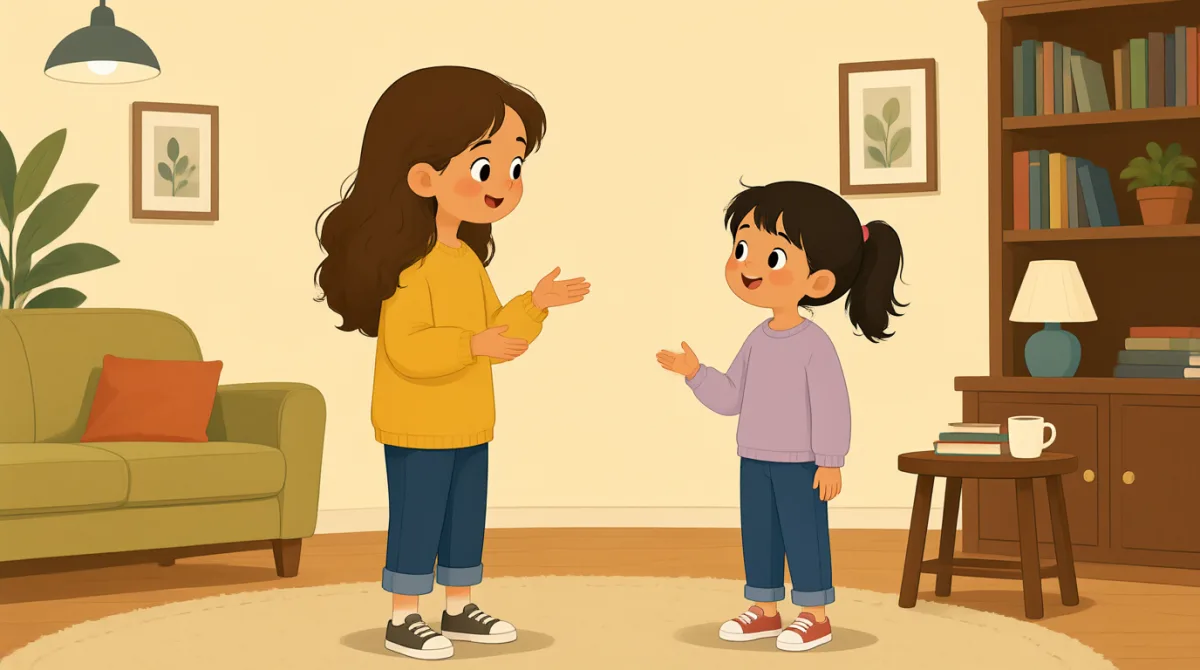

Mia, where did you grow up? Was it a big city?
ميا، أين نشأتِ؟ هل كانت مدينة كبيرة؟

I grew up in a small town near the mountains. It was very quiet.
نشأتُ في بلدة صغيرة بالقرب من الجبال. كانت هادئة جدًا.
That sounds lovely. What was your neighborhood like?
يبدو ذلك جميلًا. كيف كان حيّكِ؟
There were little houses and a park. The streets were safe for children.
كانت هناك بيوت صغيرة وحديقة. وكانت الشوارع آمنة للأطفال.
Did you play outside with other kids after school?
هل كنتِ تلعبين في الخارج مع أطفال آخرين بعد المدرسة؟
Yes, we rode our bikes and played in the park until dinner.
نعم، كنا نركب دراجاتنا ونلعب في الحديقة حتى موعد العشاء.
I grew up in a busy city. Our street had shops and buses.
نشأتُ في مدينة مزدحمة. كان في شارعنا متاجر وحافلات.
Did you like living there?
هل أحببتِ العيش هناك؟
Yes. It was noisy, but my friends lived close by.
نعم. كانت صاخبة، لكن أصدقائي كانوا يسكنون بالقرب مني.
المفردات6
- grew upنشأ
This means lived as a child in a particular place. Use it to talk about where you spent your childhood.
تعني عبارة “grew up” أن الشخص عاش طفولته في مكان معين. استخدمها للحديث عن المكان الذي قضيت فيه طفولتك.
- small townبلدة صغيرة
A small town is a place with fewer people and buildings than a city. You can use this phrase to describe where you grew up.
البلدة الصغيرة هي مكان يضم عددًا أقل من السكان والمباني مقارنةً بالمدينة. يمكنك استخدام هذه العبارة لوصف المكان الذي نشأت فيه.
- near the mountainsبالقرب من الجبال
This means close to the mountains. Use “near” to say that one place is not far from another.
تعني هذه العبارة أن المكان قريب من الجبال. استخدم “near” لتقول إن مكانًا ما ليس بعيدًا عن مكان آخر.
- neighborhoodحيّ
A neighborhood is an area of a town or city where people live. Use this word when talking about the homes and streets around you.
الحي منطقة من بلدة أو مدينة يسكن فيها الناس. استخدم هذه الكلمة عند الحديث عن المنازل والشوارع المحيطة بك.
- after schoolبعد المدرسة
This means after classes finish for the day. You can use it to talk about activities children do later in the day.
تعني هذه العبارة الوقت الذي يلي انتهاء الدروس في ذلك اليوم. يمكنك استخدامها للحديث عن الأنشطة التي يمارسها الأطفال في وقت لاحق من اليوم.
- lived close byكانوا يسكنون بالقرب مني
This means lived nearby. Use it to say that someone’s home was not far away.
تعني عبارة “lived close by” أن شخصًا ما كان يسكن قريبًا. استخدمها لتقول إن منزل شخص ما لم يكن بعيدًا.
الجمل الأساسية8
- 1
Mia, where did you grow up?
ميا، أين نشأتِ؟
This is a friendly way to ask where someone spent their childhood. You can replace “Mia” with another person’s name.
هذه طريقة ودية للسؤال عن المكان الذي قضى فيه شخص ما طفولته. يمكنك استبدال “Mia” باسم شخص آخر.
- 2
Was it a big city?
هل كانت مدينة كبيرة؟
Use this yes-or-no question to ask whether a place was a large city. You can change “big city” to another kind of place.
استخدم هذا السؤال الذي تكون إجابته نعم أو لا للسؤال عما إذا كان المكان مدينة كبيرة. يمكنك استبدال “big city” بنوع آخر من الأماكن.
- 3
What was your neighborhood like?
كيف كان حيّكِ؟
This asks someone to describe the area where they lived. You can use “What was [place] like?” to ask about a place in the past.
يسأل هذا السؤال شخصًا ما أن يصف المنطقة التي كان يسكن فيها. يمكنك استخدام “What was [place] like?” للسؤال عن مكان في الماضي.
- 4
The streets were safe for children.
كانت الشوارع آمنة للأطفال.
This describes a neighborhood in the past. You can replace “safe” with another adjective, such as “quiet” or “busy.”
تصف هذه الجملة حيًا في الماضي. يمكنك استبدال “safe” بصفة أخرى، مثل “quiet” أو “busy”.
- 5
Did you play outside with other kids after school?
هل كنتِ تلعبين في الخارج مع أطفال آخرين بعد المدرسة؟
Use this question to ask about a past activity. Start with “Did you” and use the simple form of the verb, such as “play.”
استخدم هذا السؤال للاستفسار عن نشاط حدث في الماضي. ابدأ بـ “Did you” واستخدم صيغة الفعل البسيطة، مثل “play”.
- 6
Yes, we rode our bikes and played in the park until dinner.
نعم، كنا نركب دراجاتنا ونلعب في الحديقة حتى موعد العشاء.
This sentence describes activities that continued until a certain time. You can reuse the pattern “We [past activity] until [time or event].”
تصف هذه الجملة أنشطة استمرت حتى وقت معين. يمكنك إعادة استخدام النمط “We [past activity] until [time or event].”
- 7
Our street had shops and buses.
كان في شارعنا متاجر وحافلات.
This is a simple way to describe what was on a street in the past. Replace “shops and buses” with other things you remember.
هذه طريقة بسيطة لوصف ما كان موجودًا في شارع في الماضي. استبدل “shops and buses” بأشياء أخرى تتذكرها.
- 8
It was noisy, but my friends lived close by.
كانت صاخبة، لكن أصدقائي كانوا يسكنون بالقرب مني.
Use “but” to connect two different ideas: the street was noisy, and friends lived nearby. You can use this pattern to describe both a problem and something positive.
استخدم “but” للربط بين فكرتين مختلفتين: كان الشارع صاخبًا، وكان الأصدقاء يسكنون بالقرب منك. يمكنك استخدام هذا النمط لوصف مشكلة وشيء إيجابي في الوقت نفسه.