Describing the Fever
熱の様子を伝える
At the clinic, Mia tells Dr. David when the fever started and how high it got. He asks a few simple questions about the child’s symptoms.
クリニックで、ミアはデイビッド医師に、熱がいつから出ているか、どれくらい高くなったかを伝えます。医師は子どもの症状について、簡単な質問をいくつかします。
会話9
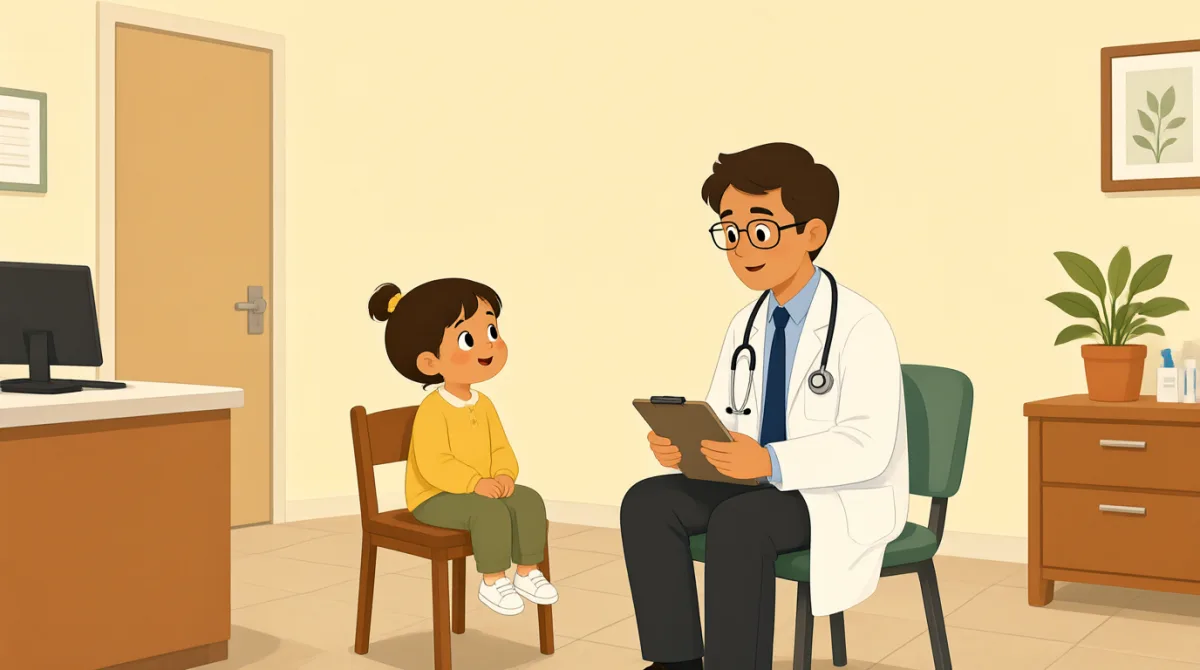

Good morning, Dr. Chen. My child has had a fever since last night.
おはようございます、チェン先生。子どもが昨夜から熱を出しています。

I’m sorry to hear that. Did you take your child’s temperature?
それは心配ですね。お子さんの体温は測りましたか?
Yes, it was 102 degrees this morning. It was lower last night.
はい、今朝は102度でした。昨夜はもう少し低かったです。
Has your child been coughing or had a sore throat?
お子さんはせきが出たり、喉が痛かったりしますか?
A little cough, but no sore throat. My child feels tired, too.
少しせきが出ますが、喉は痛くないです。子どもは疲れているようです。
Has your child been drinking water and eating anything today?
今日は水を飲んだり、何か食べたりしていますか?
My child drank some water, but didn’t want breakfast.
水は少し飲みましたが、朝ごはんは食べたがりませんでした。
I see. Any trouble breathing, or a rash on the skin?
そうですか。息苦しさや、皮膚に発疹はありますか?
No, breathing is fine, and I haven’t seen a rash.
いいえ、呼吸は問題ありませんし、発疹も見ていません。
語彙8
- fever熱
A fever is a body temperature that is higher than normal. Here, Mia says her child has been sick since last night.
“fever”は、体温が通常より高い状態のことです。ここでは、ミアは子どもが昨夜から具合が悪いと言っています。
- take your child’s temperatureお子さんの体温を測る
This means to check how hot your child’s body is. You can use this phrase when asking about a child’s fever.
“take your child’s temperature”は、お子さんの体がどれくらい熱いかを測るという意味です。子どもの熱について尋ねるときに使える表現です。
- 102 degrees102度
This tells the child’s temperature. You can use a number and “degrees” to report a temperature.
子どもの体温を伝える表現です。体温を伝えるときは、数字のあとに“degrees”を付けます。
- a sore throat喉の痛み
A sore throat is pain or discomfort in the throat. You can ask, “Do you have a sore throat?”
“a sore throat”は、喉の痛みや不快感のことです。“Do you have a sore throat?”(喉が痛いですか?)と尋ねられます。
- feels tired疲れている
This means someone does not have much energy. You can say, “I feel tired,” or “My child feels tired.”
“feels tired”は、あまり元気がないという意味です。“I feel tired.”や“My child feels tired.”のように言えます。
- drinking water水を飲んでいる
This means having water to drink. A doctor may ask if someone is drinking water when they are sick.
“drinking water”は、水を飲むことです。具合が悪い人について、医師が水を飲めているか尋ねることがあります。
- trouble breathing息苦しさ
This means difficulty breathing normally. You can use this phrase to describe an important symptom.
“trouble breathing”は、普通に呼吸するのが難しいことです。大切な症状を伝えるときに使える表現です。
- a rash on the skin皮膚の発疹
A rash is an area of irritated or unusual skin. You can use this phrase to tell a doctor about a skin problem.
“a rash”は、皮膚の一部が炎症を起こしたり、いつもと違う状態になったりすることです。皮膚の問題を医師に伝えるときは、“a rash on the skin”と言えます。
重要な文8
- 1
My child has had a fever since last night.
子どもが昨夜から熱を出しています。
This is a useful way to say when a problem began and how long it has lasted. Reuse “has had [symptom] since [time]” to describe an ongoing symptom.
問題がいつ始まり、どのくらい続いているかを伝える便利な言い方です。“has had [symptom] since [time]”を使うと、続いている症状を説明できます。
- 2
Did you take your child’s temperature?
お子さんの体温は測りましたか?
This is a simple question a doctor can ask about a fever. Replace “temperature” with another health question to ask what someone has checked.
医師が熱について尋ねるときに使える簡単な質問です。“temperature”を別の健康に関する語に置き換えると、何を確認したか尋ねられます。
- 3
It was lower last night.
昨夜はもう少し低かったです。
This compares the child’s temperature at two different times. You can use “It was lower/higher [time]” to describe how a symptom changed.
子どもの体温を、異なる二つの時間で比べています。“It was lower/higher [time]”を使うと、症状がどのように変化したか伝えられます。
- 4
Has your child been coughing or had a sore throat?
お子さんはせきが出たり、喉が痛かったりしますか?
This question asks about two common symptoms. You can use “Has your child been [verb]-ing or had [symptom]?” to ask about other problems.
よくある二つの症状について尋ねる質問です。“Has your child been [verb]-ing or had [symptom]?”の形を使って、ほかの症状についても尋ねられます。
- 5
My child feels tired, too.
子どもは疲れているようです。
This is a simple way to add another symptom. Use “feels [adjective], too” to mention an additional feeling.
別の症状を付け加える簡単な言い方です。“feels [adjective], too”を使うと、さらに別の体調や気分を伝えられます。
- 6
My child drank some water, but didn’t want breakfast.
子どもは水を少し飲みましたが、朝ごはんは食べたがりませんでした。
This sentence describes what the child did and did not do today. Use “but” to connect two different details.
今日、子どもがしたことと、しなかったことを説明しています。“but”を使うと、異なる二つの情報をつなげられます。
- 7
Any trouble breathing, or a rash on the skin?
息苦しさや、皮膚に発疹はありますか?
This is a short way to ask about serious symptoms. You can name two things after “Any” when checking for problems.
深刻な症状について尋ねる短い表現です。問題がないか確認するとき、“Any”のあとに二つの症状を挙げられます。
- 8
No, breathing is fine, and I haven’t seen a rash.
いいえ、呼吸は問題ありませんし、発疹も見ていません。
This gives a clear answer about two symptoms. You can use “I haven’t seen…” to say that you have not noticed a problem.
二つの症状について、はっきり答えています。“I haven’t seen…”を使うと、問題に気づいていないことを伝えられます。