Describing the Fever
Ateşi Anlatmak
At the clinic, Mia tells Dr. David when the fever started and how high it got. He asks a few simple questions about the child’s symptoms.
Klinikte Mia, Dr. David’e ateşin ne zaman başladığını ve ne kadar yükseldiğini anlatır. David, çocuğun belirtileriyle ilgili birkaç basit soru sorar.
Diyalog9
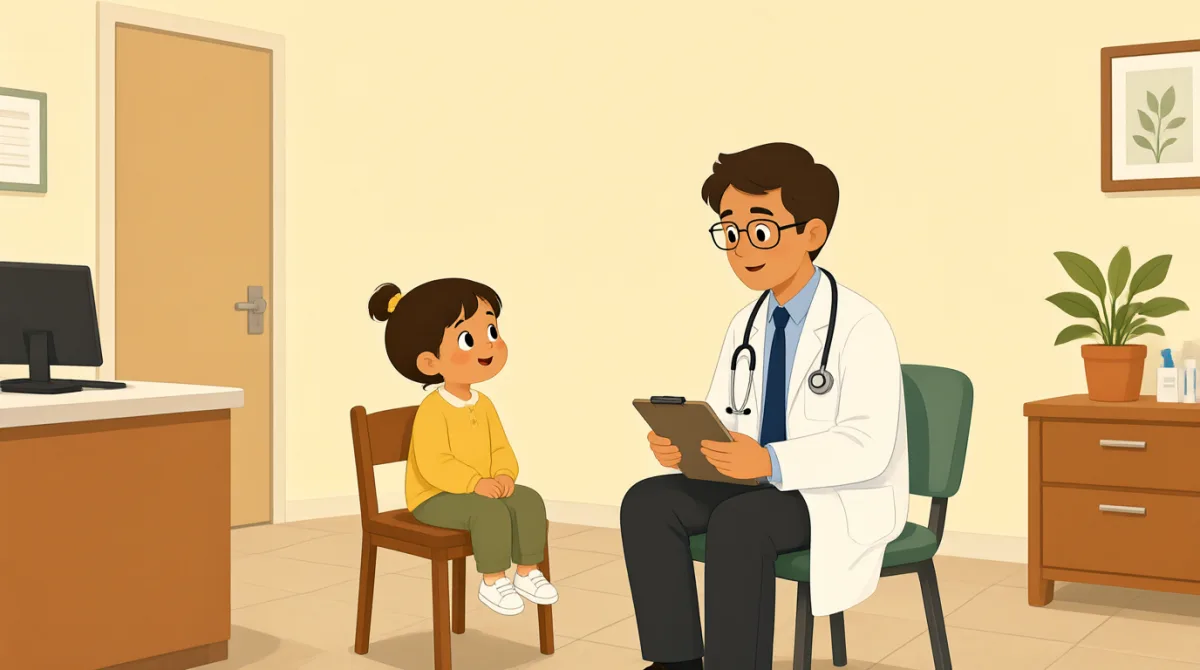

Good morning, Dr. Chen. My child has had a fever since last night.
Günaydın, Dr. Chen. Çocuğumun dünden beri ateşi var.

I’m sorry to hear that. Did you take your child’s temperature?
Bunu duyduğuma üzüldüm. Çocuğunuzun ateşini ölçtünüz mü?
Yes, it was 102 degrees this morning. It was lower last night.
Evet, bu sabah 102 dereceydi. Dün gece daha düşüktü.
Has your child been coughing or had a sore throat?
Çocuğunuz öksürüyor mu ya da boğazı ağrıyor mu?
A little cough, but no sore throat. My child feels tired, too.
Biraz öksürüyor ama boğazı ağrımıyor. Çocuğum da kendini yorgun hissediyor.
Has your child been drinking water and eating anything today?
Çocuğunuz bugün su içti mi, bir şeyler yedi mi?
My child drank some water, but didn’t want breakfast.
Biraz su içti ama kahvaltı etmek istemedi.
I see. Any trouble breathing, or a rash on the skin?
Anlıyorum. Nefes almakta zorluk çekiyor mu ya da cildinde döküntü var mı?
No, breathing is fine, and I haven’t seen a rash.
Hayır, nefes alması normal ve döküntü görmedim.
Kelime Bilgisi8
- feverateş
A fever is a body temperature that is higher than normal. Here, Mia says her child has been sick since last night.
Ateş, vücut sıcaklığının normalden yüksek olmasıdır. Mia burada çocuğunun dünden beri hasta olduğunu söylüyor.
- take your child’s temperatureçocuğunuzun ateşini ölçmek
This means to check how hot your child’s body is. You can use this phrase when asking about a child’s fever.
Bu ifade, çocuğunuzun vücut sıcaklığını kontrol etmek anlamına gelir. Çocuğun ateşi hakkında soru sorarken bu ifadeyi kullanabilirsiniz.
- 102 degrees102 derece
This tells the child’s temperature. You can use a number and “degrees” to report a temperature.
Bu, çocuğun ateşini belirtir. Ateşi söylerken bir sayı ve “degrees” (derece) kelimesini kullanabilirsiniz.
- a sore throatboğaz ağrısı
A sore throat is pain or discomfort in the throat. You can ask, “Do you have a sore throat?”
Boğaz ağrısı, boğazda hissedilen acı veya rahatsızlıktır. “Do you have a sore throat?” (Boğazınız ağrıyor mu?) diye sorabilirsiniz.
- feels tiredkendini yorgun hissetmek
This means someone does not have much energy. You can say, “I feel tired,” or “My child feels tired.”
Bu ifade, kişinin fazla enerjisi olmadığını anlatır. “I feel tired” (Kendimi yorgun hissediyorum) ya da “My child feels tired” (Çocuğum kendini yorgun hissediyor) diyebilirsiniz.
- drinking watersu içmek
This means having water to drink. A doctor may ask if someone is drinking water when they are sick.
Bu ifade, içecek olarak su tüketmek anlamına gelir. Doktor, hasta birine su içip içmediğini sorabilir.
- trouble breathingnefes almakta zorluk
This means difficulty breathing normally. You can use this phrase to describe an important symptom.
Bu ifade, normal şekilde nefes alamama durumunu anlatır. Önemli bir belirtiyi tarif etmek için kullanabilirsiniz.
- a rash on the skinciltte döküntü
A rash is an area of irritated or unusual skin. You can use this phrase to tell a doctor about a skin problem.
Döküntü, cildin tahriş olmuş veya normalden farklı görünen bir bölgesidir. Ciltle ilgili bir sorunu doktora anlatırken bu ifadeyi kullanabilirsiniz.
Önemli Cümleler8
- 1
My child has had a fever since last night.
Çocuğumun dünden beri ateşi var.
This is a useful way to say when a problem began and how long it has lasted. Reuse “has had [symptom] since [time]” to describe an ongoing symptom.
Bu cümle, bir sorunun ne zaman başladığını ve ne kadar süredir devam ettiğini söylemenin kullanışlı bir yoludur. Devam eden bir belirtiyi anlatırken “has had [symptom] since [time]” kalıbını yeniden kullanabilirsiniz.
- 2
Did you take your child’s temperature?
Çocuğunuzun ateşini ölçtünüz mü?
This is a simple question a doctor can ask about a fever. Replace “temperature” with another health question to ask what someone has checked.
Doktorun ateş hakkında sorabileceği basit bir sorudur. Birinin neyi kontrol ettiğini sormak için “temperature” kelimesini başka bir sağlık sorusuyla değiştirebilirsiniz.
- 3
It was lower last night.
Dün gece daha düşüktü.
This compares the child’s temperature at two different times. You can use “It was lower/higher [time]” to describe how a symptom changed.
Bu cümle, çocuğun ateşini iki farklı zamandaki hâliyle karşılaştırır. Bir belirtinin nasıl değiştiğini anlatmak için “It was lower/higher [time]” kalıbını kullanabilirsiniz.
- 4
Has your child been coughing or had a sore throat?
Çocuğunuz öksürüyor mu ya da boğazı ağrıyor mu?
This question asks about two common symptoms. You can use “Has your child been [verb]-ing or had [symptom]?” to ask about other problems.
Bu soru, sık görülen iki belirtiyi sorar. Başka sorunları sormak için “Has your child been [verb]-ing or had [symptom]?” kalıbını kullanabilirsiniz.
- 5
My child feels tired, too.
Çocuğum da kendini yorgun hissediyor.
This is a simple way to add another symptom. Use “feels [adjective], too” to mention an additional feeling.
Bu, başka bir belirti eklemenin basit bir yoludur. Ek bir hissi belirtmek için “feels [adjective], too” kalıbını kullanın.
- 6
My child drank some water, but didn’t want breakfast.
Çocuğum biraz su içti ama kahvaltı etmek istemedi.
This sentence describes what the child did and did not do today. Use “but” to connect two different details.
Bu cümle, çocuğun bugün ne yaptığını ve ne yapmadığını anlatır. İki farklı ayrıntıyı bağlamak için “but” kullanılır.
- 7
Any trouble breathing, or a rash on the skin?
Nefes almakta zorluk çekiyor mu ya da cildinde döküntü var mı?
This is a short way to ask about serious symptoms. You can name two things after “Any” when checking for problems.
Bu, ciddi belirtileri sormanın kısa bir yoludur. Sorun olup olmadığını kontrol ederken “Any” kelimesinden sonra iki şey sayabilirsiniz.
- 8
No, breathing is fine, and I haven’t seen a rash.
Hayır, nefes alması normal ve döküntü görmedim.
This gives a clear answer about two symptoms. You can use “I haven’t seen…” to say that you have not noticed a problem.
Bu cümle, iki belirti hakkında net bir yanıt verir. Bir sorun fark etmediğinizi söylemek için “I haven’t seen…” kalıbını kullanabilirsiniz.