Describing the Fever
बुखार का वर्णन करना
At the clinic, Mia tells Dr. David when the fever started and how high it got. He asks a few simple questions about the child’s symptoms.
क्लिनिक में, मिया डॉ. डेविड को बताती है कि बुखार कब शुरू हुआ और कितना तेज़ था। वे बच्चे के लक्षणों के बारे में कुछ आसान सवाल पूछते हैं।
संवाद9
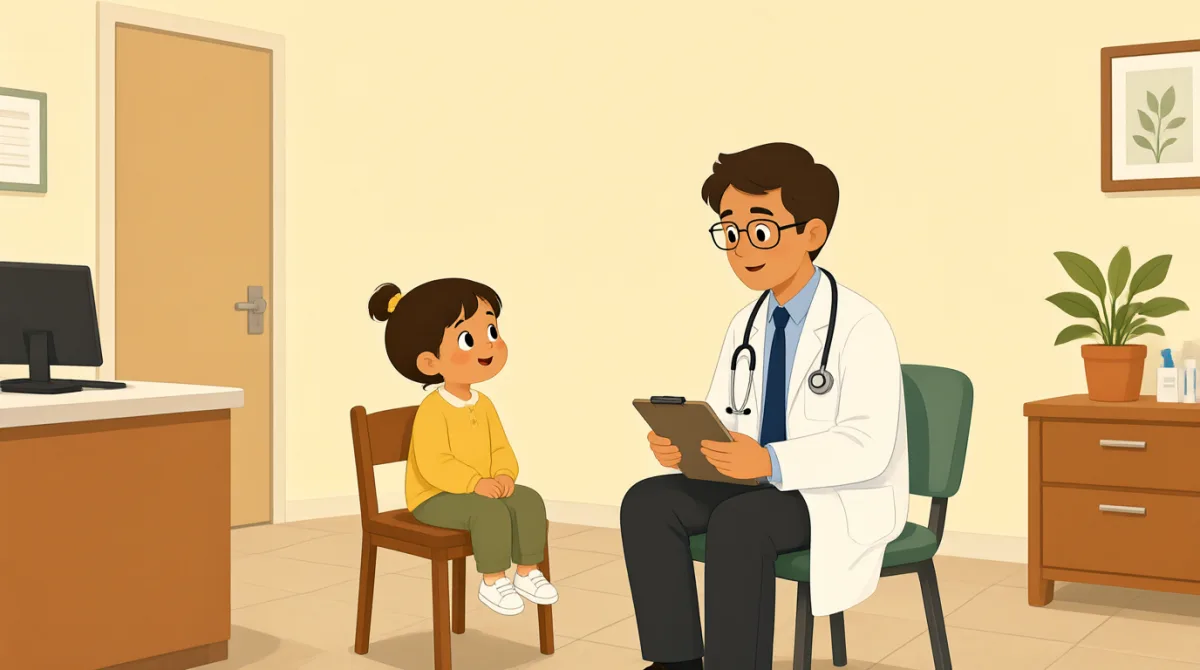

Good morning, Dr. Chen. My child has had a fever since last night.
सुप्रभात, डॉ. चेन। मेरे बच्चे को कल रात से बुखार है।

I’m sorry to hear that. Did you take your child’s temperature?
यह सुनकर मुझे अफ़सोस हुआ। क्या आपने अपने बच्चे का तापमान नापा?
Yes, it was 102 degrees this morning. It was lower last night.
हाँ, आज सुबह यह 102 डिग्री था। कल रात कम था।
Has your child been coughing or had a sore throat?
क्या आपके बच्चे को खाँसी हो रही है या गले में खराश है?
A little cough, but no sore throat. My child feels tired, too.
थोड़ी खाँसी है, लेकिन गले में खराश नहीं है। मेरे बच्चे को थकान भी महसूस हो रही है।
Has your child been drinking water and eating anything today?
क्या आपके बच्चे ने आज पानी पिया है और कुछ खाया है?
My child drank some water, but didn’t want breakfast.
मेरे बच्चे ने थोड़ा पानी पिया, लेकिन नाश्ता नहीं करना चाहा।
I see. Any trouble breathing, or a rash on the skin?
समझ गया। साँस लेने में कोई परेशानी या त्वचा पर दाने तो नहीं हैं?
No, breathing is fine, and I haven’t seen a rash.
नहीं, साँस लेने में कोई परेशानी नहीं है और मैंने कोई दाने नहीं देखे हैं।
शब्दावली8
- feverबुखार
A fever is a body temperature that is higher than normal. Here, Mia says her child has been sick since last night.
बुखार शरीर के सामान्य से अधिक तापमान को कहते हैं। यहाँ, मिया कहती है कि उसका बच्चा कल रात से बीमार है।
- take your child’s temperatureअपने बच्चे का तापमान नापना
This means to check how hot your child’s body is. You can use this phrase when asking about a child’s fever.
इसका मतलब है यह जाँचना कि आपके बच्चे के शरीर का तापमान कितना है। बच्चे के बुखार के बारे में पूछते समय आप इस वाक्यांश का इस्तेमाल कर सकते हैं।
- 102 degrees102 डिग्री
This tells the child’s temperature. You can use a number and “degrees” to report a temperature.
इससे बच्चे का तापमान बताया जाता है। तापमान बताने के लिए आप किसी संख्या के साथ “degrees” का इस्तेमाल कर सकते हैं।
- a sore throatगले में खराश
A sore throat is pain or discomfort in the throat. You can ask, “Do you have a sore throat?”
गले में खराश का मतलब गले में दर्द या परेशानी होना है। आप पूछ सकते हैं, “Do you have a sore throat?”
- feels tiredथकान महसूस करना
This means someone does not have much energy. You can say, “I feel tired,” or “My child feels tired.”
इसका मतलब है कि किसी व्यक्ति में ज़्यादा ऊर्जा नहीं है। आप कह सकते हैं, “I feel tired,” या “My child feels tired.”
- drinking waterपानी पीना
This means having water to drink. A doctor may ask if someone is drinking water when they are sick.
इसका मतलब है पीने के लिए पानी लेना। बीमार होने पर डॉक्टर पूछ सकते हैं कि कोई व्यक्ति पानी पी रहा है या नहीं।
- trouble breathingसाँस लेने में परेशानी
This means difficulty breathing normally. You can use this phrase to describe an important symptom.
इसका मतलब है सामान्य रूप से साँस लेने में कठिनाई होना। किसी महत्वपूर्ण लक्षण का वर्णन करने के लिए आप इस वाक्यांश का इस्तेमाल कर सकते हैं।
- a rash on the skinत्वचा पर दाने
A rash is an area of irritated or unusual skin. You can use this phrase to tell a doctor about a skin problem.
दाने त्वचा के उस हिस्से को कहते हैं जहाँ जलन हो या त्वचा असामान्य दिखाई दे। त्वचा की समस्या के बारे में डॉक्टर को बताते समय आप इस वाक्यांश का इस्तेमाल कर सकते हैं।
मुख्य वाक्य8
- 1
My child has had a fever since last night.
मेरे बच्चे को कल रात से बुखार है।
This is a useful way to say when a problem began and how long it has lasted. Reuse “has had [symptom] since [time]” to describe an ongoing symptom.
किसी समस्या के शुरू होने का समय और वह कितने समय से है, यह बताने का यह एक उपयोगी तरीका है। लगातार बने रहने वाले लक्षण का वर्णन करने के लिए “has had [symptom] since [time]” का दोबारा इस्तेमाल करें।
- 2
Did you take your child’s temperature?
क्या आपने अपने बच्चे का तापमान नापा?
This is a simple question a doctor can ask about a fever. Replace “temperature” with another health question to ask what someone has checked.
बुखार के बारे में डॉक्टर यह आसान सवाल पूछ सकते हैं। यह पूछने के लिए कि किसी ने क्या जाँचा है, “temperature” की जगह किसी अन्य स्वास्थ्य-संबंधी शब्द का इस्तेमाल करें।
- 3
It was lower last night.
कल रात यह कम था।
This compares the child’s temperature at two different times. You can use “It was lower/higher [time]” to describe how a symptom changed.
इस वाक्य में बच्चे के तापमान की दो अलग-अलग समय पर तुलना की गई है। किसी लक्षण में हुए बदलाव का वर्णन करने के लिए “It was lower/higher [time]” का इस्तेमाल कर सकते हैं।
- 4
Has your child been coughing or had a sore throat?
क्या आपके बच्चे को खाँसी हो रही है या गले में खराश है?
This question asks about two common symptoms. You can use “Has your child been [verb]-ing or had [symptom]?” to ask about other problems.
इस सवाल में दो आम लक्षणों के बारे में पूछा गया है। अन्य समस्याओं के बारे में पूछने के लिए “Has your child been [verb]-ing or had [symptom]?” का इस्तेमाल कर सकते हैं।
- 5
My child feels tired, too.
मेरे बच्चे को थकान भी महसूस हो रही है।
This is a simple way to add another symptom. Use “feels [adjective], too” to mention an additional feeling.
किसी अन्य लक्षण को जोड़ने का यह एक आसान तरीका है। किसी अतिरिक्त एहसास का ज़िक्र करने के लिए “feels [adjective], too” का इस्तेमाल करें।
- 6
My child drank some water, but didn’t want breakfast.
मेरे बच्चे ने थोड़ा पानी पिया, लेकिन नाश्ता नहीं करना चाहा।
This sentence describes what the child did and did not do today. Use “but” to connect two different details.
इस वाक्य में बताया गया है कि बच्चे ने आज क्या किया और क्या नहीं किया। दो अलग-अलग बातों को जोड़ने के लिए “but” का इस्तेमाल करें।
- 7
Any trouble breathing, or a rash on the skin?
साँस लेने में कोई परेशानी या त्वचा पर दाने तो नहीं हैं?
This is a short way to ask about serious symptoms. You can name two things after “Any” when checking for problems.
गंभीर लक्षणों के बारे में पूछने का यह छोटा तरीका है। समस्याओं की जाँच करते समय “Any” के बाद दो चीज़ों के नाम ले सकते हैं।
- 8
No, breathing is fine, and I haven’t seen a rash.
नहीं, साँस लेने में कोई परेशानी नहीं है और मैंने कोई दाने नहीं देखे हैं।
This gives a clear answer about two symptoms. You can use “I haven’t seen…” to say that you have not noticed a problem.
इसमें दो लक्षणों के बारे में स्पष्ट उत्तर दिया गया है। यह कहने के लिए कि आपने कोई समस्या नहीं देखी है, “I haven’t seen…” का इस्तेमाल कर सकते हैं।