Describing the Fever
บอกอาการไข้
At the clinic, Mia tells Dr. David when the fever started and how high it got. He asks a few simple questions about the child’s symptoms.
ที่คลินิก มีอาบอกคุณหมอเดวิดว่าเริ่มมีไข้ตั้งแต่เมื่อไร และไข้ขึ้นสูงแค่ไหน เขาถามคำถามง่ายๆ สองสามข้อเกี่ยวกับอาการของเด็ก
บทสนทนา9
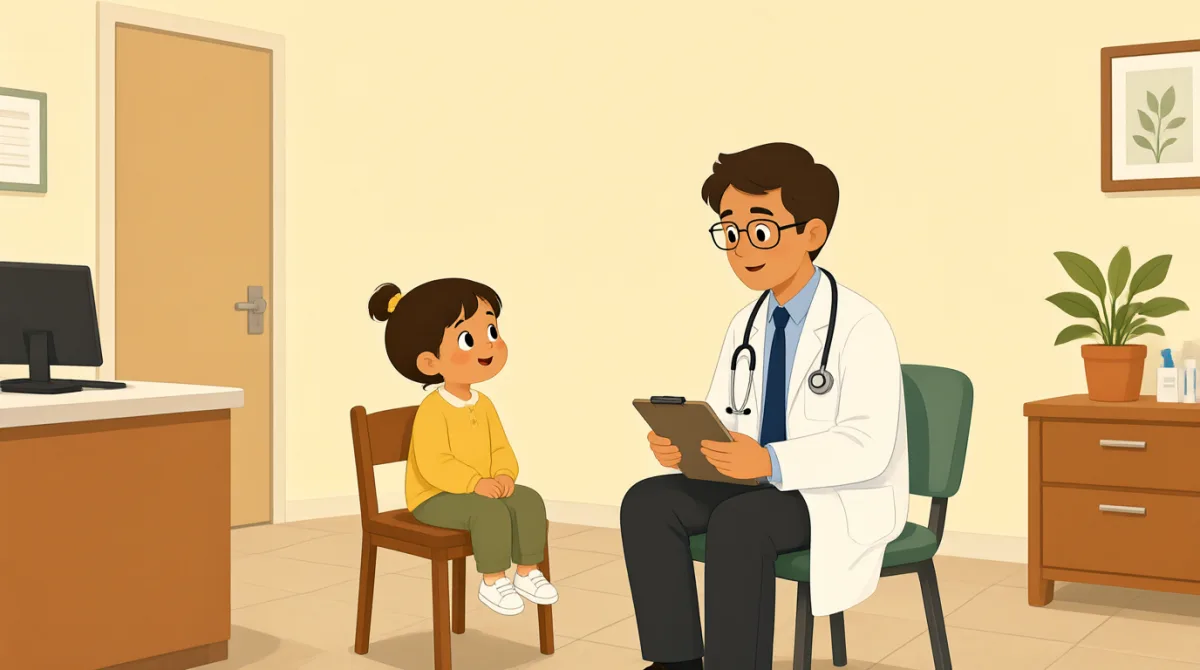

Good morning, Dr. Chen. My child has had a fever since last night.
สวัสดีตอนเช้าค่ะ คุณหมอเฉิน ลูกฉันมีไข้ตั้งแต่เมื่อคืนค่ะ

I’m sorry to hear that. Did you take your child’s temperature?
เสียใจด้วยนะครับที่ได้ยินแบบนั้น ได้วัดไข้ให้ลูกหรือยังครับ
Yes, it was 102 degrees this morning. It was lower last night.
วัดแล้วค่ะ เมื่อเช้าได้ 102 องศา เมื่อคืนไข้ต่ำกว่านี้ค่ะ
Has your child been coughing or had a sore throat?
ลูกไอหรือเจ็บคอบ้างไหมครับ
A little cough, but no sore throat. My child feels tired, too.
ไอนิดหน่อยค่ะ แต่ไม่เจ็บคอ ลูกก็รู้สึกเหนื่อยด้วยค่ะ
Has your child been drinking water and eating anything today?
วันนี้ลูกดื่มน้ำหรือกินอะไรบ้างไหมครับ
My child drank some water, but didn’t want breakfast.
ลูกดื่มน้ำไปบ้างค่ะ แต่ไม่อยากกินอาหารเช้า
I see. Any trouble breathing, or a rash on the skin?
เข้าใจแล้วครับ หายใจลำบากหรือมีผื่นขึ้นตามตัวไหมครับ
No, breathing is fine, and I haven’t seen a rash.
ไม่ค่ะ หายใจได้ปกติดี แล้วก็ไม่เห็นมีผื่นค่ะ
คำศัพท์8
- feverไข้
A fever is a body temperature that is higher than normal. Here, Mia says her child has been sick since last night.
ไข้คืออุณหภูมิร่างกายที่สูงกว่าปกติ ในบทสนทนานี้ มีอาบอกว่าลูกป่วยมาตั้งแต่เมื่อคืน
- take your child’s temperatureวัดไข้ให้ลูก
This means to check how hot your child’s body is. You can use this phrase when asking about a child’s fever.
หมายถึงตรวจดูว่าร่างกายของลูกตัวร้อนแค่ไหน ใช้สำนวนนี้เมื่อต้องการถามเรื่องไข้ของเด็กได้
- 102 degrees102 องศา
This tells the child’s temperature. You can use a number and “degrees” to report a temperature.
ใช้บอกอุณหภูมิของเด็ก เมื่อต้องการรายงานอุณหภูมิ คุณสามารถบอกตัวเลขตามด้วย “degrees” ได้
- a sore throatเจ็บคอ
A sore throat is pain or discomfort in the throat. You can ask, “Do you have a sore throat?”
“a sore throat” หมายถึงอาการเจ็บหรือระคายเคืองในลำคอ คุณถามได้ว่า “Do you have a sore throat?” (คุณเจ็บคอไหม)
- feels tiredรู้สึกเหนื่อย
This means someone does not have much energy. You can say, “I feel tired,” or “My child feels tired.”
หมายถึงรู้สึกไม่มีเรี่ยวแรงมากนัก คุณพูดได้ว่า “I feel tired,” (ฉันรู้สึกเหนื่อย) หรือ “My child feels tired.” (ลูกฉันรู้สึกเหนื่อย)
- drinking waterดื่มน้ำ
This means having water to drink. A doctor may ask if someone is drinking water when they are sick.
หมายถึงดื่มน้ำ เมื่อมีคนป่วย หมออาจถามว่าดื่มน้ำอยู่หรือเปล่า
- trouble breathingหายใจลำบาก
This means difficulty breathing normally. You can use this phrase to describe an important symptom.
หมายถึงหายใจได้ไม่สะดวกตามปกติ ใช้สำนวนนี้เพื่อบอกอาการสำคัญได้
- a rash on the skinผื่นขึ้นตามผิวหนัง
A rash is an area of irritated or unusual skin. You can use this phrase to tell a doctor about a skin problem.
“a rash” คือบริเวณผิวหนังที่ระคายเคืองหรือมีลักษณะผิดปกติ คุณใช้สำนวนนี้เพื่อบอกหมอเกี่ยวกับปัญหาผิวหนังได้
ประโยคสำคัญ8
- 1
My child has had a fever since last night.
ลูกฉันมีไข้ตั้งแต่เมื่อคืนค่ะ
This is a useful way to say when a problem began and how long it has lasted. Reuse “has had [symptom] since [time]” to describe an ongoing symptom.
ประโยคนี้เป็นวิธีที่มีประโยชน์ในการบอกว่าปัญหาเริ่มเมื่อไรและเป็นมานานแค่ไหน ลองใช้ “has had [symptom] since [time]” เพื่อบอกอาการที่ยังเป็นอยู่ได้
- 2
Did you take your child’s temperature?
ได้วัดไข้ให้ลูกหรือยังครับ
This is a simple question a doctor can ask about a fever. Replace “temperature” with another health question to ask what someone has checked.
นี่เป็นคำถามง่ายๆ ที่หมอถามเกี่ยวกับอาการไข้ได้ คุณเปลี่ยน “temperature” เป็นเรื่องสุขภาพอย่างอื่น เพื่อถามว่ามีการตรวจอะไรไปแล้วบ้าง
- 3
It was lower last night.
เมื่อคืนไข้ต่ำกว่านี้ค่ะ
This compares the child’s temperature at two different times. You can use “It was lower/higher [time]” to describe how a symptom changed.
ประโยคนี้เปรียบเทียบอุณหภูมิของเด็กในสองช่วงเวลา คุณใช้ “It was lower/higher [time]” เพื่อบอกว่าอาการเปลี่ยนแปลงอย่างไรได้
- 4
Has your child been coughing or had a sore throat?
ลูกไอหรือเจ็บคอบ้างไหมครับ
This question asks about two common symptoms. You can use “Has your child been [verb]-ing or had [symptom]?” to ask about other problems.
คำถามนี้ถามถึงอาการที่พบบ่อยสองอย่าง คุณใช้ “Has your child been [verb]-ing or had [symptom]?” เพื่อถามถึงปัญหาอื่นๆ ได้
- 5
My child feels tired, too.
ลูกก็รู้สึกเหนื่อยด้วยค่ะ
This is a simple way to add another symptom. Use “feels [adjective], too” to mention an additional feeling.
นี่เป็นวิธีง่ายๆ ในการบอกอาการเพิ่มเติม ใช้ “feels [adjective], too” เพื่อพูดถึงความรู้สึกอื่นที่เพิ่มเข้ามาได้
- 6
My child drank some water, but didn’t want breakfast.
ลูกดื่มน้ำไปบ้างค่ะ แต่ไม่อยากกินอาหารเช้า
This sentence describes what the child did and did not do today. Use “but” to connect two different details.
ประโยคนี้บอกสิ่งที่เด็กทำและไม่ได้ทำในวันนี้ ใช้ “but” เพื่อเชื่อมรายละเอียดสองอย่างที่แตกต่างกัน
- 7
Any trouble breathing, or a rash on the skin?
หายใจลำบากหรือมีผื่นขึ้นตามตัวไหมครับ
This is a short way to ask about serious symptoms. You can name two things after “Any” when checking for problems.
นี่เป็นวิธีถามสั้นๆ เกี่ยวกับอาการรุนแรง คุณระบุอาการสองอย่างต่อจาก “Any” เมื่อต้องการตรวจดูว่ามีปัญหาหรือไม่
- 8
No, breathing is fine, and I haven’t seen a rash.
ไม่ค่ะ หายใจได้ปกติดี แล้วก็ไม่เห็นมีผื่นค่ะ
This gives a clear answer about two symptoms. You can use “I haven’t seen…” to say that you have not noticed a problem.
ประโยคนี้ตอบเกี่ยวกับอาการสองอย่างได้อย่างชัดเจน คุณใช้ “I haven’t seen…” เพื่อบอกว่ายังไม่สังเกตเห็นปัญหาได้