Describing the Fever
وصف الحمى
At the clinic, Mia tells Dr. David when the fever started and how high it got. He asks a few simple questions about the child’s symptoms.
في العيادة، تخبر ميا الدكتور ديفيد متى بدأت الحمى وإلى أي درجة ارتفعت. ويطرح عليها بعض الأسئلة البسيطة عن أعراض طفلها.
حوار9
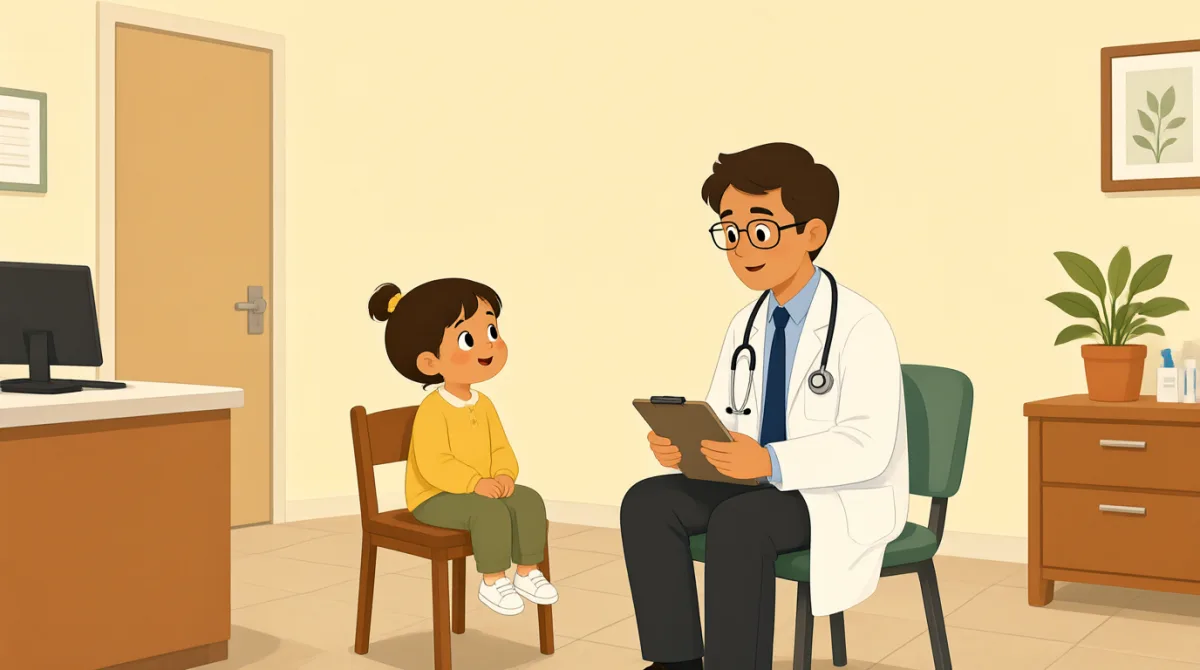

Good morning, Dr. Chen. My child has had a fever since last night.
صباح الخير، دكتور تشين. يعاني طفلي من الحمى منذ الليلة الماضية.

I’m sorry to hear that. Did you take your child’s temperature?
يؤسفني سماع ذلك. هل قستِ درجة حرارة طفلك؟
Yes, it was 102 degrees this morning. It was lower last night.
نعم، كانت 102 درجة هذا الصباح. وكانت أقل الليلة الماضية.
Has your child been coughing or had a sore throat?
هل كان طفلك يسعل أو يشكو من التهاب في الحلق؟
A little cough, but no sore throat. My child feels tired, too.
لديه سعال خفيف، لكن لا يعاني من التهاب في الحلق. ويشعر بالتعب أيضًا.
Has your child been drinking water and eating anything today?
هل شرب طفلك الماء وتناول أي شيء اليوم؟
My child drank some water, but didn’t want breakfast.
شرب طفلي بعض الماء، لكنه لم يرغب في تناول الإفطار.
I see. Any trouble breathing, or a rash on the skin?
فهمت. هل لديه أي صعوبة في التنفس أو طفح جلدي؟
No, breathing is fine, and I haven’t seen a rash.
لا، تنفسه طبيعي، ولم ألاحظ أي طفح جلدي.
المفردات8
- feverحمّى
A fever is a body temperature that is higher than normal. Here, Mia says her child has been sick since last night.
الحمى هي ارتفاع درجة حرارة الجسم عن المعدل الطبيعي. هنا، تقول ميا إن طفلها مريض منذ الليلة الماضية.
- take your child’s temperatureقياس درجة حرارة طفلك
This means to check how hot your child’s body is. You can use this phrase when asking about a child’s fever.
يعني هذا التحقق من مدى ارتفاع حرارة جسم طفلك. يمكنك استخدام هذه العبارة عند السؤال عن حمى طفل.
- 102 degrees102 درجة
This tells the child’s temperature. You can use a number and “degrees” to report a temperature.
تشير هذه العبارة إلى درجة حرارة الطفل. يمكنك ذكر رقم متبوع بكلمة “degrees” للإبلاغ عن درجة الحرارة.
- a sore throatالتهاب في الحلق
A sore throat is pain or discomfort in the throat. You can ask, “Do you have a sore throat?”
التهاب الحلق هو ألم أو انزعاج في الحلق. يمكنك أن تسأل: “Do you have a sore throat?” (هل تشعر بألم في حلقك؟).
- feels tiredيشعر بالتعب
This means someone does not have much energy. You can say, “I feel tired,” or “My child feels tired.”
يعني هذا أن الشخص لا يملك طاقة كبيرة. يمكنك أن تقول: “I feel tired,” (أشعر بالتعب) أو “My child feels tired.” (يشعر طفلي بالتعب).
- drinking waterشرب الماء
This means having water to drink. A doctor may ask if someone is drinking water when they are sick.
يعني هذا تناول الماء للشرب. قد يسأل الطبيب إن كان المريض يشرب الماء عندما يكون مريضًا.
- trouble breathingصعوبة في التنفس
This means difficulty breathing normally. You can use this phrase to describe an important symptom.
يعني هذا صعوبة التنفس بشكل طبيعي. يمكنك استخدام هذه العبارة لوصف أحد الأعراض المهمة.
- a rash on the skinطفح جلدي
A rash is an area of irritated or unusual skin. You can use this phrase to tell a doctor about a skin problem.
الطفح الجلدي منطقة من الجلد متهيجة أو غير طبيعية. يمكنك استخدام هذه العبارة لإخبار الطبيب عن مشكلة جلدية.
الجمل الأساسية8
- 1
My child has had a fever since last night.
يعاني طفلي من الحمى منذ الليلة الماضية.
This is a useful way to say when a problem began and how long it has lasted. Reuse “has had [symptom] since [time]” to describe an ongoing symptom.
هذه طريقة مفيدة لذكر متى بدأت المشكلة والمدة التي استمرت فيها. أعد استخدام النمط “has had [symptom] since [time]” (يعاني من [العَرَض] منذ [الوقت]) لوصف عَرَض مستمر.
- 2
Did you take your child’s temperature?
هل قستِ درجة حرارة طفلك؟
This is a simple question a doctor can ask about a fever. Replace “temperature” with another health question to ask what someone has checked.
هذا سؤال بسيط قد يطرحه الطبيب عن الحمى. استبدل “temperature” (درجة الحرارة) بسؤال صحي آخر لتسأل عمّا تحقّق منه شخص ما.
- 3
It was lower last night.
كانت أقل الليلة الماضية.
This compares the child’s temperature at two different times. You can use “It was lower/higher [time]” to describe how a symptom changed.
تقارن هذه الجملة درجة حرارة الطفل في وقتين مختلفين. يمكنك استخدام النمط “It was lower/higher [time]” (كانت أقل/أعلى [الوقت]) لوصف تغير أحد الأعراض.
- 4
Has your child been coughing or had a sore throat?
هل كان طفلك يسعل أو يشكو من التهاب في الحلق؟
This question asks about two common symptoms. You can use “Has your child been [verb]-ing or had [symptom]?” to ask about other problems.
يسأل هذا السؤال عن عَرَضين شائعين. يمكنك استخدام النمط “Has your child been [verb]-ing or had [symptom]?” للسؤال عن مشكلات أخرى.
- 5
My child feels tired, too.
ويشعر طفلي بالتعب أيضًا.
This is a simple way to add another symptom. Use “feels [adjective], too” to mention an additional feeling.
هذه طريقة بسيطة لإضافة عَرَض آخر. استخدم النمط “feels [adjective], too” (يشعر أيضًا بأنه [صفة]) لذكر إحساس إضافي.
- 6
My child drank some water, but didn’t want breakfast.
شرب طفلي بعض الماء، لكنه لم يرغب في تناول الإفطار.
This sentence describes what the child did and did not do today. Use “but” to connect two different details.
تصف هذه الجملة ما فعله الطفل وما لم يفعله اليوم. استخدم “but” (لكن) للربط بين معلومتين مختلفتين.
- 7
Any trouble breathing, or a rash on the skin?
هل لديه أي صعوبة في التنفس أو طفح جلدي؟
This is a short way to ask about serious symptoms. You can name two things after “Any” when checking for problems.
هذه طريقة مختصرة للسؤال عن أعراض خطيرة. يمكنك ذكر أمرين بعد “Any” عند التحقق من وجود مشكلات.
- 8
No, breathing is fine, and I haven’t seen a rash.
لا، تنفسه طبيعي، ولم ألاحظ أي طفح جلدي.
This gives a clear answer about two symptoms. You can use “I haven’t seen…” to say that you have not noticed a problem.
تقدم هذه الجملة إجابة واضحة عن عَرَضين. يمكنك استخدام “I haven’t seen…” (لم ألاحظ...) لتقول إنك لم تلاحظ وجود مشكلة.