Describing the Fever
Describir la fiebre
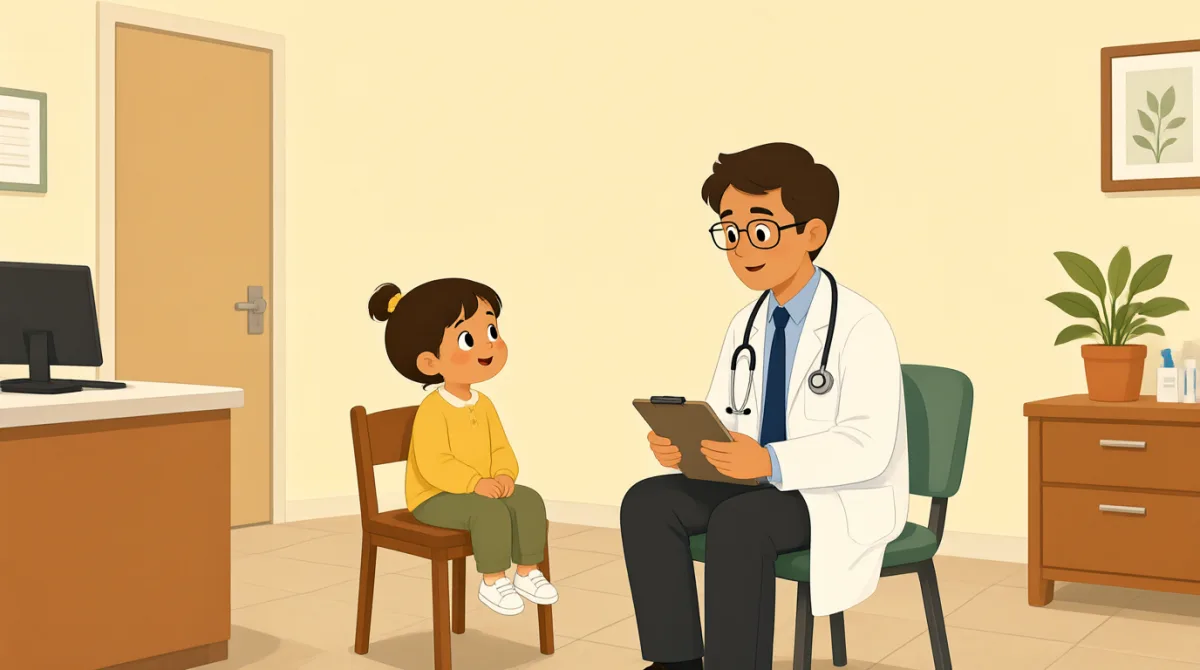
At the clinic, Mia tells Dr. David when the fever started and how high it got. He asks a few simple questions about the child’s symptoms.
En la clínica, Mia le cuenta al doctor David cuándo empezó la fiebre y qué tan alta llegó a estar. Él le hace unas preguntas sencillas sobre los síntomas del niño.
Diálogo9

Good morning, Dr. Chen. My child has had a fever since last night.
Buenos días, doctor Chen. Mi hijo tiene fiebre desde anoche.

I’m sorry to hear that. Did you take your child’s temperature?
Siento oír eso. ¿Le tomó la temperatura a su hijo?
Yes, it was 102 degrees this morning. It was lower last night.
Sí, esta mañana tenía 102 grados. Anoche estaba más baja.
Has your child been coughing or had a sore throat?
¿Su hijo ha estado tosiendo o ha tenido dolor de garganta?
A little cough, but no sore throat. My child feels tired, too.
Tiene un poco de tos, pero no le duele la garganta. También está cansado.
Has your child been drinking water and eating anything today?
¿Su hijo ha estado tomando agua y ha comido algo hoy?
My child drank some water, but didn’t want breakfast.
Mi hijo tomó un poco de agua, pero no quiso desayunar.
I see. Any trouble breathing, or a rash on the skin?
Entiendo. ¿Tiene dificultad para respirar o le ha salido algún sarpullido?
No, breathing is fine, and I haven’t seen a rash.
No, respira bien y no le he visto ningún sarpullido.
Vocabulario8
- feverfiebre
A fever is a body temperature that is higher than normal. Here, Mia says her child has been sick since last night.
La fiebre es una temperatura corporal más alta de lo normal. Aquí, Mia dice que su hijo está enfermo desde anoche.
- take your child’s temperaturetomarle la temperatura a su hijo
This means to check how hot your child’s body is. You can use this phrase when asking about a child’s fever.
Significa comprobar qué tan caliente está el cuerpo de su hijo. Puede usar esta expresión para preguntar por la fiebre de un niño.
- 102 degrees102 grados
This tells the child’s temperature. You can use a number and “degrees” to report a temperature.
Esto indica la temperatura del niño. Puede usar un número seguido de “degrees” para decir una temperatura.
- a sore throatdolor de garganta
A sore throat is pain or discomfort in the throat. You can ask, “Do you have a sore throat?”
Un dolor de garganta es una molestia o dolor en la garganta. Puede preguntar: “Do you have a sore throat?” (¿Le duele la garganta?).
- feels tiredsentirse cansado
This means someone does not have much energy. You can say, “I feel tired,” or “My child feels tired.”
Significa que alguien tiene poca energía. Puede decir: “I feel tired” (Me siento cansado) o “My child feels tired” (Mi hijo está cansado).
- drinking watertomar agua
This means having water to drink. A doctor may ask if someone is drinking water when they are sick.
Significa beber agua. Cuando alguien está enfermo, el médico puede preguntarle si está tomando agua.
- trouble breathingdificultad para respirar
This means difficulty breathing normally. You can use this phrase to describe an important symptom.
Significa que cuesta respirar con normalidad. Puede usar esta expresión para describir un síntoma importante.
- a rash on the skinsarpullido en la piel
A rash is an area of irritated or unusual skin. You can use this phrase to tell a doctor about a skin problem.
Un sarpullido es una zona de la piel irritada o con un aspecto inusual. Puede usar esta expresión para contarle al médico que tiene un problema en la piel.
Frases clave8
- 1
My child has had a fever since last night.
Mi hijo tiene fiebre desde anoche.
This is a useful way to say when a problem began and how long it has lasted. Reuse “has had [symptom] since [time]” to describe an ongoing symptom.
Esta es una forma útil de decir cuándo comenzó un problema y cuánto tiempo lleva. Puede reutilizar “has had [symptom] since [time]” para describir un síntoma que continúa.
- 2
Did you take your child’s temperature?
¿Le tomó la temperatura a su hijo?
This is a simple question a doctor can ask about a fever. Replace “temperature” with another health question to ask what someone has checked.
Esta es una pregunta sencilla que un médico puede hacer sobre la fiebre. Cambie “temperature” por otra pregunta de salud para preguntar qué ha comprobado alguien.
- 3
It was lower last night.
Anoche estaba más baja.
This compares the child’s temperature at two different times. You can use “It was lower/higher [time]” to describe how a symptom changed.
Esta frase compara la temperatura del niño en dos momentos distintos. Puede usar “It was lower/higher [time]” para describir cómo cambió un síntoma.
- 4
Has your child been coughing or had a sore throat?
¿Su hijo ha estado tosiendo o ha tenido dolor de garganta?
This question asks about two common symptoms. You can use “Has your child been [verb]-ing or had [symptom]?” to ask about other problems.
Esta pregunta consulta por dos síntomas comunes. Puede usar “Has your child been [verb]-ing or had [symptom]?” para preguntar por otros problemas.
- 5
My child feels tired, too.
Mi hijo también está cansado.
This is a simple way to add another symptom. Use “feels [adjective], too” to mention an additional feeling.
Esta es una forma sencilla de añadir otro síntoma. Use “feels [adjective], too” para mencionar otra sensación o estado.
- 6
My child drank some water, but didn’t want breakfast.
Mi hijo tomó un poco de agua, pero no quiso desayunar.
This sentence describes what the child did and did not do today. Use “but” to connect two different details.
Esta frase describe lo que el niño hizo y no hizo hoy. Use “but” para unir dos detalles diferentes.
- 7
Any trouble breathing, or a rash on the skin?
¿Tiene dificultad para respirar o le ha salido algún sarpullido?
This is a short way to ask about serious symptoms. You can name two things after “Any” when checking for problems.
Esta es una forma breve de preguntar por síntomas graves. Puede mencionar dos cosas después de “Any” al comprobar si hay algún problema.
- 8
No, breathing is fine, and I haven’t seen a rash.
No, respira bien y no le he visto ningún sarpullido.
This gives a clear answer about two symptoms. You can use “I haven’t seen…” to say that you have not noticed a problem.
Esta respuesta es clara sobre dos síntomas. Puede usar “I haven’t seen…” para decir que no ha notado ningún problema.