Describing the Fever
Opisywanie gorączki
At the clinic, Mia tells Dr. David when the fever started and how high it got. He asks a few simple questions about the child’s symptoms.
W przychodni Mia mówi doktorowi Davidowi, kiedy zaczęła się gorączka i jak wysoka była. Lekarz zadaje kilka prostych pytań o objawy u dziecka.
Dialog9
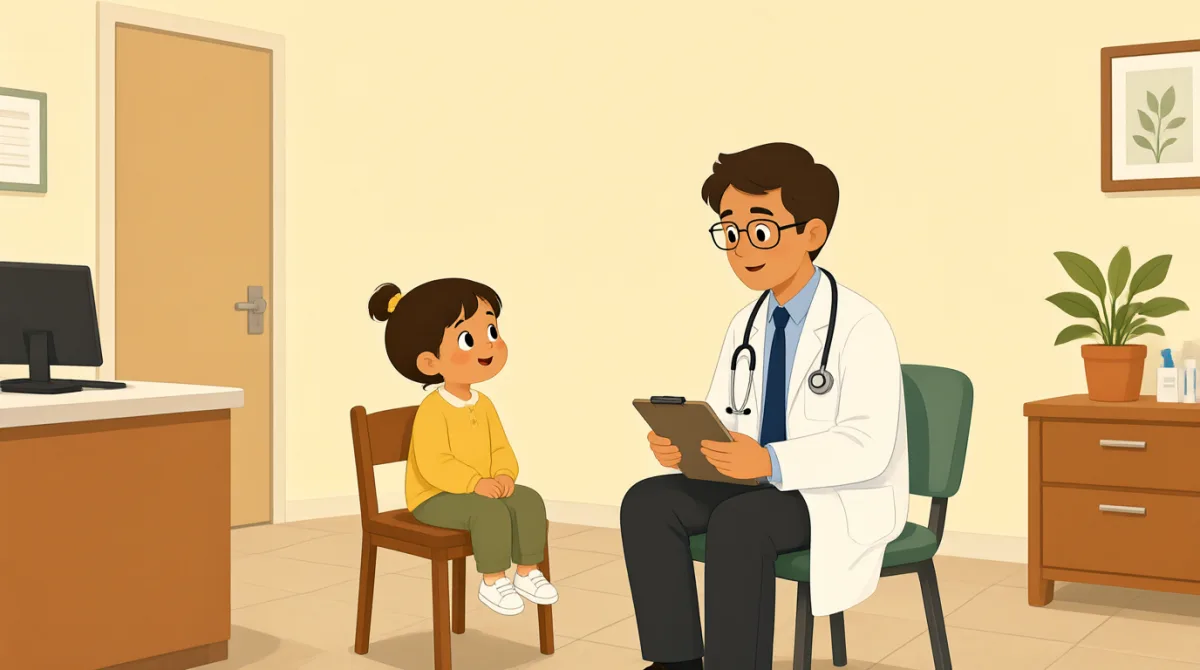

Good morning, Dr. Chen. My child has had a fever since last night.
Dzień dobry, doktorze Chen. Moje dziecko gorączkuje od wczorajszego wieczoru.

I’m sorry to hear that. Did you take your child’s temperature?
Przykro mi to słyszeć. Mierzyła pani dziecku temperaturę?
Yes, it was 102 degrees this morning. It was lower last night.
Tak, dziś rano miało 102 stopnie. Wczoraj wieczorem temperatura była niższa.
Has your child been coughing or had a sore throat?
Czy dziecko kaszle albo skarży się na ból gardła?
A little cough, but no sore throat. My child feels tired, too.
Trochę kaszle, ale gardło go nie boli. Jest też zmęczone.
Has your child been drinking water and eating anything today?
Czy dziecko pije dziś wodę i coś je?
My child drank some water, but didn’t want breakfast.
Dziecko napiło się trochę wody, ale nie chciało zjeść śniadania.
I see. Any trouble breathing, or a rash on the skin?
Rozumiem. Czy ma trudności z oddychaniem albo wysypkę na skórze?
No, breathing is fine, and I haven’t seen a rash.
Nie, oddycha bez problemu i nie zauważyłam żadnej wysypki.
Słownictwo8
- fevergorączka
A fever is a body temperature that is higher than normal. Here, Mia says her child has been sick since last night.
Gorączka to temperatura ciała wyższa niż normalnie. W tej rozmowie Mia mówi, że jej dziecko jest chore od wczorajszego wieczoru.
- take your child’s temperaturezmierzyć dziecku temperaturę
This means to check how hot your child’s body is. You can use this phrase when asking about a child’s fever.
To znaczy sprawdzić, jaką temperaturę ma ciało dziecka. Tego wyrażenia możesz użyć, pytając o gorączkę u dziecka.
- 102 degrees102 stopnie
This tells the child’s temperature. You can use a number and “degrees” to report a temperature.
To informacja o temperaturze dziecka. Temperaturę możesz podać, używając liczby i słowa “degrees”.
- a sore throatból gardła
A sore throat is pain or discomfort in the throat. You can ask, “Do you have a sore throat?”
“A sore throat” to ból lub dyskomfort w gardle. Możesz zapytać: “Do you have a sore throat?” (Czy boli cię gardło?).
- feels tiredczuć się zmęczonym
This means someone does not have much energy. You can say, “I feel tired,” or “My child feels tired.”
To znaczy nie mieć dużo energii. Możesz powiedzieć: “I feel tired” (Czuję się zmęczony/zmęczona) albo “My child feels tired” (Moje dziecko jest zmęczone).
- drinking waterpić wodę
This means having water to drink. A doctor may ask if someone is drinking water when they are sick.
“Drinking water” oznacza picie wody. Lekarz może zapytać, czy ktoś pije wodę podczas choroby.
- trouble breathingtrudności z oddychaniem
This means difficulty breathing normally. You can use this phrase to describe an important symptom.
To oznacza problemy z normalnym oddychaniem. Tego wyrażenia możesz użyć, by opisać ważny objaw.
- a rash on the skinwysypka na skórze
A rash is an area of irritated or unusual skin. You can use this phrase to tell a doctor about a skin problem.
“A rash” to podrażniony lub nietypowo wyglądający obszar skóry. Możesz użyć tego wyrażenia, by opowiedzieć lekarzowi o problemie skórnym.
Kluczowe zdania8
- 1
My child has had a fever since last night.
Moje dziecko gorączkuje od wczorajszego wieczoru.
This is a useful way to say when a problem began and how long it has lasted. Reuse “has had [symptom] since [time]” to describe an ongoing symptom.
To przydatny sposób, by powiedzieć, kiedy zaczął się problem i jak długo trwa. Użyj ponownie wzoru “has had [symptom] since [time]”, by opisać objaw, który nadal się utrzymuje.
- 2
Did you take your child’s temperature?
Mierzyła pani dziecku temperaturę?
This is a simple question a doctor can ask about a fever. Replace “temperature” with another health question to ask what someone has checked.
To proste pytanie, które lekarz może zadać w związku z gorączką. Zastąp “temperature” innym pytaniem o zdrowie, by zapytać, co ktoś sprawdzał.
- 3
It was lower last night.
Wczoraj wieczorem temperatura była niższa.
This compares the child’s temperature at two different times. You can use “It was lower/higher [time]” to describe how a symptom changed.
To porównanie temperatury dziecka w dwóch różnych momentach. Możesz użyć wzoru “It was lower/higher [time]”, by opisać, jak zmienił się objaw.
- 4
Has your child been coughing or had a sore throat?
Czy dziecko kaszle albo skarży się na ból gardła?
This question asks about two common symptoms. You can use “Has your child been [verb]-ing or had [symptom]?” to ask about other problems.
To pytanie dotyczy dwóch częstych objawów. Użyj wzoru “Has your child been [verb]-ing or had [symptom]?”, by zapytać o inne dolegliwości.
- 5
My child feels tired, too.
Moje dziecko jest też zmęczone.
This is a simple way to add another symptom. Use “feels [adjective], too” to mention an additional feeling.
To prosty sposób, by dodać kolejny objaw. Użyj wzoru “feels [adjective], too”, by wspomnieć o dodatkowym samopoczuciu.
- 6
My child drank some water, but didn’t want breakfast.
Moje dziecko napiło się trochę wody, ale nie chciało zjeść śniadania.
This sentence describes what the child did and did not do today. Use “but” to connect two different details.
To zdanie opisuje, co dziecko dziś zrobiło, a czego nie zrobiło. Użyj “but”, by połączyć dwie różne informacje.
- 7
Any trouble breathing, or a rash on the skin?
Czy ma trudności z oddychaniem albo wysypkę na skórze?
This is a short way to ask about serious symptoms. You can name two things after “Any” when checking for problems.
To krótkie pytanie o poważne objawy. Podając kolejne problemy po “Any”, możesz zapytać o kilka dolegliwości naraz.
- 8
No, breathing is fine, and I haven’t seen a rash.
Nie, oddycha bez problemu i nie zauważyłam żadnej wysypki.
This gives a clear answer about two symptoms. You can use “I haven’t seen…” to say that you have not noticed a problem.
To jasna odpowiedź dotycząca dwóch objawów. Użyj “I haven’t seen…”, by powiedzieć, że nie zauważyłaś problemu.