Describing the Fever
জ্বরের বর্ণনা
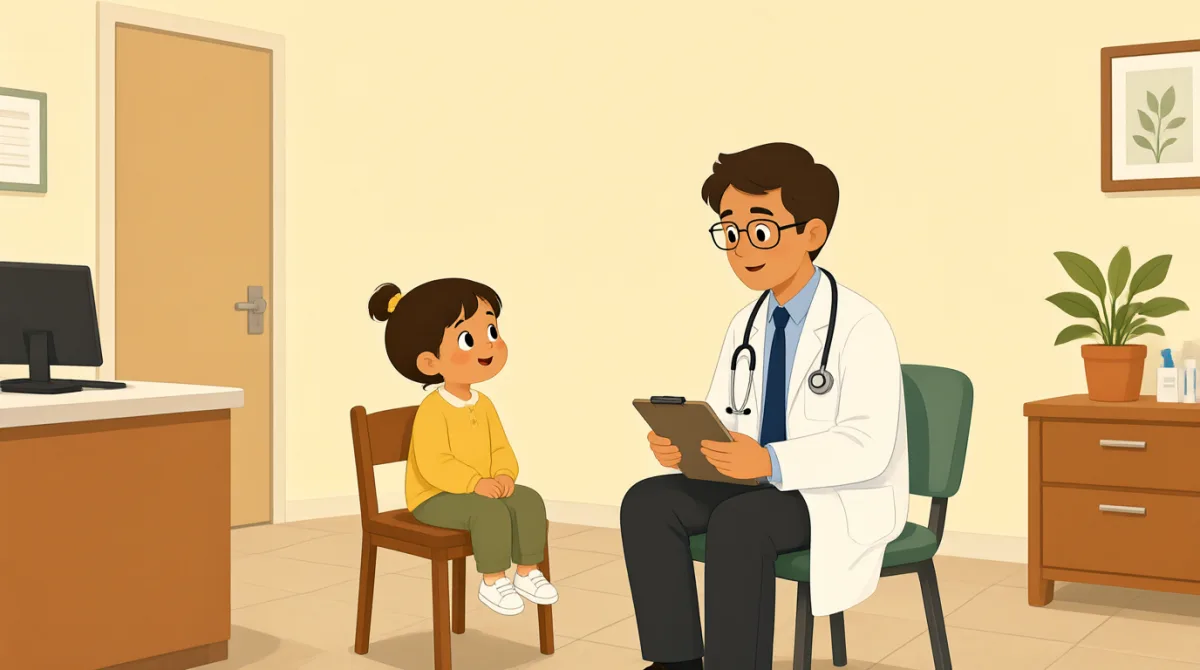
At the clinic, Mia tells Dr. David when the fever started and how high it got. He asks a few simple questions about the child’s symptoms.
ক্লিনিকে মিয়া ডা. ডেভিডকে জানান, কখন জ্বর শুরু হয়েছে এবং কতটা বেড়েছিল। তিনি শিশুটির উপসর্গ সম্পর্কে কয়েকটি সহজ প্রশ্ন করেন।
সংলাপ9

Good morning, Dr. Chen. My child has had a fever since last night.
সুপ্রভাত, ডা. চেন। গত রাত থেকে আমার সন্তানের জ্বর।

I’m sorry to hear that. Did you take your child’s temperature?
শুনে খারাপ লাগল। আপনি কি আপনার সন্তানের তাপমাত্রা মেপেছেন?
Yes, it was 102 degrees this morning. It was lower last night.
হ্যাঁ, আজ সকালে তাপমাত্রা ছিল ১০২ ডিগ্রি। গত রাতে এর চেয়ে কম ছিল।
Has your child been coughing or had a sore throat?
আপনার কি সন্তানের কাশি হয়েছে বা গলায় ব্যথা আছে?
A little cough, but no sore throat. My child feels tired, too.
একটু কাশি আছে, তবে গলায় ব্যথা নেই। আমার সন্তানের ক্লান্তও লাগছে।
Has your child been drinking water and eating anything today?
আজ আপনার সন্তান কি পানি পান করেছে এবং কিছু খেয়েছে?
My child drank some water, but didn’t want breakfast.
আমার সন্তান কিছু পানি পান করেছে, কিন্তু নাশতা খেতে চায়নি।
I see. Any trouble breathing, or a rash on the skin?
বুঝলাম। শ্বাস নিতে কোনো সমস্যা হচ্ছে, বা ত্বকে কোনো ফুসকুড়ি আছে?
No, breathing is fine, and I haven’t seen a rash.
না, শ্বাস নিতে সমস্যা নেই, আর কোনো ফুসকুড়িও চোখে পড়েনি।
শব্দভান্ডার8
- feverজ্বর
A fever is a body temperature that is higher than normal. Here, Mia says her child has been sick since last night.
জ্বর হলো শরীরের তাপমাত্রা স্বাভাবিকের চেয়ে বেশি হওয়া। এখানে মিয়া বলছেন, গত রাত থেকে তাঁর সন্তান অসুস্থ।
- take your child’s temperatureআপনার সন্তানের তাপমাত্রা মাপা
This means to check how hot your child’s body is. You can use this phrase when asking about a child’s fever.
এর মানে হলো আপনার সন্তানের শরীর কতটা গরম তা পরীক্ষা করা। শিশুর জ্বর সম্পর্কে জানতে এই কথাটি বলতে পারেন।
- 102 degrees১০২ ডিগ্রি
This tells the child’s temperature. You can use a number and “degrees” to report a temperature.
এটি শিশুটির তাপমাত্রা জানায়। তাপমাত্রা জানাতে একটি সংখ্যা ও “degrees” বলতে পারেন।
- a sore throatগলায় ব্যথা
A sore throat is pain or discomfort in the throat. You can ask, “Do you have a sore throat?”
গলায় ব্যথা বলতে গলায় ব্যথা বা অস্বস্তি বোঝায়। আপনি জিজ্ঞেস করতে পারেন, “Do you have a sore throat?” (আপনার কি গলায় ব্যথা আছে?)
- feels tiredক্লান্ত লাগা
This means someone does not have much energy. You can say, “I feel tired,” or “My child feels tired.”
এর মানে হলো কারও খুব একটা শক্তি নেই। আপনি বলতে পারেন, “I feel tired,” (আমার ক্লান্ত লাগছে) বা “My child feels tired.” (আমার সন্তানের ক্লান্ত লাগছে।)
- drinking waterপানি পান করা
This means having water to drink. A doctor may ask if someone is drinking water when they are sick.
এর মানে হলো পান করার জন্য পানি খাওয়া। কেউ অসুস্থ হলে ডাক্তার জিজ্ঞেস করতে পারেন, সে পানি পান করছে কি না।
- trouble breathingশ্বাস নিতে সমস্যা
This means difficulty breathing normally. You can use this phrase to describe an important symptom.
এর মানে স্বাভাবিকভাবে শ্বাস নিতে অসুবিধা হওয়া। গুরুত্বপূর্ণ কোনো উপসর্গের কথা জানাতে এই কথাটি ব্যবহার করতে পারেন।
- a rash on the skinত্বকে ফুসকুড়ি
A rash is an area of irritated or unusual skin. You can use this phrase to tell a doctor about a skin problem.
ফুসকুড়ি হলো ত্বকের কোনো অংশে জ্বালা বা অস্বাভাবিক পরিবর্তন। ত্বকের সমস্যা সম্পর্কে ডাক্তারকে জানাতে এই কথাটি ব্যবহার করতে পারেন।
গুরুত্বপূর্ণ বাক্য8
- 1
My child has had a fever since last night.
গত রাত থেকে আমার সন্তানের জ্বর।
This is a useful way to say when a problem began and how long it has lasted. Reuse “has had [symptom] since [time]” to describe an ongoing symptom.
কোনো সমস্যা কখন শুরু হয়েছে এবং কতক্ষণ ধরে আছে, তা বলার এটি একটি কার্যকর উপায়। চলমান কোনো উপসর্গের কথা বলতে “has had [symptom] since [time]” গঠনটি ব্যবহার করুন।
- 2
Did you take your child’s temperature?
আপনি কি আপনার সন্তানের তাপমাত্রা মেপেছেন?
This is a simple question a doctor can ask about a fever. Replace “temperature” with another health question to ask what someone has checked.
জ্বর সম্পর্কে ডাক্তার এভাবে সহজে প্রশ্ন করতে পারেন। কেউ কী পরীক্ষা করেছেন তা জানতে “temperature” শব্দটির বদলে অন্য স্বাস্থ্য-সংক্রান্ত বিষয় বসান।
- 3
It was lower last night.
গত রাতে এর চেয়ে কম ছিল।
This compares the child’s temperature at two different times. You can use “It was lower/higher [time]” to describe how a symptom changed.
এতে দুই ভিন্ন সময়ে শিশুটির তাপমাত্রার তুলনা করা হয়েছে। কোনো উপসর্গের পরিবর্তন বোঝাতে “It was lower/higher [time]” বলতে পারেন।
- 4
Has your child been coughing or had a sore throat?
আপনার কি সন্তানের কাশি হয়েছে বা গলায় ব্যথা আছে?
This question asks about two common symptoms. You can use “Has your child been [verb]-ing or had [symptom]?” to ask about other problems.
এই প্রশ্নে দুটি সাধারণ উপসর্গ সম্পর্কে জানতে চাওয়া হয়েছে। অন্য সমস্যা সম্পর্কে জানতে “Has your child been [verb]-ing or had [symptom]?” গঠনটি ব্যবহার করতে পারেন।
- 5
My child feels tired, too.
আমার সন্তানের ক্লান্তও লাগছে।
This is a simple way to add another symptom. Use “feels [adjective], too” to mention an additional feeling.
আরেকটি উপসর্গ যোগ করার এটি একটি সহজ উপায়। অতিরিক্ত কোনো অনুভূতির কথা বলতে “feels [adjective], too” ব্যবহার করুন।
- 6
My child drank some water, but didn’t want breakfast.
আমার সন্তান কিছু পানি পান করেছে, কিন্তু নাশতা খেতে চায়নি।
This sentence describes what the child did and did not do today. Use “but” to connect two different details.
এই বাক্যে আজ শিশুটি কী করেছে এবং কী করেনি, তা বলা হয়েছে। দুটি ভিন্ন তথ্য জুড়তে “but” ব্যবহার করুন।
- 7
Any trouble breathing, or a rash on the skin?
শ্বাস নিতে কোনো সমস্যা হচ্ছে, বা ত্বকে কোনো ফুসকুড়ি আছে?
This is a short way to ask about serious symptoms. You can name two things after “Any” when checking for problems.
গুরুতর উপসর্গ সম্পর্কে সংক্ষেপে এভাবে জানতে চাওয়া যায়। সমস্যা আছে কি না যাচাই করার সময় “Any”-এর পরে দুটি বিষয়ের নাম বলতে পারেন।
- 8
No, breathing is fine, and I haven’t seen a rash.
না, শ্বাস নিতে সমস্যা নেই, আর কোনো ফুসকুড়িও চোখে পড়েনি।
This gives a clear answer about two symptoms. You can use “I haven’t seen…” to say that you have not noticed a problem.
এতে দুটি উপসর্গ সম্পর্কে স্পষ্ট উত্তর দেওয়া হয়েছে। কোনো সমস্যা চোখে পড়েনি—এ কথা বলতে “I haven’t seen…” ব্যবহার করতে পারেন।