Describing the Fever
열이 난다고 설명하기
At the clinic, Mia tells Dr. David when the fever started and how high it got. He asks a few simple questions about the child’s symptoms.
진료실에서 미아는 데이비드 의사에게 열이 언제부터 나기 시작했는지, 얼마나 높이 올랐는지 말합니다. 의사는 아이의 증상에 대해 몇 가지 간단한 질문을 합니다.
대화9
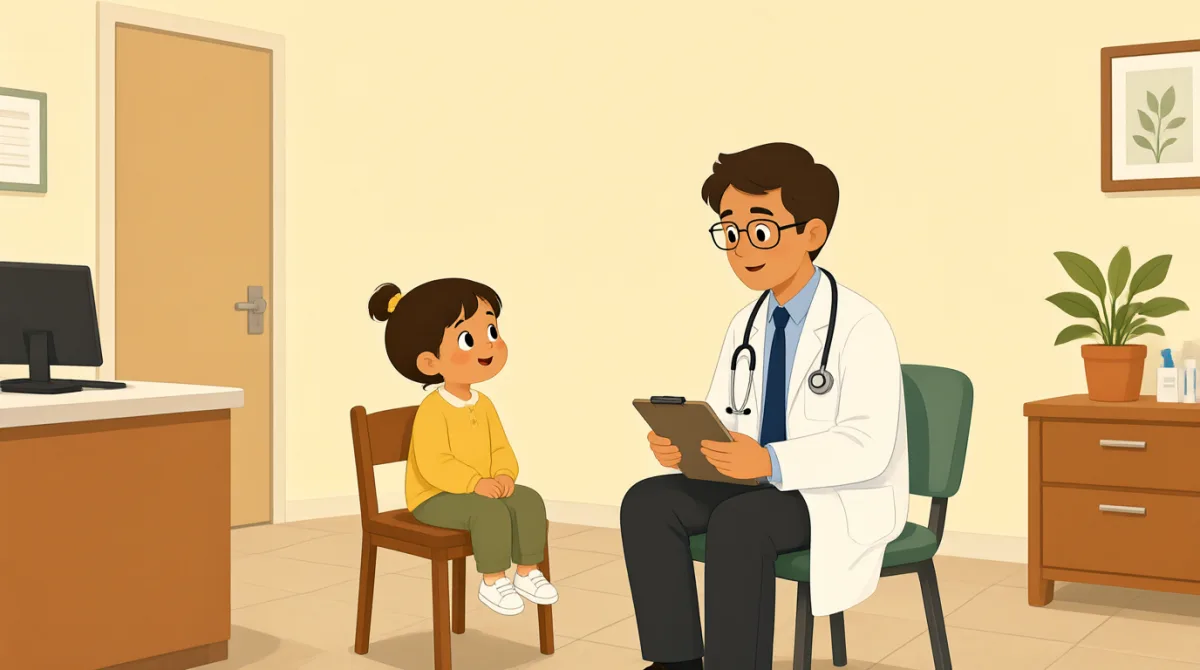

Good morning, Dr. Chen. My child has had a fever since last night.
안녕하세요, 첸 선생님. 아이가 어젯밤부터 열이 났어요.

I’m sorry to hear that. Did you take your child’s temperature?
그랬군요. 아이 체온을 재 보셨나요?
Yes, it was 102 degrees this morning. It was lower last night.
네, 오늘 아침에는 102도였어요. 어젯밤에는 더 낮았어요.
Has your child been coughing or had a sore throat?
아이가 기침을 하거나 목이 아프다고 하나요?
A little cough, but no sore throat. My child feels tired, too.
기침은 조금 하지만 목은 안 아파요. 아이가 피곤해하기도 해요.
Has your child been drinking water and eating anything today?
아이가 오늘 물을 마시거나 뭔가 먹었나요?
My child drank some water, but didn’t want breakfast.
물을 조금 마셨지만 아침은 먹고 싶어 하지 않았어요.
I see. Any trouble breathing, or a rash on the skin?
알겠습니다. 숨쉬기 힘들어하거나 피부에 발진이 있나요?
No, breathing is fine, and I haven’t seen a rash.
아니요, 숨쉬는 건 괜찮고 발진은 못 봤어요.
어휘8
- fever열
A fever is a body temperature that is higher than normal. Here, Mia says her child has been sick since last night.
열은 체온이 정상보다 높은 상태예요. 여기서 미아는 아이가 어젯밤부터 아팠다고 말해요.
- take your child’s temperature아이 체온을 재다
This means to check how hot your child’s body is. You can use this phrase when asking about a child’s fever.
아이의 몸이 얼마나 뜨거운지 확인한다는 뜻이에요. 아이가 열이 날 때 이렇게 물어볼 수 있어요.
- 102 degrees102도
This tells the child’s temperature. You can use a number and “degrees” to report a temperature.
아이의 체온을 알려 주는 표현이에요. 체온을 말할 때 숫자 뒤에 “degrees”를 붙여 말할 수 있어요.
- a sore throat목이 아픔
A sore throat is pain or discomfort in the throat. You can ask, “Do you have a sore throat?”
목에 통증이나 불편함이 있는 상태를 말해요. “Do you have a sore throat?”라고 물어볼 수 있어요.
- feels tired피곤해하다
This means someone does not have much energy. You can say, “I feel tired,” or “My child feels tired.”
기운이 별로 없다는 뜻이에요. “I feel tired” 또는 “My child feels tired”라고 말할 수 있어요.
- drinking water물을 마시다
This means having water to drink. A doctor may ask if someone is drinking water when they are sick.
마실 물을 먹는다는 뜻이에요. 의사는 환자가 아플 때 물을 마시고 있는지 물어볼 수 있어요.
- trouble breathing숨쉬기 힘듦
This means difficulty breathing normally. You can use this phrase to describe an important symptom.
평소처럼 숨쉬기 어렵다는 뜻이에요. 중요한 증상을 설명할 때 이 표현을 쓸 수 있어요.
- a rash on the skin피부 발진
A rash is an area of irritated or unusual skin. You can use this phrase to tell a doctor about a skin problem.
피부가 자극을 받아 붉어지거나 평소와 달라진 부분을 말해요. 피부 문제를 의사에게 설명할 때 이 표현을 쓸 수 있어요.
핵심 문장8
- 1
My child has had a fever since last night.
아이가 어젯밤부터 열이 났어요.
This is a useful way to say when a problem began and how long it has lasted. Reuse “has had [symptom] since [time]” to describe an ongoing symptom.
문제가 언제 시작됐고 얼마나 이어졌는지 말할 때 유용한 표현이에요. 계속되는 증상을 설명하려면 “has had [symptom] since [time]”을 활용해 보세요.
- 2
Did you take your child’s temperature?
아이 체온을 재 보셨나요?
This is a simple question a doctor can ask about a fever. Replace “temperature” with another health question to ask what someone has checked.
의사가 열에 관해 물을 때 쓸 수 있는 간단한 질문이에요. 누군가 무엇을 확인했는지 물을 때는 “temperature”를 다른 건강 관련 표현으로 바꿔 보세요.
- 3
It was lower last night.
어젯밤에는 더 낮았어요.
This compares the child’s temperature at two different times. You can use “It was lower/higher [time]” to describe how a symptom changed.
아이의 체온을 서로 다른 두 시점으로 비교하는 문장이에요. 증상이 어떻게 변했는지 말할 때 “It was lower/higher [time]”을 활용할 수 있어요.
- 4
Has your child been coughing or had a sore throat?
아이가 기침을 하거나 목이 아프다고 하나요?
This question asks about two common symptoms. You can use “Has your child been [verb]-ing or had [symptom]?” to ask about other problems.
흔한 증상 두 가지를 묻는 질문이에요. 다른 증상을 물어볼 때 “Has your child been [verb]-ing or had [symptom]?” 형태를 활용해 보세요.
- 5
My child feels tired, too.
아이가 피곤해하기도 해요.
This is a simple way to add another symptom. Use “feels [adjective], too” to mention an additional feeling.
증상을 하나 더 덧붙일 때 쓰는 간단한 표현이에요. 추가로 느끼는 점을 말할 때 “feels [adjective], too”를 활용하세요.
- 6
My child drank some water, but didn’t want breakfast.
물을 조금 마셨지만 아침은 먹고 싶어 하지 않았어요.
This sentence describes what the child did and did not do today. Use “but” to connect two different details.
오늘 아이가 한 일과 하지 않은 일을 설명하는 문장이에요. 서로 다른 두 가지 내용을 연결할 때 “but”을 사용하세요.
- 7
Any trouble breathing, or a rash on the skin?
숨쉬기 힘들거나 피부에 발진이 있나요?
This is a short way to ask about serious symptoms. You can name two things after “Any” when checking for problems.
심각할 수 있는 증상을 간단히 묻는 표현이에요. 문제가 있는지 확인할 때 “Any” 뒤에 두 가지 항목을 나란히 말할 수 있어요.
- 8
No, breathing is fine, and I haven’t seen a rash.
아니요, 숨쉬는 건 괜찮고 발진은 못 봤어요.
This gives a clear answer about two symptoms. You can use “I haven’t seen…” to say that you have not noticed a problem.
증상 두 가지에 대해 분명하게 답하는 문장이에요. 문제를 알아차리지 못했다고 말할 때 “I haven’t seen…”을 활용할 수 있어요.