Describing the Fever
描述發燒情況
At the clinic, Mia tells Dr. David when the fever started and how high it got. He asks a few simple questions about the child’s symptoms.
在診所,Mia 告訴 David 醫生孩子從什麼時候開始發燒,以及體溫最高是多少。他簡單詢問孩子的其他症狀。
對話9
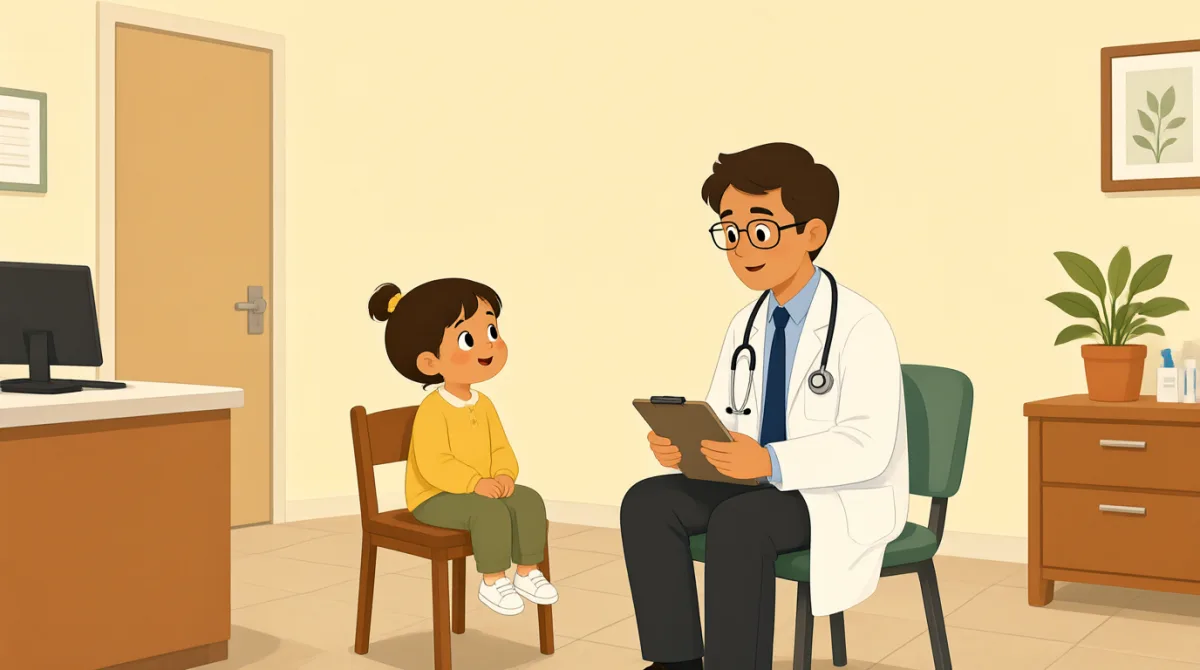

Good morning, Dr. Chen. My child has had a fever since last night.
早上好,陳醫生。我的孩子從昨晚開始發燒。

I’m sorry to hear that. Did you take your child’s temperature?
聽到這個我很遺憾。您量過孩子的體溫嗎?
Yes, it was 102 degrees this morning. It was lower last night.
量了,今天早上是102華氏度。昨晚沒這麼高。
Has your child been coughing or had a sore throat?
您的孩子咳嗽或喉嚨痛嗎?
A little cough, but no sore throat. My child feels tired, too.
有一點咳嗽,但喉嚨不痛。我的孩子也覺得很累。
Has your child been drinking water and eating anything today?
您的孩子今天喝水或吃東西了嗎?
My child drank some water, but didn’t want breakfast.
我的孩子喝了一些水,但不想吃早飯。
I see. Any trouble breathing, or a rash on the skin?
我知道了。呼吸有困難嗎?皮膚上有皮疹嗎?
No, breathing is fine, and I haven’t seen a rash.
沒有,呼吸正常,我也沒看到皮疹。
詞彙8
- fever發燒
A fever is a body temperature that is higher than normal. Here, Mia says her child has been sick since last night.
發燒指體溫高於正常水平。這裡,米婭說她的孩子從昨晚開始就不舒服。
- take your child’s temperature給孩子量體溫
This means to check how hot your child’s body is. You can use this phrase when asking about a child’s fever.
這個短語的意思是測量孩子的體溫。詢問孩子發燒的情況時,可以用這個說法。
- 102 degrees102度
This tells the child’s temperature. You can use a number and “degrees” to report a temperature.
這個說法表示孩子的體溫。報告體溫時,可以用數字加上“degrees”。
- a sore throat喉嚨痛
A sore throat is pain or discomfort in the throat. You can ask, “Do you have a sore throat?”
“a sore throat”指喉嚨疼痛或不舒服。你可以問:“Do you have a sore throat?”(你喉嚨痛嗎?)
- feels tired覺得累
This means someone does not have much energy. You can say, “I feel tired,” or “My child feels tired.”
這個說法表示某人沒什麼精神。你可以說:“I feel tired,”(我覺得累。)或者“My child feels tired.”(我的孩子覺得累。)
- drinking water喝水
This means having water to drink. A doctor may ask if someone is drinking water when they are sick.
這個短語指喝水。有人生病時,醫生可能會問對方有沒有喝水。
- trouble breathing呼吸困難
This means difficulty breathing normally. You can use this phrase to describe an important symptom.
這個短語表示呼吸不順暢。你可以用它來描述一種需要重視的症狀。
- a rash on the skin皮疹
A rash is an area of irritated or unusual skin. You can use this phrase to tell a doctor about a skin problem.
“a rash”指皮膚上出現的一片發炎或異常區域。你可以用這個說法向醫生描述皮膚問題。
關鍵句8
- 1
My child has had a fever since last night.
我的孩子從昨晚開始就發燒。
This is a useful way to say when a problem began and how long it has lasted. Reuse “has had [symptom] since [time]” to describe an ongoing symptom.
這是說明問題何時開始、持續了多久的一種實用說法。描述持續存在的症狀時,可以套用“has had [symptom] since [time]”。
- 2
Did you take your child’s temperature?
您給孩子量過體溫嗎?
This is a simple question a doctor can ask about a fever. Replace “temperature” with another health question to ask what someone has checked.
醫生可以用這個簡單的問題詢問發燒情況。把“temperature”換成其他健康相關的內容,也可以詢問對方檢查過什麼。
- 3
It was lower last night.
昨晚體溫沒那麼高。
This compares the child’s temperature at two different times. You can use “It was lower/higher [time]” to describe how a symptom changed.
這句話比較了孩子在兩個不同時間的體溫。你可以用“It was lower/higher [time]”來描述症狀的變化。
- 4
Has your child been coughing or had a sore throat?
您的孩子一直咳嗽或喉嚨痛嗎?
This question asks about two common symptoms. You can use “Has your child been [verb]-ing or had [symptom]?” to ask about other problems.
這個問題詢問兩種常見症狀。你可以用“Has your child been [verb]-ing or had [symptom]?”來詢問其他不適。
- 5
My child feels tired, too.
我的孩子也覺得累。
This is a simple way to add another symptom. Use “feels [adjective], too” to mention an additional feeling.
這是補充說明另一種症狀的簡單說法。提到另一種感受時,可以用“feels [adjective], too”。
- 6
My child drank some water, but didn’t want breakfast.
我的孩子喝了一些水,但不想吃早飯。
This sentence describes what the child did and did not do today. Use “but” to connect two different details.
這句話說明了孩子今天做了什麼,以及沒做什麼。用“but”連線兩條不同的資訊。
- 7
Any trouble breathing, or a rash on the skin?
呼吸困難嗎?皮膚上有皮疹嗎?
This is a short way to ask about serious symptoms. You can name two things after “Any” when checking for problems.
這是詢問嚴重症狀的簡短說法。檢查是否有問題時,可以在“Any”後面列出兩種情況。
- 8
No, breathing is fine, and I haven’t seen a rash.
沒有,呼吸正常,我也沒看到皮疹。
This gives a clear answer about two symptoms. You can use “I haven’t seen…” to say that you have not noticed a problem.
這句話清楚地回答了兩種症狀的情況。你可以用“I haven’t seen…”表示自己沒有發現某個問題。