The First Lesson
初めてのレッスン
Emma joins a beginner lesson with Grace, the ski instructor. Grace shows her how to stand, move, and stop on the snow.
エマはスキーインストラクターのグレースと初心者レッスンに参加します。グレースが、雪の上での立ち方や動き方、止まり方を教えます。
会話8
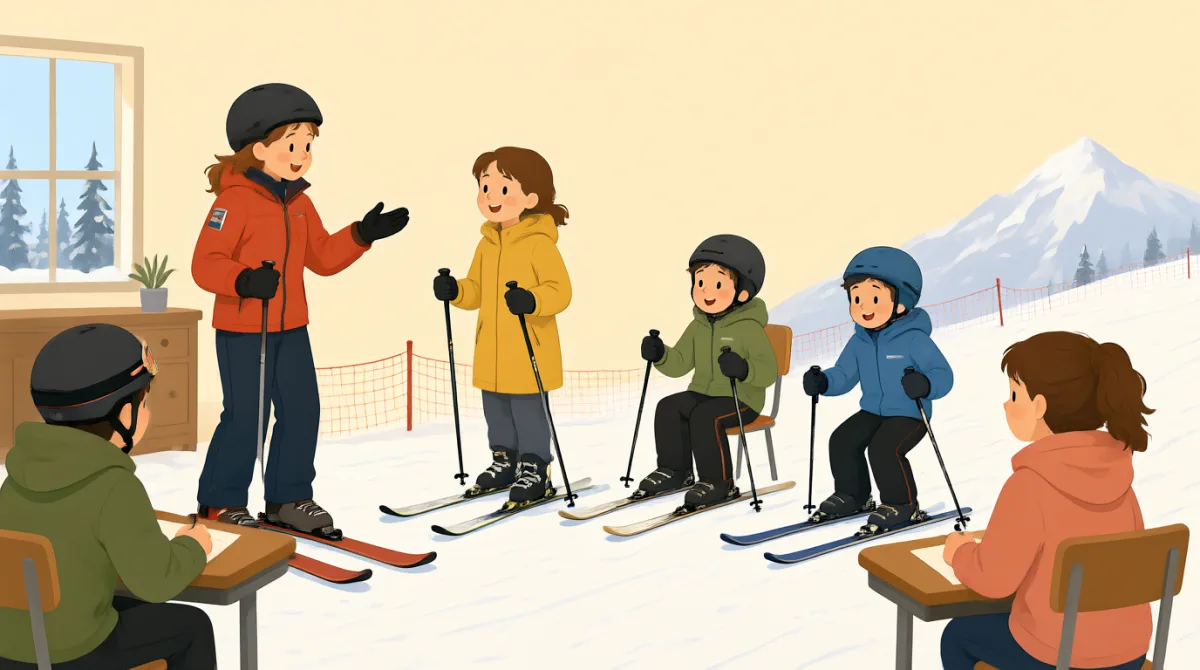

Welcome to your first ski lesson, Emma. Is this your first time on snow?
初めてのスキーレッスンへようこそ、エマ。雪の上に立つのは初めてですか?

Yes! I’m excited, but these boots feel a little strange.
うん!楽しみだけど、このブーツ、ちょっと変な感じ。
That’s normal. First, stand with your feet about shoulder-width apart.
それは普通ですよ。まず、足を肩幅くらいに開いて立ってください。
Like this? Should I bend my knees a little?
こんな感じ?膝を少し曲げたほうがいい?
Exactly. Keep your knees soft, and lean forward just a little.
そのとおりです。膝の力を抜いて、ほんの少し前かがみになってください。
How do I move on the snow without sliding too fast?
速く滑りすぎないように、雪の上をどうやって動けばいいの?
Take small steps first. To stop, point your ski tips toward each other.
まずは小さな歩幅で歩いてください。止まるときは、スキーの先端を内側に向けます。
Oh, that makes a snowplow shape. I’ll try it now!
あ、これで雪かきみたいな形になるんだね。さっそくやってみる!
語彙8
- first time on snow雪の上に立つのは初めて
This means the first time someone has been on snow. Use it to ask if an activity is new for someone.
雪の上に初めて立つことを表します。雪の上ですることが初めてかどうかを尋ねるときに使えます。
- feel a little strangeちょっと変な感じがする
This means something feels unusual or unfamiliar. Use it to describe how new clothes or equipment feel.
何かがいつもと違ったり、慣れなかったりする感じを表します。新しい服や道具の着心地・使い心地を説明するときに使えます。
- shoulder-width apart肩幅くらいに開いて
This means your feet are as far apart as the width of your shoulders. It describes a stable standing position.
足を肩幅と同じくらいの間隔に開くことです。安定して立つ姿勢を説明するときに使います。
- bend my knees膝を曲げる
This means to move your knees so they are not straight. Use it when talking about posture or exercise.
膝を伸ばした状態から曲げることです。姿勢や運動について話すときに使います。
- lean forward前かがみになる
This means to move the top of your body toward the front. Use it to give or follow instructions about body position.
上半身を前に傾けることです。体の姿勢について指示したり、その指示に従ったりするときに使います。
- take small steps小さな歩幅で歩く
This means to move by making short steps. It is useful advice when you want to move carefully.
一歩を小さくして進むことです。慎重に動きたいときに役立つアドバイスです。
- ski tipsスキーの先端
These are the front ends of skis. Ski instructors may use this phrase when explaining how to move or stop.
スキー板の前の部分です。動き方や止まり方を説明するとき、スキーインストラクターが使うことがあります。
- snowplow shapeハの字
This is a shape made when the front ends of the skis point toward each other. Beginners use this position to help stop.
スキー板の先端を内側に向けたときにできる形です。初心者は止まりやすくするために、この姿勢をとります。
重要な文8
- 1
Is this your first time on snow?
Is this your first time on snow?(雪の上に立つのは初めてですか?)
This is a friendly way to ask if someone has done a snow activity before. You can reuse “Is this your first time at/in…?” to ask about a new experience.
雪の上ですることを経験したことがあるか、親しみを込めて尋ねる表現です。「Is this your first time at/in…?」を使えば、新しい経験について尋ねられます。
- 2
These boots feel a little strange.
These boots feel a little strange.(このブーツ、ちょっと変な感じがします。)
Use this sentence to say that new footwear or equipment feels unusual. You can replace “boots” with another item, such as “These gloves feel a little strange.”
新しい靴や道具がいつもと違う感じだと伝える表現です。「boots」を別のものに替えて使えます。たとえば「These gloves feel a little strange.」と言えます。
- 3
First, stand with your feet about shoulder-width apart.
First, stand with your feet about shoulder-width apart.(まず、足を肩幅くらいに開いて立ってください。)
This gives a simple instruction for standing in a stable position. “Stand with your feet…” is useful for explaining how to get ready for an activity.
安定した姿勢で立つための簡単な指示です。「Stand with your feet…」は、活動を始める準備としてどんな姿勢をとるか説明するときに便利です。
- 4
Should I bend my knees a little?
Should I bend my knees a little?(膝を少し曲げたほうがいいですか?)
This is a polite way to check whether you are doing something correctly. You can reuse “Should I… a little?” when asking about an action.
自分のやり方が合っているか、丁寧に確認する表現です。動作について尋ねるときは「Should I… a little?」を応用できます。
- 5
Keep your knees soft, and lean forward just a little.
Keep your knees soft, and lean forward just a little.(膝の力を抜いて、ほんの少し前かがみになってください。)
This sentence gives two clear instructions about body position. “Keep…” and “lean…” are useful verbs for giving movement directions.
体の姿勢について、分かりやすく二つの指示を伝える文です。「Keep…」と「lean…」は、体の動かし方を指示するときに便利な動詞です。
- 6
How do I move on the snow without sliding too fast?
How do I move on the snow without sliding too fast?(速く滑りすぎないように、雪の上をどうやって動けばいいですか?)
Use this question to ask how to do something safely. You can replace “move on the snow” with another activity, such as “walk on the ice.”
安全なやり方を尋ねるときに使います。「move on the snow」を別の動作に替えて、「walk on the ice」(氷の上を歩く)のように言うこともできます。
- 7
Take small steps first.
Take small steps first.(まずは小さな歩幅で歩いてください。)
This is a short instruction to move carefully and slowly. You can use “Take small steps” for other activities that require balance.
慎重に、ゆっくり動くように伝える短い指示です。バランスが必要な別の活動でも「Take small steps」を使えます。
- 8
To stop, point your ski tips toward each other.
To stop, point your ski tips toward each other.(止まるときは、スキーの先端を内側に向けてください。)
This explains how to stop while skiing. “To [verb],…” is a useful way to introduce an instruction or explain how to do something.
スキーを滑っているときの止まり方を説明しています。「To [verb],…」は、指示を始めたり、何かのやり方を説明したりするときに便利な形です。