A Cleaning with the Hygienist
歯科衛生士によるクリーニング
Mia cleans Emma’s teeth and explains what she is doing. Emma asks how to care for her teeth at home.
ミアがエマの歯をクリーニングしながら、何をしているか説明します。エマは家での歯のケアについて尋ねます。
会話9
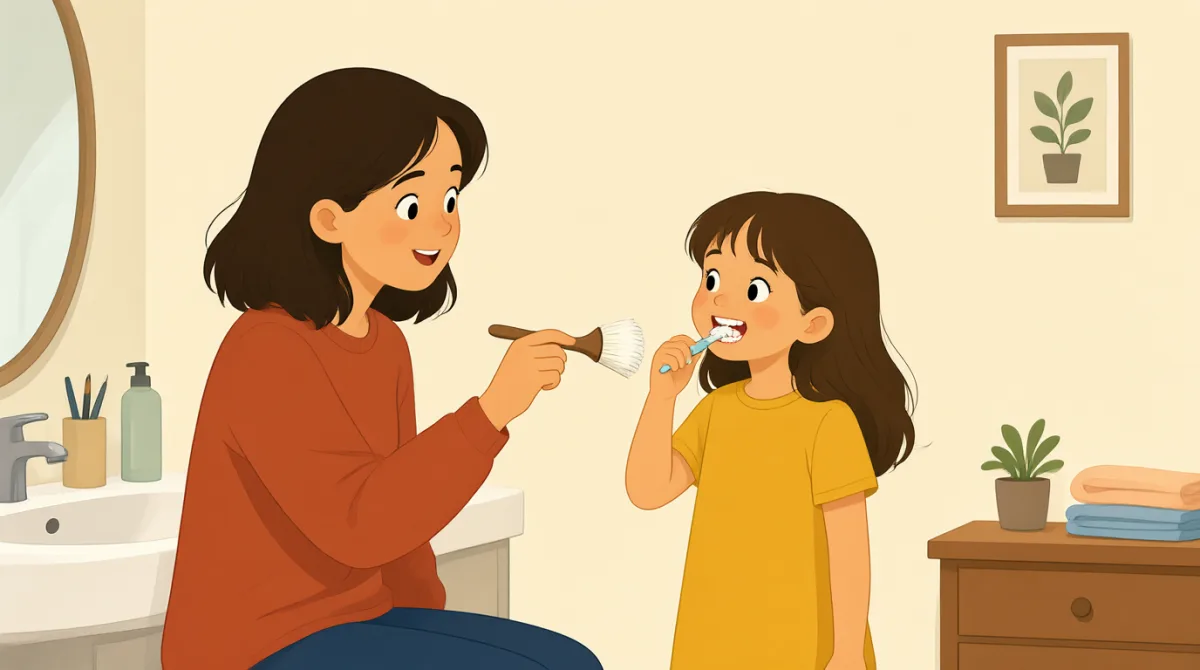

Please sit back and relax. I’m going to clean your teeth now.
背もたれにもたれて、楽にしてください。これから歯をきれいにしますね。

Okay. Will it hurt? One tooth has been a little sore.
わかりました。痛いですか?少し痛む歯があるんです。
It shouldn’t hurt. Tell me if anything feels uncomfortable.
痛くないはずですよ。何か気になることがあれば教えてくださいね。
What are you doing now? I hear a little buzzing sound.
今、何をしているんですか?小さなブーンという音が聞こえます。
I’m using a small tool to clean around your teeth and gums.
小さな器具を使って、歯と歯ぐきの周りをきれいにしています。
How often should I brush and floss at home?
家では、どのくらいの頻度で歯みがきとフロスをすればいいですか?
Brush twice a day, and floss once a day. Be gentle near your gums.
歯みがきは1日2回、フロスは1日1回してください。歯ぐきの近くは優しく磨いてくださいね。
Thanks. Should I use mouthwash, too?
ありがとうございます。マウスウォッシュも使ったほうがいいですか?
You can, but brushing and flossing are most important. Rinse with water after meals, too.
使ってもいいですが、歯みがきとフロスがいちばん大切です。食後に水ですすぐのもいいですよ。
語彙8
- sit back and relax背もたれにもたれて楽にする
This means to lean back and try to feel calm. A dentist may say this before starting a treatment.
「sit back and relax」は、背もたれにもたれてリラックスするという意味です。歯科医は治療を始める前にこう言うことがあります。
- a little sore少し痛む
This means slightly painful or tender. You can use it to describe a part of your body.
「a little sore」は、少し痛い、または触ると少し痛むという意味です。体の一部の状態を表すときに使えます。
- hurt痛む
Here, “hurt” means to cause pain. You can ask “Will it hurt?” before a treatment or procedure.
ここでの「hurt」は、痛みを起こすという意味です。治療や処置の前に「Will it hurt?」と尋ねることができます。
- uncomfortable不快な
This means not feeling comfortable, or feeling some pain or worry. You can tell someone if something feels uncomfortable.
「uncomfortable」は、心地よくない、または少し痛かったり不安だったりするという意味です。何かが不快に感じたら、相手に伝えることができます。
- buzzing soundブーンという音
This is a low, steady sound, like the sound of a small electric tool. You can use it to describe a noise you hear.
「buzzing sound」は、小型の電動器具のような、低く一定した音のことです。聞こえてくる音を表すときに使えます。
- flossフロスを使う
To floss means to clean between your teeth with dental floss. It is often used as part of daily dental care.
「floss」は、デンタルフロスを使って歯と歯の間をきれいにすることです。毎日の歯のケアの一環としてよく行います。
- be gentle優しくする
This means to do something carefully and not use too much force. You can use it when giving advice about sensitive areas.
「be gentle」は、注意して、力を入れすぎずに何かをするという意味です。デリケートな部分についてアドバイスするときに使えます。
- rinse with water水ですすぐ
This means to wash your mouth by moving water around in it and then spitting it out. You can rinse your mouth after eating.
「rinse with water」は、口の中で水を動かしてから吐き出し、口をすすぐことです。食後に口をすすぐときなどに使えます。
重要な文8
- 1
Will it hurt?
痛いですか?
Use this to ask if a treatment or activity will cause pain. You can replace “it” with another activity or procedure.
治療や行為で痛みがあるかどうかを尋ねる表現です。「it」を別の行為や処置に置き換えることもできます。
- 2
Tell me if anything feels uncomfortable.
何か気になることがあれば教えてください。
This is a helpful way to invite someone to speak up if they feel pain or discomfort. You can use “Tell me if…” to ask someone to let you know about a problem.
痛みや不快感があったら遠慮なく伝えてもらうための便利な表現です。「Tell me if…」を使うと、問題があれば知らせてほしいと相手に伝えられます。
- 3
What are you doing now?
今、何をしているんですか?
Use this to ask what someone is doing at this moment. It is useful when you want an explanation during an activity.
相手が今していることを尋ねる表現です。何かをしている最中に説明してほしいときに便利です。
- 4
How often should I brush and floss at home?
家では、どのくらいの頻度で歯みがきとフロスをすればいいですか?
Use “How often should I…?” to ask how frequently to do something. You can change the actions to ask about other routines.
「How often should I…?」は、どのくらいの頻度で何かをすればよいか尋ねる表現です。行動の部分を変えて、ほかの習慣について尋ねることもできます。
- 5
Brush twice a day, and floss once a day.
歯みがきは1日2回、フロスは1日1回してください。
This gives simple advice about how often to do two things. You can use “once a day” and “twice a day” to describe daily routines.
これは、2つのことをどのくらいの頻度で行えばよいかを簡潔に伝える表現です。「once a day」は1日1回、「twice a day」は1日2回という意味で、毎日の習慣について話すときに使えます。
- 6
Be gentle near your gums.
歯ぐきの近くは優しくしてください。
This is advice to use care and not press too hard. You can use “Be gentle near…” when talking about a sensitive area.
注意して、強く押しすぎないようにというアドバイスです。敏感な部分について話すときは、「Be gentle near…」を使えます。
- 7
You can, but brushing and flossing are most important.
使ってもいいですが、歯みがきとフロスがいちばん大切です。
This gives permission while explaining which actions matter most. You can use “You can, but…” to offer a choice and add a more important point.
何かをしてもよいと伝えながら、何が最も大切かを説明する表現です。「You can, but…」を使うと、選択肢を示したうえで、より大切な点を付け加えられます。
- 8
Rinse with water after meals, too.
食後に水ですすぐのもいいですよ。
This gives a simple instruction and says when to do it. You can use “after meals” to describe when to do a daily activity.
簡単な指示と、それをいつ行うかを伝える表現です。「after meals」は、毎日の習慣を行うタイミングを表すときに使えます。