A Cleaning with the Hygienist
हाइजीनिस्ट से दाँतों की सफ़ाई
Mia cleans Emma’s teeth and explains what she is doing. Emma asks how to care for her teeth at home.
मिया एमा के दाँत साफ़ करती हैं और बताती हैं कि वह क्या कर रही हैं। एमा पूछती हैं कि घर पर अपने दाँतों की देखभाल कैसे करें।
संवाद9
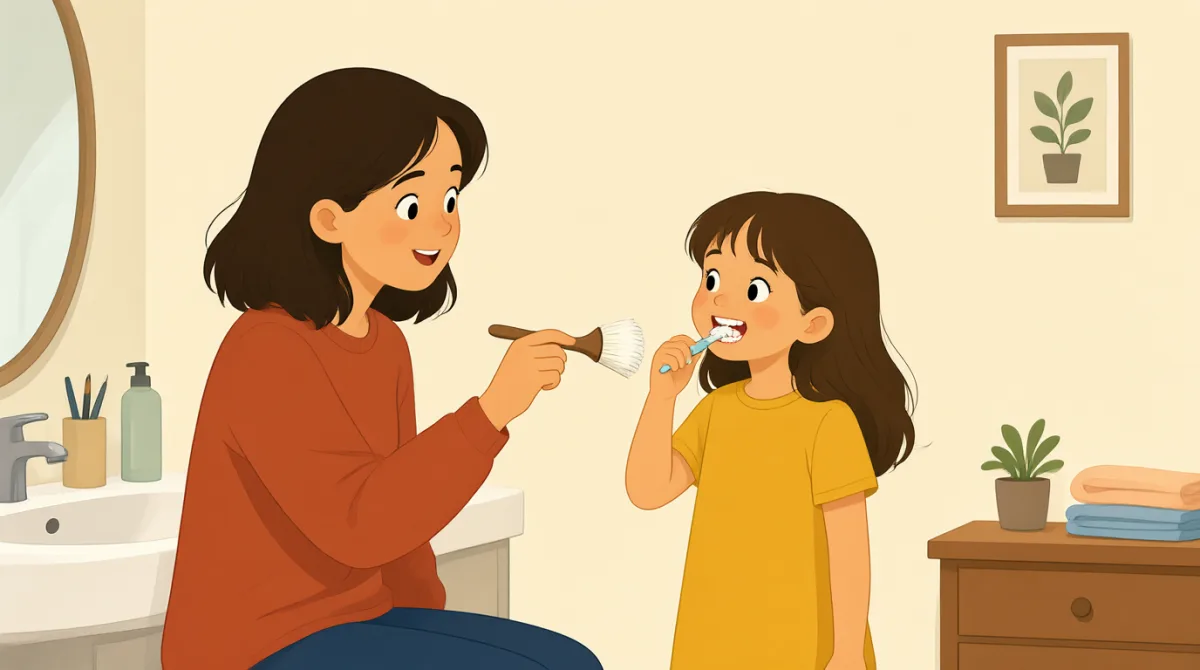

Please sit back and relax. I’m going to clean your teeth now.
कृपया पीछे होकर आराम से बैठिए। अब मैं आपके दाँत साफ़ करने जा रही हूँ।

Okay. Will it hurt? One tooth has been a little sore.
ठीक है। क्या दर्द होगा? मेरा एक दाँत थोड़ा दुख रहा है।
It shouldn’t hurt. Tell me if anything feels uncomfortable.
दर्द नहीं होना चाहिए। अगर आपको कुछ भी असहज लगे, तो मुझे बताइएगा।
What are you doing now? I hear a little buzzing sound.
आप अभी क्या कर रही हैं? मुझे हल्की-सी भनभनाहट सुनाई दे रही है।
I’m using a small tool to clean around your teeth and gums.
मैं आपके दाँतों और मसूड़ों के आसपास सफ़ाई करने के लिए एक छोटा-सा उपकरण इस्तेमाल कर रही हूँ।
How often should I brush and floss at home?
मुझे घर पर कितनी बार ब्रश और फ्लॉस करना चाहिए?
Brush twice a day, and floss once a day. Be gentle near your gums.
दिन में दो बार ब्रश कीजिए और एक बार फ्लॉस कीजिए। मसूड़ों के पास धीरे से सफ़ाई कीजिए।
Thanks. Should I use mouthwash, too?
धन्यवाद। क्या मुझे माउथवॉश भी इस्तेमाल करना चाहिए?
You can, but brushing and flossing are most important. Rinse with water after meals, too.
आप कर सकती हैं, लेकिन ब्रश करना और फ्लॉस करना सबसे ज़रूरी है। खाना खाने के बाद पानी से कुल्ला भी कीजिए।
शब्दावली8
- sit back and relaxपीछे होकर आराम से बैठना
This means to lean back and try to feel calm. A dentist may say this before starting a treatment.
इसका मतलब है पीछे की ओर झुककर बैठना और शांत रहने की कोशिश करना। इलाज शुरू करने से पहले दंत चिकित्सक आपसे ऐसा कह सकते हैं।
- a little soreथोड़ा दुखना
This means slightly painful or tender. You can use it to describe a part of your body.
इसका मतलब है हल्का दर्द होना या छूने पर दर्द महसूस होना। आप इसका इस्तेमाल शरीर के किसी हिस्से में दर्द बताने के लिए कर सकते हैं।
- hurtदर्द होना
Here, “hurt” means to cause pain. You can ask “Will it hurt?” before a treatment or procedure.
यहाँ “hurt” का मतलब है दर्द पहुँचाना। किसी इलाज या प्रक्रिया से पहले आप पूछ सकते हैं, “Will it hurt?” (क्या दर्द होगा?)
- uncomfortableअसहज
This means not feeling comfortable, or feeling some pain or worry. You can tell someone if something feels uncomfortable.
इसका मतलब है आराम महसूस न होना, या थोड़ा दर्द या चिंता महसूस होना। अगर आपको कुछ असहज लगे, तो आप किसी को बता सकते हैं।
- buzzing soundभनभनाहट की आवाज़
This is a low, steady sound, like the sound of a small electric tool. You can use it to describe a noise you hear.
यह धीमी और लगातार आने वाली आवाज़ होती है, जैसे किसी छोटे बिजली से चलने वाले उपकरण की आवाज़। आप इसका इस्तेमाल सुनाई देने वाली आवाज़ का वर्णन करने के लिए कर सकते हैं।
- flossफ्लॉस करना
To floss means to clean between your teeth with dental floss. It is often used as part of daily dental care.
“floss” करने का मतलब है डेंटल फ्लॉस से दाँतों के बीच की सफ़ाई करना। इसे अक्सर रोज़ाना दाँतों की देखभाल के हिस्से के रूप में किया जाता है।
- be gentleधीरे से करना
This means to do something carefully and not use too much force. You can use it when giving advice about sensitive areas.
इसका मतलब है कोई काम सावधानी से करना और ज़्यादा ज़ोर न लगाना। संवेदनशील जगहों की देखभाल के बारे में सलाह देते समय आप इसका इस्तेमाल कर सकते हैं।
- rinse with waterपानी से कुल्ला करना
This means to wash your mouth by moving water around in it and then spitting it out. You can rinse your mouth after eating.
इसका मतलब है मुँह में पानी घुमाकर फिर उसे थूक देना। खाना खाने के बाद आप कुल्ला कर सकते हैं।
मुख्य वाक्य8
- 1
Will it hurt?
क्या दर्द होगा?
Use this to ask if a treatment or activity will cause pain. You can replace “it” with another activity or procedure.
किसी इलाज या गतिविधि से दर्द होगा या नहीं, यह पूछने के लिए इसका इस्तेमाल करें। आप “it” की जगह किसी दूसरी गतिविधि या प्रक्रिया का नाम रख सकते हैं।
- 2
Tell me if anything feels uncomfortable.
अगर आपको कुछ भी असहज लगे, तो मुझे बताइएगा।
This is a helpful way to invite someone to speak up if they feel pain or discomfort. You can use “Tell me if…” to ask someone to let you know about a problem.
दर्द या तकलीफ़ महसूस होने पर किसी को बताने के लिए कहना एक अच्छा तरीका है। किसी से समस्या बताने के लिए कहने के लिए आप “Tell me if…” का इस्तेमाल कर सकते हैं।
- 3
What are you doing now?
आप अभी क्या कर रही हैं?
Use this to ask what someone is doing at this moment. It is useful when you want an explanation during an activity.
किसी से यह पूछने के लिए इसका इस्तेमाल करें कि वह इसी समय क्या कर रहा है। किसी गतिविधि के दौरान उसका विवरण जानना हो, तो यह वाक्य काम आता है।
- 4
How often should I brush and floss at home?
मुझे घर पर कितनी बार ब्रश और फ्लॉस करना चाहिए?
Use “How often should I…?” to ask how frequently to do something. You can change the actions to ask about other routines.
किसी काम को कितनी बार करना चाहिए, यह पूछने के लिए “How often should I…?” का इस्तेमाल करें। दूसरी दिनचर्या के बारे में पूछने के लिए आप इसमें काम बदल सकते हैं।
- 5
Brush twice a day, and floss once a day.
दिन में दो बार ब्रश कीजिए और एक बार फ्लॉस कीजिए।
This gives simple advice about how often to do two things. You can use “once a day” and “twice a day” to describe daily routines.
इसमें दो काम कितनी बार करने चाहिए, इसकी सरल सलाह दी गई है। रोज़ की दिनचर्या बताने के लिए आप “once a day” और “twice a day” का इस्तेमाल कर सकते हैं।
- 6
Be gentle near your gums.
मसूड़ों के पास धीरे से सफ़ाई कीजिए।
This is advice to use care and not press too hard. You can use “Be gentle near…” when talking about a sensitive area.
यह सावधानी बरतने और ज़्यादा ज़ोर न लगाने की सलाह है। किसी संवेदनशील जगह के बारे में बात करते समय आप “Be gentle near…” का इस्तेमाल कर सकते हैं।
- 7
You can, but brushing and flossing are most important.
आप कर सकती हैं, लेकिन ब्रश करना और फ्लॉस करना सबसे ज़रूरी है।
This gives permission while explaining which actions matter most. You can use “You can, but…” to offer a choice and add a more important point.
इसमें किसी काम की अनुमति देते हुए यह भी बताया गया है कि सबसे ज़्यादा ज़रूरी क्या है। विकल्प देने और फिर कोई ज़्यादा ज़रूरी बात बताने के लिए आप “You can, but…” का इस्तेमाल कर सकते हैं।
- 8
Rinse with water after meals, too.
खाना खाने के बाद पानी से कुल्ला भी कीजिए।
This gives a simple instruction and says when to do it. You can use “after meals” to describe when to do a daily activity.
इसमें एक सरल निर्देश दिया गया है और यह भी बताया गया है कि उसे कब करना है। रोज़मर्रा का कोई काम कब करना है, यह बताने के लिए आप “after meals” का इस्तेमाल कर सकते हैं।