A Cleaning with the Hygienist
การทำความสะอาดฟันกับผู้เชี่ยวชาญด้านอนามัยช่องปาก
Mia cleans Emma’s teeth and explains what she is doing. Emma asks how to care for her teeth at home.
มีอาทำความสะอาดฟันให้เอ็มมาและอธิบายสิ่งที่กำลังทำ เอ็มมาถามวิธีดูแลฟันที่บ้าน
บทสนทนา9
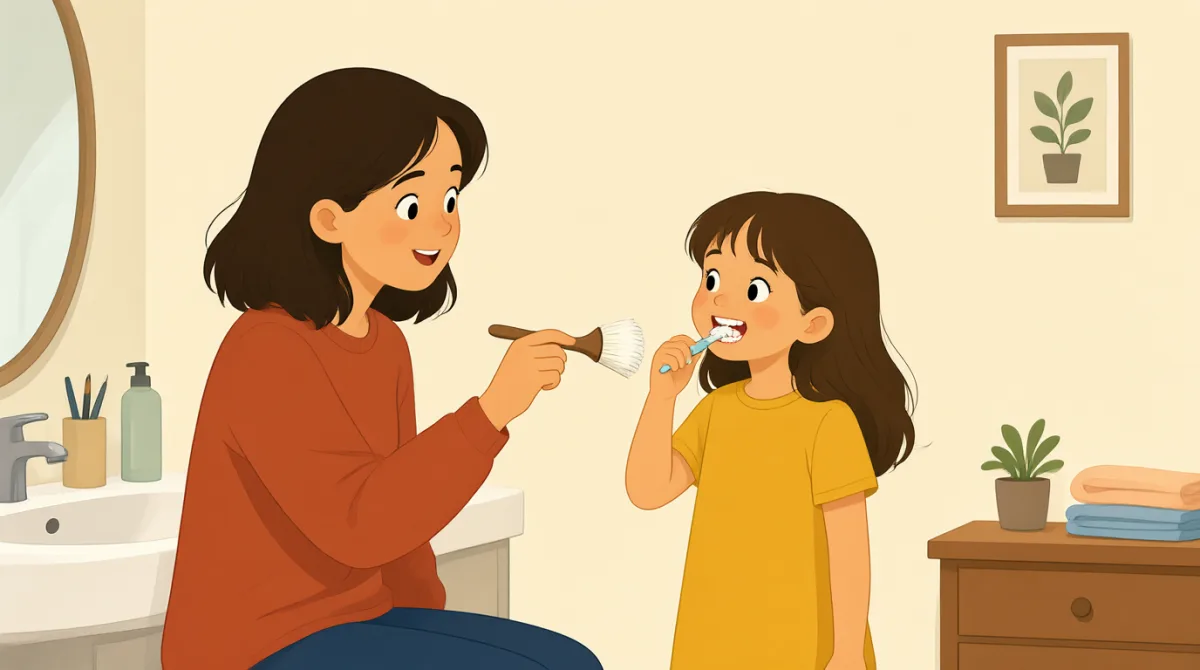

Please sit back and relax. I’m going to clean your teeth now.
เอนหลังและผ่อนคลายได้เลยค่ะ ตอนนี้ฉันจะทำความสะอาดฟันให้คุณนะคะ

Okay. Will it hurt? One tooth has been a little sore.
ได้ค่ะ จะเจ็บไหมคะ? ฟันซี่หนึ่งรู้สึกเจ็บนิดหน่อยค่ะ
It shouldn’t hurt. Tell me if anything feels uncomfortable.
ไม่น่าเจ็บนะคะ ถ้ารู้สึกไม่สบายตรงไหนก็บอกฉันได้เลยค่ะ
What are you doing now? I hear a little buzzing sound.
ตอนนี้คุณกำลังทำอะไรอยู่คะ? ได้ยินเสียงหึ่ง ๆ เบา ๆ ค่ะ
I’m using a small tool to clean around your teeth and gums.
ฉันกำลังใช้เครื่องมือเล็ก ๆ ทำความสะอาดบริเวณรอบ ๆ ฟันและเหงือกของคุณค่ะ
How often should I brush and floss at home?
ที่บ้านควรแปรงฟันและใช้ไหมขัดฟันบ่อยแค่ไหนคะ?
Brush twice a day, and floss once a day. Be gentle near your gums.
แปรงฟันวันละสองครั้ง และใช้ไหมขัดฟันวันละครั้งนะคะ บริเวณใกล้เหงือกให้ทำเบา ๆ ค่ะ
Thanks. Should I use mouthwash, too?
ขอบคุณค่ะ แล้วควรใช้น้ำยาบ้วนปากด้วยไหมคะ?
You can, but brushing and flossing are most important. Rinse with water after meals, too.
ใช้ได้ค่ะ แต่การแปรงฟันและใช้ไหมขัดฟันสำคัญที่สุด หลังรับประทานอาหารก็บ้วนปากด้วยน้ำเปล่านะคะ
คำศัพท์8
- sit back and relaxเอนหลังและผ่อนคลาย
This means to lean back and try to feel calm. A dentist may say this before starting a treatment.
คำนี้หมายถึงการเอนตัวไปด้านหลังและพยายามทำใจให้สบาย ทันตแพทย์อาจพูดประโยค “sit back and relax” ก่อนเริ่มการรักษา
- a little soreเจ็บนิดหน่อย
This means slightly painful or tender. You can use it to describe a part of your body.
คำนี้หมายถึงการเจ็บหรือระบมเล็กน้อย ใช้บรรยายส่วนต่าง ๆ ของร่างกายได้
- hurtเจ็บ
Here, “hurt” means to cause pain. You can ask “Will it hurt?” before a treatment or procedure.
ในที่นี้ “hurt” หมายถึงทำให้เกิดความเจ็บปวด คุณสามารถถามว่า “Will it hurt?” ก่อนการรักษาหรือหัตถการได้
- uncomfortableไม่สบาย
This means not feeling comfortable, or feeling some pain or worry. You can tell someone if something feels uncomfortable.
คำนี้หมายถึงรู้สึกไม่สบาย หรือรู้สึกเจ็บหรือกังวลเล็กน้อย คุณสามารถบอกผู้อื่นได้หากมีบางอย่างทำให้รู้สึกไม่สบาย
- buzzing soundเสียงหึ่ง ๆ
This is a low, steady sound, like the sound of a small electric tool. You can use it to describe a noise you hear.
คำนี้หมายถึงเสียงต่ำที่ดังต่อเนื่อง คล้ายเสียงของเครื่องมือไฟฟ้าขนาดเล็ก ใช้บรรยายเสียงที่คุณได้ยินได้
- flossใช้ไหมขัดฟัน
To floss means to clean between your teeth with dental floss. It is often used as part of daily dental care.
“floss” หมายถึงการทำความสะอาดซอกฟันด้วยไหมขัดฟัน มักใช้เป็นส่วนหนึ่งของการดูแลฟันในแต่ละวัน
- be gentleทำเบา ๆ
This means to do something carefully and not use too much force. You can use it when giving advice about sensitive areas.
คำนี้หมายถึงการทำบางอย่างอย่างระมัดระวังและไม่ใช้แรงมาก ใช้เมื่อต้องแนะนำการดูแลบริเวณที่บอบบางได้
- rinse with waterบ้วนปากด้วยน้ำ
This means to wash your mouth by moving water around in it and then spitting it out. You can rinse your mouth after eating.
คำนี้หมายถึงการกลั้วน้ำไว้ในปากแล้วบ้วนทิ้ง คุณสามารถบ้วนปากหลังรับประทานอาหารได้
ประโยคสำคัญ8
- 1
Will it hurt?
จะเจ็บไหมคะ?
Use this to ask if a treatment or activity will cause pain. You can replace “it” with another activity or procedure.
ใช้ประโยค “Will it hurt?” เพื่อถามว่าการรักษาหรือกิจกรรมนั้นจะทำให้เจ็บไหม คุณสามารถแทน “it” ด้วยกิจกรรมหรือหัตถการอย่างอื่นได้
- 2
Tell me if anything feels uncomfortable.
ถ้ารู้สึกไม่สบายตรงไหนก็บอกฉันได้เลยค่ะ
This is a helpful way to invite someone to speak up if they feel pain or discomfort. You can use “Tell me if…” to ask someone to let you know about a problem.
ประโยค “Tell me if anything feels uncomfortable.” เป็นวิธีที่ช่วยเชิญให้อีกฝ่ายบอกหากรู้สึกเจ็บหรือไม่สบาย คุณสามารถใช้ “Tell me if…” เพื่อขอให้อีกฝ่ายแจ้งเมื่อพบปัญหาได้
- 3
What are you doing now?
ตอนนี้คุณกำลังทำอะไรอยู่คะ?
Use this to ask what someone is doing at this moment. It is useful when you want an explanation during an activity.
ใช้ประโยค “What are you doing now?” เพื่อถามว่าอีกฝ่ายกำลังทำอะไรอยู่ในขณะนั้น เหมาะเมื่อคุณต้องการคำอธิบายระหว่างที่มีกิจกรรมกำลังดำเนินอยู่
- 4
How often should I brush and floss at home?
ที่บ้านควรแปรงฟันและใช้ไหมขัดฟันบ่อยแค่ไหนคะ?
Use “How often should I…?” to ask how frequently to do something. You can change the actions to ask about other routines.
ใช้ “How often should I…?” เพื่อถามว่าควรทำบางอย่างบ่อยเพียงใด คุณสามารถเปลี่ยนการกระทำเพื่อถามเกี่ยวกับกิจวัตรอื่น ๆ ได้
- 5
Brush twice a day, and floss once a day.
แปรงฟันวันละสองครั้ง และใช้ไหมขัดฟันวันละครั้งนะคะ
This gives simple advice about how often to do two things. You can use “once a day” and “twice a day” to describe daily routines.
ประโยคนี้ให้คำแนะนำง่าย ๆ เกี่ยวกับความถี่ในการทำสองสิ่ง คุณสามารถใช้ “once a day” และ “twice a day” เพื่อบอกกิจวัตรประจำวันที่ทำวันละครั้งและวันละสองครั้งได้
- 6
Be gentle near your gums.
บริเวณใกล้เหงือกให้ทำเบา ๆ ค่ะ
This is advice to use care and not press too hard. You can use “Be gentle near…” when talking about a sensitive area.
ประโยคนี้เป็นคำแนะนำให้ทำอย่างระมัดระวังและอย่ากดแรงเกินไป คุณสามารถใช้ “Be gentle near…” เมื่อพูดถึงบริเวณที่บอบบางได้
- 7
You can, but brushing and flossing are most important.
ใช้ได้ค่ะ แต่การแปรงฟันและใช้ไหมขัดฟันสำคัญที่สุด
This gives permission while explaining which actions matter most. You can use “You can, but…” to offer a choice and add a more important point.
ประโยคนี้เป็นการอนุญาตพร้อมอธิบายว่าสิ่งใดสำคัญที่สุด คุณสามารถใช้ “You can, but…” เพื่อเสนอทางเลือกแล้วเสริมประเด็นที่สำคัญกว่าได้
- 8
Rinse with water after meals, too.
หลังรับประทานอาหารก็บ้วนปากด้วยน้ำเปล่านะคะ
This gives a simple instruction and says when to do it. You can use “after meals” to describe when to do a daily activity.
ประโยคนี้เป็นคำสั่งง่าย ๆ และบอกว่าควรทำเมื่อใด คุณสามารถใช้ “after meals” เพื่อบอกเวลาที่ควรทำกิจกรรมประจำวันได้